The Untold Link Between Diet and Gallstones: Why Healthy Fats May Hold the Key?
Rethinking Fat, Gallstones, and Your Health
What if the advice to steer clear of dietary fat could do more harm than good?
Most people are surprised to learn that around 80% of gallstones are cholesterol stones, and, paradoxically, avoiding or consuming too little fat is often a contributing factor to the problem. In this comprehensive review, you’ll discover how gallstones form, why low-fat diets may set you up for trouble, and how to nourish your body, including what the current evidence says about high-fat diets and ketogenic plans.
This isn’t just about gallstones. This is about reclaiming a healthy, sustainable diet, one based on science and deeply rooted in how our bodies are designed to digest, store, and use fat.
Let’s separate myth from truth so that you can make truly informed decisions.
The Gallbladder’s Role
Your gallbladder stores bile, a fluid made by your liver (rich in cholesterol, bile salts, and water). Bile helps digest fat by emulsifying it in your gut. When you eat fat, your small intestine releases cholecystokinin (CCK), a hormone that signals the gallbladder to contract and release bile.
Gallstones: Causes, Types, and Who’s at Risk
Fast Facts About Gallstones
Gallstones: Hardened deposits (mainly cholesterol, bile salts, lecithin, and bilirubin) that form in your gallbladder, a small organ below your liver.
Prevalence: Affects up to 20% of adults in Western countries, though many people never have symptoms.
Types: Most stones (about 80%) are cholesterol-based; the rest are pigment stones (mostly bilirubin).
Symptoms: Many cases are “silent.” Pain (sometimes severe), bloating, and nausea often develop when a stone blocks the bile duct.
Surgery: Cholecystectomy is a surgical procedure to remove the gallbladder. It is the number one surgery in the UK, resulting in a large portion of the population having no gallbladder and experiencing dramatic issues with fat digestion and assimilation, as well as problems with fat-soluble compounds, including health-supporting Vitamins A, D, E, and K.
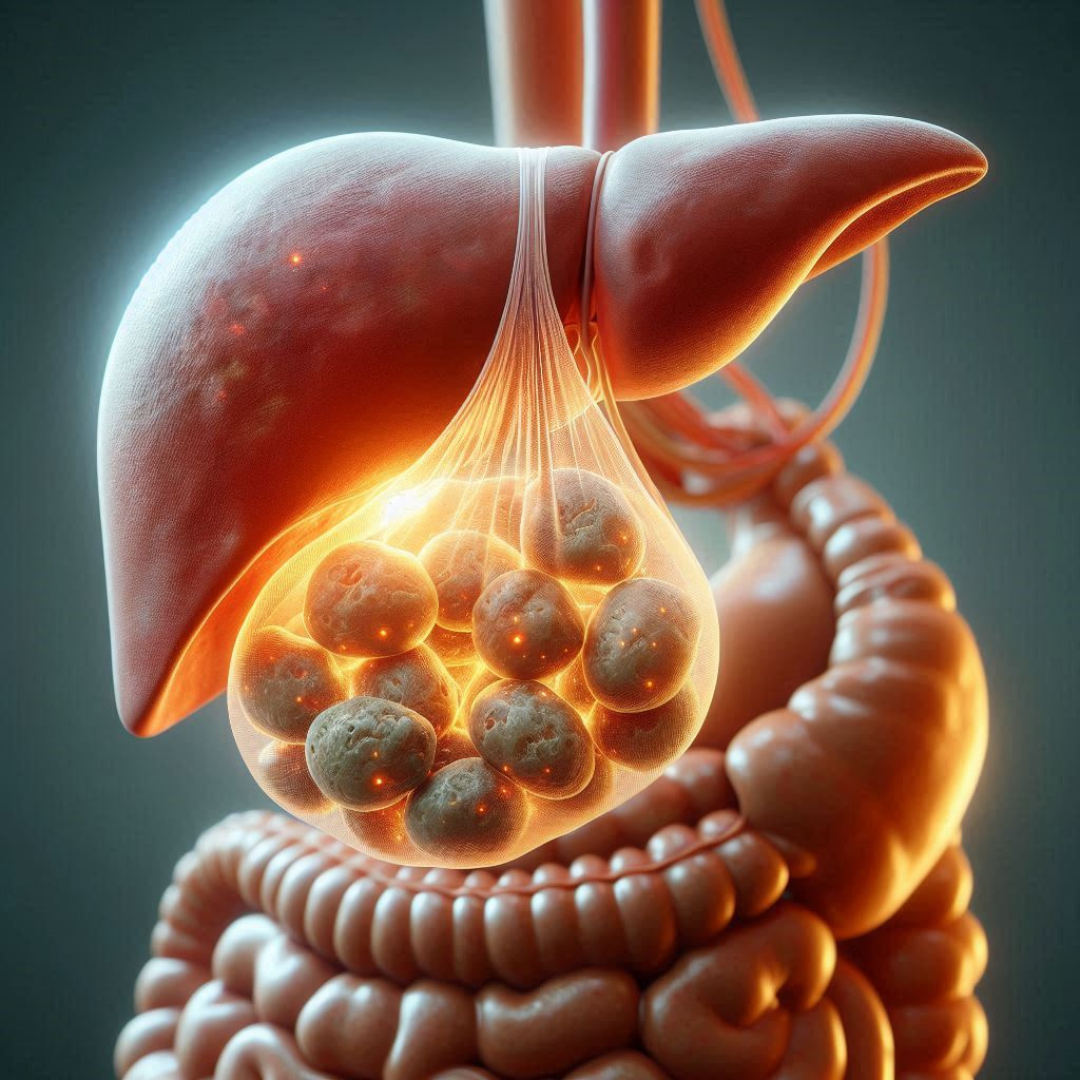
AI-generated illustration of gallstones for dramatic affect
UK Trends NOT TO IGNORE
Cholecystectomy, the surgical removal of the gallbladder, is among the most commonly performed procedures in the UK, with over 70,000 operations annually. Its widespread usage has resulted in a large portion of the population living without a gallbladder, often unaware of the long-term implications.
Without a gallbladder, bile produced by the liver is no longer stored and released in response to fat intake; instead, it drips continuously into the intestine. This can impair the digestion and assimilation of dietary fats, leading to difficulty tolerating rich or fatty meals. Over time, this may contribute to the malabsorption of fat-soluble vitamins, including vitamins A, D, E, and K, which play vital roles in immunity, bone health, cognition, vision, and cardiovascular function.
While some people adjust well, others continue to experience symptoms such as bloating, bile acid diarrhoea, nutritional deficiencies, or unintended weight loss. For optimal long-term health, those without a gallbladder may need to prioritise nutrient-dense whole foods, adjust their diet, and in some cases, seek targeted supplementation or digestive enzyme support.
Supplementing with lecithin* (a natural emulsifier, also present in bile) can help improve fat breakdown by compensating for the reduced bile concentration after surgery. Because the gallbladder no longer stores and concentrates bile, the continuous but less concentrated flow may be insufficient to digest fatty meals completely. This can affect the digestion of healthy fats found in foods like olive oil, salad dressings, and fatty fish such as salmon and mackerel.
Lecithin in bile plays a crucial role in emulsifying dietary fats, which facilitates the digestion and absorption of lipids and fat-soluble compounds in the small intestine.
—
* Commercial lecithin, found in processed foods and snacks, is typically produced using genetically modified (GMO) soybeans and solvents (such as hexane) or mechanical pressing, with the latter method yielding higher-priced but chemical-free lecithin. Concerns about soybeans, their allergy profile, and source have led to an increased use of sunflower and rapeseed lecithin, particularly in Europe. Lecithin from sunflower is gaining popularity due to its non-GMO status and allergen-free profile. Ensure to check the type of lecithin when buying products in plastic, such as biscuits, savoury snacks and baking products.
“Cholecystectomy, the surgical removal of the gallbladder, is among the most commonly performed procedures in the UK, with over 70,000 operations annually. Its widespread usage has resulted in a large portion of the population living without a gallbladder, often unaware of the long-term implications.”
How Gallstones Form
Most people assume gallstones are caused by eating too much fat. In reality, the opposite can be true. Diets too low in fat are a common and underappreciated contributor to gallstone formation. This paradox arises from the intricate relationship between fat intake, bile production, and gallbladder function.
Your liver produces bile, a fluid made up of cholesterol, bile salts, water, and other compounds, which is stored and concentrated in the gallbladder. The gallbladder acts as a reservoir, releasing bile in response to the intake of dietary fat. This release is triggered by a hormone called cholecystokinin (CCK), which is secreted when fatty food enters the small intestine. When your diet lacks sufficient fat or when you skip meals altogether, CCK release is minimal. As a result, bile sits stagnant in the gallbladder for prolonged periods.
Over time, this stagnant bile becomes overly concentrated. The cholesterol suspended in the bile can then begin to crystallise. With continued stagnation and inadequate gallbladder contractions, these crystals gradually clump together, forming gallstones. This process doesn’t happen overnight; it may take months or years to develop, but it often progresses silently, without noticeable symptoms.
Interestingly, several lifestyle factors can disrupt bile balance and increase the likelihood of producing gallstones. Contrary to what you might expect, rapid weight loss, particularly through crash dieting or fasting (for example, a 5-day water fast), dramatically increases risk. During rapid weight loss, the liver often secretes more cholesterol into bile than the gallbladder can efficiently absorb. Without enough dietary fat to stimulate bile flow, this excess cholesterol adds to the formation of sludge and stones.
— Key Factors That Increase Risk
Obesity and metabolic syndrome also play a significant role, as excess body weight contributes to higher cholesterol production in the liver and diminished gallbladder motility. Similarly, individuals with insulin resistance or type 2 diabetes often have altered bile composition, with an increased concentration of cholesterol and a decreased concentration of bile salts. This imbalance makes their bile more prone to crystallisation, accelerating the development of gallstones.
Low-fat or fat-free diets exacerbate this issue by weakening the body’s natural CCK signalling mechanism. Without enough dietary fat to stimulate gallbladder contractions, bile remains in the gallbladder for too long and gradually becomes sludge-like, making it easier for cholesterol crystals to precipitate. When this occurs repeatedly, stones begin to grow silently over time.
Hormonal factors can also increase the risk of gallstones. Oestrogen (whether from pregnancy, hormonal contraceptives, or hormone replacement therapy) can raise cholesterol levels in bile while simultaneously decreasing gallbladder motility. This combination increases the likelihood of gallstone formation, particularly in women during their reproductive years.
Underlying this entire physiological process are often non-dietary factors, such as genetics and family history. Some people are genetically predisposed to produce cholesterol-rich bile or to have sluggish gallbladders. If close family members have experienced gallstones, your risk could be significantly higher, even with a balanced diet.
— Symptoms and Complications of Gallstones
Gallstones can often remain “silent,” meaning they cause no symptoms and may only be discovered incidentally during scans for unrelated issues. However, when symptoms do arise, they can be serious and even life-disrupting.
A “gallstone attack” typically presents as sudden, sharp pain in the upper right abdomen, often occurring after a meal, especially one high in fat. This pain may radiate to the right shoulder blade or the back and often comes with bloating, nausea, or discomfort that can last from minutes to hours.
If a gallstone blocks one of the bile ducts, it can lead to serious complications. Cholecystitis, or inflammation of the gallbladder, is one of the most common and painful outcomes, often requiring hospital treatment. If left unaddressed, this blockage can also cause pancreatitis (inflammation of the pancreas, as pancreatic enzymes accumulate and have nowhere to go) or jaundice due to impaired bile flow. These conditions are medical emergencies, making it important to recognise symptoms early.
Understanding the true factors behind gallstone formation, particularly the underappreciated link with low-fat and restrictive diets, can help you take smarter, more balanced steps to protect your digestive health.

Illustration of gallstones travelling inside the bile duct and blocking the pancreatic duct, causing inflammation of the pancreas (pancreatitis). This blockage prevents digestive enzymes from flowing from the pancreas into the small intestine, causing them to back up and irritate the pancreatic tissue.
In a nutshell
Gallstone Formation, Step by Step
Bile Becomes Over-Concentrated: Infrequent eating or low-fat diets mean the gallbladder doesn’t empty regularly. Bile just sits and thickens.
Cholesterol Crystallises: As bile stagnates, cholesterol can precipitate and form crystals.
Crystals Grow into Stones: Over weeks to years, crystals build up into gallstones.
Did you know?
Rapid weight loss, crash diets, skipping meals, and even obesity or insulin resistance can all disturb bile balance and vastly increase your risk.
— Key Factors That Increase Risk
Obesity and Metabolic Syndrome: Higher cholesterol in bile plus gallbladder sluggishness.
Insulin Resistance and Diabetes: Changes how bile and cholesterol are processed.
Low/No-Fat Diets: Weakens the CCK signal, so bile isn’t adequately released.
Rapid Weight Loss & Fasting: Triggers the liver to dump cholesterol into the bile, more than the gallbladder can handle.
Oestrogen: Pregnancy, hormone therapy, or birth control pills can raise cholesterol in bile.
Family History: Significant role in risk.
— Typical Symptoms and Complications
Silent stones: No symptoms until a stone blocks the bile ducts.
Classic attack: Sudden, sharp pain in the upper right abdomen, especially after a fatty meal.
Other symptoms: Bloating, nausea, pain radiating to the back or right shoulder.
Serious cases: Gallbladder inflammation (cholecystitis), pancreatitis, and jaundice if left untreated.
Standard Treatment and What You Can Do to Prevent Gallstones
— Medical Treatments
When gallstones become symptomatic, causing pain, digestive distress, or complications such as inflammation, the most common treatment is laparoscopic cholecystectomy. This minimally invasive surgical procedure removes the gallbladder entirely and is considered standard care in both the UK and globally. It’s typically recommended when stones are causing repeated episodes of biliary colic, gallbladder inflammation (cholecystitis), or other complications. Again, the focus is on removing the problem, rather than finding its cause. Doesn’t it make sense? It’s like the appendix, doctors still believe it has no function and removing it has no impact on overall health.
In some cases, particularly where the gallstones are small and discovered early, oral dissolution therapy may be considered. These medications, such as ursodeoxycholic acid, work by gradually dissolving gallstones over several months. However, this approach is rarely used due to slow effectiveness, cost, and limited patient eligibility.
If a gallstone travels into a bile duct and causes an obstruction, a procedure known as endoscopic retrograde cholangiopancreatography (ERCP) may be necessary. This procedure allows doctors to locate and remove the blockage, often resolving the issue without the need for immediate surgery. ERCP may be required when gallstones trigger infections or inflammation in the bile ducts or pancreas.
While surgical removal remains the gold standard for symptomatic cases, many people seek ways to minimise their risk before symptoms develop. Fortunately, lifestyle and dietary choices can play a major role in prevention.
Dietary Approaches for Prevention
One of the most effective ways to support gallbladder health and reduce the risk of developing gallstones is through balanced, nutrient-dense meals that include healthy fats. Unlike popular belief, moderate intake of good-quality fats does not trigger the formation of gallstones; it actually helps prevent them. Including sources such as cold-pressed olive oil, ghee, avocado, nuts, seeds, and oily fish like mackerel or salmon encourages the gallbladder to release bile regularly, which helps keep it circulating and prevents bile from stagnating.
In addition to including the right fats, maintaining consistent eating patterns is important. Long periods of fasting, such as extreme intermittent water fasts, can reduce the frequency of gallbladder contractions. This allows bile to sit stagnant, increasing the risk of cholesterol crystallising into stones. Eating balanced meals at regular intervals helps maintain healthy bile flow and gallbladder function.
Equally important is avoiding crash diets or rapid weight loss regimes, which are strongly linked to gallstone formation. During rapid fat loss, the liver increases the secretion of cholesterol into bile, overwhelming the gallbladder’s capacity to process it. As a result, stone formation is accelerated, especially when combined with low-fat intake or irregular eating habits.
A fibre-rich diet may also offer protective benefits. Dietary fibre, particularly from vegetables, legumes, and whole grains, supports bile acid metabolism and helps regulate cholesterol levels in the body. This dietary strategy can benefit gallbladder health and contribute to improved overall digestion and metabolic function.
Some studies have suggested that moderate alcohol consumption may reduce the risk of gallstones by influencing cholesterol metabolism and biliary motility. However, the risks associated with even modest alcohol use often outweigh its potential benefits, particularly in non-drinkers. Therefore, alcohol should never be “prescribed” preventively.
Lastly, regular physical activity can significantly reduce your risk of gallstone formation. Exercise supports healthy weight management and improves insulin sensitivity, two key factors in gallbladder health. Even moderate, consistent movement, such as brisk walking, swimming, or cycling, can enhance gallbladder motility and reduce the likelihood of stone formation over time.
Keeping well hydrated is also essential. Dehydration will impact the quality and fluidity of the bile.
High-Fat and Ketogenic Diets: Are They Safe?
— The Ketogenic Diet:
A ketogenic diet is very high in fat (70%+ of calories), very low in carbs, and moderate in protein. It’s designed to push the body into ketosis, where it burns fat for fuel instead of carbohydrates. Popular for rapid weight loss, type 2 diabetes, and even epilepsy, keto is now everywhere.
Do High-Fat or Ketogenic Diets Increase the Risk of Gallstones?
The evidence depicts a complex picture:
Gallstone risk is high any time you lose weight very rapidly, even if fat intake is high, because your liver dumps excess cholesterol into bile.
People following a very-low-calorie diet or on meal replacements, juice cleanses, or extreme keto plans with rapid weight loss are at the highest risk.
Research shows that slow weight loss and a diet rich in unsaturated fats (such as olive oil, nuts, and fatty fish) reduces the risk. Some studies even find no increased risk compared to standard diets.
— What About Fasting or Intermittent Fasting?
Extended fasting (lasting more than 24 hours) can trigger gallstone problems, as the gallbladder may not empty effectively for prolonged periods. Standard intermittent fasting protocols (such as 16:8) that include meals with fat seem less problematic.
Mechanisms: How Fats Help (or Hurt) the Gallbladder
Sufficient dietary fat = regular gallbladder contractions. Each meal with fat triggers bile release, keeping it fresh and moving, preventing cholesterol from crystallising.
Low-fat or erratic eating = gallbladder stasis: No fat means weak or missing bile release signals, allowing bile to over-concentrate and increase the risk of gallstones.
Diets high in saturated and trans fats may promote cholesterol crystallisation, so prioritise unsaturated fats (such as olive oil, nuts, seeds, and oily fish) for gallbladder protection.
What Do Major Studies and Guidelines Say?
The European Association for the Study of the Liver recommends preventing gallstones by avoiding rapid weight loss, eating regular meals with adequate dietary fat, and emphasising a plant-based, high-fibre diet.
The American Gastroenterological Association notes obesity, diabetes, and very-low-calorie diets as clear risk factors, but highlights that moderate caloric restriction and the inclusion of healthy fats are protective.
A 2021 review in Nutrients found ketogenic diets can be safely used for metabolic issues in most adults, including those with gallbladders in place, as long as the transition is gradual and weight loss isn’t extreme.
Key point: Symptoms of gallstones (abdominal pain, bloating, especially after meals) require prompt medical evaluation regardless of diet.
Is There a Link Between Smoking and Gallstones?
Current medical evidence indicates a positive association between smoking and gallstone disease, but the strength and clarity of this link are still being explored.
Epidemiological studies and meta-analyses have found that smokers, including both current and former smokers, have a higher risk of developing gallstones compared to non-smokers. A large meta-analysis of prospective cohort studies showed that current smokers have a 19% increased risk of gallbladder disease compared to non-smokers, and there is a dose-dependent relationship with risk rising along with the number of cigarettes smoked per day.
The mechanisms suggested include delayed gallbladder emptying and alterations in bile composition. Smoking may negatively influence the balance of proteins and cholesterol in bile, making it more likely for cholesterol crystals to precipitate and form stones.
Is There a Link Between Gallstones and NAFLD?
There is a well-documented and clinically significant bidirectional association between gallstones (cholelithiasis) and non-alcoholic fatty liver disease (NAFLD).
• Large systematic reviews and cohort studies reveal that individuals with NAFLD have a higher prevalence of gallstones than those without, and vice versa.
• The link is explained by shared metabolic risk factors: both conditions are strongly associated with obesity, insulin resistance, central adiposity, type 2 diabetes, and dyslipidaemia. These metabolic disturbances foster both increased liver fat accumulation (NAFLD) and cholesterol supersaturation of bile (gallstones).
• The relationship remains statistically significant even after adjusting for age, sex, and other metabolic factors.
• Some research suggests that gallstones may also be a marker for more severe forms of NAFLD, including non-alcoholic steatohepatitis (NASH).
• Additionally, gallstone disease and especially cholecystectomy are increasingly recognised as independent risk factors for the development or progression of NAFLD, potentially due to changes in bile acid metabolism and regulatory mechanisms that promote hepatic fat accumulation once the gallbladder is removed.
Prevention: How to Support Your Gallbladder
Supporting your gallbladder — and overall digestive health — starts with practical, everyday habits that nourish your body and promote regular function. One of the most important steps is to incorporate healthy fats into your daily diet. Foods like olive oil, avocado, fatty fish (such as wild or sockeye salmon and mackerel), nuts, seeds, and ghee provide the right kinds of fats needed to stimulate gallbladder contractions. These fats encourage your body to release bile regularly, preventing bile from becoming stagnant and reducing the risk of gallstone formation.
DO NOT FEAR FAT! When it’s consumed in moderation and from high-quality sources. Adequate fat intake helps keep your gallbladder active and supports the proper digestion and absorption of nutrients. The misconception that fat causes gallstones can lead people to overly restrict their fat intake, which paradoxically increases their risk by altering bile flow and encouraging cholesterol crystallisation in the gallbladder.
Consistency is key, so eating at regular intervals is another essential strategy. Skipping meals or engaging in frequent crash diets disrupts the natural rhythm of gallbladder emptying. Irregular eating patterns can cause bile to remain in the gallbladder for too long, increasing the chance that cholesterol will crystallise into stones. Aim for balanced meals spaced evenly throughout the day to maintain normal digestive signalling and bile release; however, avoid grazing.
Choosing whole, minimally processed foods high in fibre and antioxidants further supports gallbladder health. Antioxidants in colourful, plant-based foods help reduce inflammation and oxidative stress in the liver and gallbladder.
If weight loss is part of your health goals, it’s essential to pursue it gradually and sustainably, ideally losing less than 1.5 kilograms (about 3 pounds) per week. Combining moderate cardiovascular exercise, strength training, and a well-balanced diet ensures steady metabolic improvements without increasing the risk of gallstone development.
Limiting sugary and refined carbohydrates is another robust preventive measure. Excess sugar and refined starches lead to increased liver cholesterol synthesis, which in turn raises biliary cholesterol levels, thereby increasing the risk of gallstones. Opting for whole grains and seeds, and reducing intake of sweets, sugary drinks, and processed snacks helps maintain a balanced cholesterol profile favourable to gallbladder health.
Staying well-hydrated is often overlooked but vital. Adequate water intake prevents bile from becoming overly concentrated and viscous, a condition that predisposes to cholesterol crystallisation. Aim to drink consistent amounts of water throughout the day, adjusting for your activity levels and the local climate.
Finally, regular physical activity is a cornerstone of gallbladder and metabolic health. Even moderate exercise, such as brisk walking, cycling, or swimming a few times per week, improves insulin sensitivity, supports a healthy weight, and promotes efficient gallbladder emptying. Regular physical activity encourages optimal digestive and biliary function, reducing the likelihood of gallstone formation.
The Complex Physiology of Digestion and Gallbladder Health
Much of the conversation surrounding gallstones and bile centres on dietary fats. Still, there’s a vital aspect of digestion that is often overlooked: the function of digestive hormones and enzymes depends not only on dietary intake but also on healthy gastric function.
It’s essential to clarify that bile does not itself digest fats; rather, it emulsifies them. This means bile breaks large fat globules into much smaller droplets, dramatically increasing the surface area. This process is important because it allows pancreatic lipase, with the assistance of colipase, to access and effectively digest fats, ultimately enabling their absorption in the small intestine.
— A Chain Reaction: How Stomach Acid, Secretin, and CCK Interact
When you eat, your stomach produces hydrochloric acid (HCl) to help churn and partially digest food, resulting in an acidic mixture called chyme. The acidity of this chyme is critical. As the acidic chyme enters the duodenum (the first part of the small intestine), it prompts the release of the hormone secretin. Secretin then encourages the pancreas to secrete bicarbonate (to neutralise the acid) and, crucially, helps trigger the release of cholecystokinin (CCK). Finally, CCK signals the gallbladder to contract, releasing bile, and also stimulates the pancreas to release digestive enzymes.
Thus, the entire process of proper fat digestion hinges on an adequate acidic pH in the stomach.
— Low Stomach Acid: The Hidden Disruptor
With age and chronic stress, or sometimes due to medical conditions or medications, people often experience reduced stomach acid production. This seemingly minor change sets off a cascade:
Less acidic chyme means weaker secretin and CCK release.
This results in below-optimal bile and enzyme secretion.
Fats and proteins are not properly digested, leading to discomfort, bloating, and, in the context of gallstones, less regular gallbladder emptying.
Complicating matters, acid-blocking medications (commonly prescribed for ‘acid reflux’ or indigestion) may inadvertently worsen digestion by lowering stomach acidity. When stomach acid is low, carbohydrate fermentation and protein putrefaction by bacteria in the gut can cause a burning sensation, often mistaken for excess acid. In many cases, this is remedied not by suppressing acid, but by supporting healthy acid production (such as with betaine HCl supplements or addressing underlying dietary issues — This is where our role as naturopath and health detective is key).
Long-term use of proton pump inhibitors (PPIs) has been linked to malabsorption of nutrients and disruption of the gut microbiota in several studies, thereby further compromising digestive efficiency.
Gallstones are rarely caused by consuming excessive fat. Instead, it is caused by eating too little fat, skipping meals, rapid dieting, or imbalanced eating patterns. The solution isn’t fear, it’s balance and knowledge.
Embrace real, whole foods, healthy fats, and mindful, regular eating. This is the path not only to gallbladder health, but to lifelong energy and wellbeing.
If you’re struggling with symptoms or considering a new diet (like keto or a very-low-carb diet), seek the advice of your healthcare provider first.
Probiotics and Gallbladder Health
Emerging research clearly shows that the gut microbiome plays a pivotal role in gallstone formation by influencing bile acid metabolism, cholesterol regulation, and immune function via the gut-liver axis. The bacterial populations in our intestines harbour enzymes such as bile salt hydrolase (BSH) and 7α-dehydroxylase, which chemically modify primary bile acids into secondary bile acids. These transformations can alter the detergent properties of bile, making it more hydrophobic and prone to cholesterol supersaturation.
Additionally, shifts in gut microbiota in gallstone patients include a higher abundance of bacteria capable of producing secondary bile acids, such as deoxycholic acid (DCA), which increases bile toxicity and promotes cholesterol crystallisation. Patients with gallstones also exhibit reduced production of beneficial short-chain fatty acids (SCFAs), such as butyrate, which is important for anti-inflammatory effects and maintaining gut barrier function. The resulting intestinal inflammation and endotoxin leakage can further disrupt bile acid metabolism and gallbladder motility, creating a vicious cycle that favours gallstone development.
Regarding probiotics, while research is still evolving, some strains show promise for supporting gallbladder and bile acid health by modulating gut microbiota and bile acid profiles:
Lactobacillus species (e.g., Lactobacillus acidophilus and Lactobacillus plantarum) are known producers of bile salt hydrolase, which can deconjugate bile acids and potentially influence bile composition. By altering bile salt pools, these strains may help reduce cholesterol precipitation, although direct evidence for gallstone prevention in humans remains limited.
Some bifidobacteria also exhibit bile salt hydrolase activity, which improves gut barrier integrity and may reduce inflammation associated with gallstone formation.
Experimental studies in animal models suggest that probiotics that modify gut microbiota and enhance SCFA production can reduce gallstone risk by improving lipid metabolism and reducing intestinal inflammation; however, large-scale human trials are lacking.
Currently, no specific probiotic strain is officially approved or conclusively proven to prevent or treat gallstones. However, maintaining a diverse, balanced gut microbiome through diet (rich in fibre and fermented foods) and possibly targeted probiotic supplementation offers a promising complementary approach to support bile acid metabolism and gallbladder health in the future.
This area of research is rapidly evolving, holding potential for novel microbiome-targeted therapies to help prevent or manage gallstones in the future. However, prevention is always better than searching for a cure once the disease occurs.
References
Abraham, S. Rivero, HG. Erlikh, IV. et al. (2014). Surgical and nonsurgical management of gallstones. American Family Physician. 89(10), pp. 795-802. PMID: 24866215.
Ahmed, MH. Ali, A. (2014). Nonalcoholic fatty liver disease and cholesterol gallstones: Which comes first? Scandinavian Journal of Gastroenterology. 49(5):521-527. doi:10.3109/00365521.2014.894119
Aune, D. Vatten, LJ. Boffetta, P. (2016). Tobacco smoking and the risk of gallbladder disease. European Journal of Epidemiology. 31(7), pp. 643-653. doi:10.1007/s10654-016-0124-z
Casper, M. Lammert, F. (2011). Gallstone disease: basic mechanisms, diagnosis and therapy. Praxis (Bern 1994). 100(23), pp. 1403-1412. [German]. doi:10.1024/1661-8157/a000721
Chen, LY. Qiao, QH. Zhang, SC. et al. (2012). Metabolic syndrome and gallstone disease. World Journal of Gastroenterology. 18(31), pp. 4215-4220. doi:10.3748/wjg.v18.i31.4215
Degirmenci, B. Albayrak, R. Haktanir, A. et al. (2006). Acute effect of smoking on gallbladder emptying and refilling in chronic smokers and nonsmokers: A sonographic study. World Journal of Gastroenterology. 12(34), pp. 5540-5543. doi:10.3748/wjg.v12.i34.5540
Di Ciaula, A. Portincasa, P. (2018). Recent advances in understanding and managing cholesterol gallstones. F1000Res. 7, F1000 Faculty Rev-1529. doi:10.12688/f1000research.15505.1
Di Ciaula, A. Garruti, G. Frühbeck, G. et al. (2019). The role of diet in the pathogenesis of cholesterol gallstones. Current Medicinal Chemistry. 26(19), pp. 3620-3638. doi:10.2174/0929867324666170530080636
European Association for the Study of the Liver (EASL). Electronic address: easloffice@easloffice.eu. EASL Clinical Practice Guidelines on the prevention, diagnosis and treatment of gallstones. Journal of Hepatology. 65(1), pp. 146-181. doi:10.1016/j.jhep.2016.03.005
Lin, X. Lin, H. Xu, J. et al. (2025). Relative fat mass as a predictor of gallstones: Insights from national health and nutrition examination survey data. Lipids in Health and Disease. 24(1), 78. doi:10.1186/s12944-025-02480-2
Liu, X. Zhang, Z. Wang, H. et al. (2024). The link between serum cotinine levels and gallstones prevalence in adults: A cross-sectional analysis using NHANES data (2017-2020). Frontiers in Nutrition. 11, 1438170. doi:10.3389/fnut.2024.1438170
Patel, H. Jepsen, J. (2024). Gallstone disease: Common questions and answers. American Family Physician. 109(6), pp. 518-524. PMID: 38905549.
Portincasa, P. Di Ciaula, A. de Bari, O. et al. (2016). Management of gallstones and its related complications. Expert Review of Gastroenterology & Hepatology. 10(1), pp. 93-112. doi:10.1586/17474124.2016.1109445
Portincasa, P. Di Ciaula, A. Bonfrate, L. et al. (2023). Metabolic dysfunction-associated gallstone disease: Expecting more from critical care manifestations. Internal and Emergency Medicine. 18(7), pp. 1897-1918. doi: 10.1007/s11739-023-03355-z
Schirmer, BD. Winters, KL. Edlich, RF. (2005). Cholelithiasis and cholecystitis. Journal of Long-Term Effects of Medical Implants. 15(3), 329-338. doi:10.1615/jlongtermeffmedimplants.v15.i3.90
Shabanzadeh, DM. (2018). Incidence of gallstone disease and complications. Current Opinions in Gastroenterology. 34(2), pp. 81-89. doi:10.1097/MOG.0000000000000418. PMID: 29256915.
Stinton, LM. Shaffer, EA. (2012). Epidemiology of gallbladder disease: Cholelithiasis and cancer. Gut Liver. 6(2), 172-187. doi:10.5009/gnl.2012.6.2.172
Wang, J. He, W. Shi, R. et al. (2025). Association between relative fat mass and risk of gallstones in adults. Scientific Reports. 15(1), 9210. doi:10.1038/s41598-025-93963-w
Wang, K. Liu, Z. Tang, R. et al. (2025). Gallstones in the era of metabolic syndrome: Pathophysiology, risk prediction, and management. Cureus. 17(3), e80541. doi: 10.7759/cureus.80541
Xie, S. Ma, S. Chen, X. et al. (2025). Higher relative fat mass was associated with a higher prevalence of gallstones in US adults. BMC Gastroenterology. 25(1),133. doi: 10.1186/s12876-025-03715-3