
Mitochondria: The Masterminds of Our Cells and Health?
Every second, trillions of microscopic power plants are working tirelessly inside your body. These are mitochondria, tiny, double-membraned organelles found in nearly every cell except red blood cells. While most of us have heard them called the “powerhouse of the cell,” this catchy phrase barely scratches the surface of their true importance. Mitochondria are not only the main producers of cellular energy (ATP), but they also orchestrate a vast array of biological processes essential for life, health, and even the way we age.
This article will take you on a journey through the structure, function, and surprising secrets of mitochondria, revealing why these organelles are so much more than mere energy factories. From their ancient origins to their role in disease, from their unique genetics to their influence on your mood and metabolism, mitochondria are the ultimate multitaskers of the biological world.

Illustration of a cell showing organelles, including mitochondria, and transmembrane proteins. Below, a section of the phospholipid bilayer of the cell membrane. (Edited using Canva Pro stock images)
Mitochondria: Structure, Function, and Fascinating Facts
Mitochondria are small, sausage-shaped organelles ranging from 0.5 to 10 micrometres in length. Each cell can contain hundreds to thousands of mitochondria, depending on its energy needs. For example, muscle and nerve cells, which require lots of energy, are packed with mitochondria, while skin cells have fewer.
Structure in Detail
Outer Membrane: Acts as a gateway, allowing small molecules to pass freely. It contains proteins called porins and enzymes with diverse functions.
Intermembrane Space: The area between the outer and inner membranes, crucial for the energy production process.
Inner Membrane: Highly folded into structures called cristae, this membrane houses the proteins that drive ATP synthesis. It is impermeable to most molecules, requiring special transporters for passage.
Cristae: The folds increase surface area, maximising the space for energy-generating reactions.
Matrix: The innermost compartment, packed with enzymes for the Krebs cycle and home to the mitochondria’s own DNA (mtDNA).

Schematic illustration of a mitochondrium
The Many Roles of Mitochondria
1. Energy Production
The most famous job of mitochondria is producing adenosine triphosphate (ATP), the universal energy currency of the cell. Through a process called cellular respiration, mitochondria convert glucose and oxygen into ATP, carbon dioxide, and water. This process is so efficient that it provides over 90% of the energy required by most cells.

2. Calcium Storage and Regulation
Mitochondria play a crucial and dynamic role in cellular calcium storage and regulation, functioning as “calcium banks” that absorb and release calcium ions (Ca²⁺) according to the cell’s needs. This regulation is vital for numerous physiological processes, including muscle contraction, nerve signalling, metabolic control, and maintaining overall cellular health.
Calcium enters mitochondria primarily through a specialised channel in the inner mitochondrial membrane called the mitochondrial calcium uniporter (MCU), part of a complex that includes regulatory proteins that carefully control calcium uptake to prevent overload and maintain balance. Mitochondria have a remarkable capacity to buffer transient increases in cytosolic calcium levels, typically handling concentrations in the nanomolar range. This buffering ability protects cells from harmful calcium spikes that could otherwise trigger dysfunction or cell death.
Mitochondria are often positioned close to other organelles, particularly the endoplasmic reticulum (ER), which serves as the main intracellular calcium store. This proximity creates specialised regions, where calcium can be rapidly transferred from the ER or the extracellular space directly into mitochondria. Such spatial organisation allows mitochondria to respond swiftly to local calcium signals and maintain cellular homeostasis. When necessary, calcium is released back into the cytosol through transporters, such as the sodium-calcium exchanger, ensuring that calcium levels within mitochondria do not become excessive.
The regulation of calcium within mitochondria has profound effects on cellular metabolism. Calcium ions activate key enzymes within the Krebs cycle and the electron transport chain, thereby increasing ATP production when demand rises. In this way, mitochondrial calcium acts as a direct signal linking energy production to cellular activity. Beyond metabolism, mitochondrial calcium shapes intracellular signalling pathways, influencing gene expression, neurotransmitter release, and other vital cellular functions.
However, calcium regulation by mitochondria is a delicate balancing act. While mitochondria can absorb excess calcium during stress or injury to protect the cell, excessive mitochondrial calcium accumulation can lead to the generation of harmful reactive oxygen species (ROS). This, in turn, can initiate programmed cell death (apoptosis) or necrosis. Thus, mitochondrial calcium handling is critical not only for normal function but also for determining cell fate under stress.
In the brain, where energy and signalling demands are exceptionally high, mitochondrial calcium regulation is especially sophisticated. Neurones express unique regulatory proteins, which enhance mitochondrial calcium uptake to meet the intense metabolic and signalling needs of neural tissue. This fine-tuned control is essential for processes such as synaptic transmission and plasticity, which underlie learning and memory.
Given the central role of mitochondrial calcium regulation in health and disease, it has become a target of therapeutic interest. Researchers are investigating methods to modulate mitochondrial calcium channels to protect against neurodegenerative disorders, cardiac diseases, and other conditions associated with calcium imbalances.
3. Cell Death (Apoptosis)
Mitochondria are the gatekeepers of apoptosis, a process known as programmed cell death. When a cell is damaged or no longer needed, mitochondria release proteins (like cytochrome c) that trigger a cascade leading to its orderly self-destruction. This process is crucial for development, immune defence, and cancer prevention.
4. Heat Production
In brown fat cells, mitochondria can generate heat instead of ATP, a process called thermogenesis. This helps newborns and hibernating animals maintain body temperature.
5. Steroid Synthesis
Some mitochondria play a crucial role in producing steroid hormones, which are essential chemicals that regulate various bodily functions, including stress, metabolism, and reproduction. These hormones include cortisol (which helps manage stress), aldosterone (which regulates blood pressure), and sex hormones such as oestrogen, progesterone, and testosterone.
The process begins when cholesterol is transported into the mitochondria of cells located in the adrenal glands, ovaries, and testes. This step is crucial because it regulates the amount of hormone the cell can produce. A special protein called StAR helps move cholesterol into the mitochondria, where it is then changed into the first building block of all steroid hormones.
After this first step, the hormone precursors move to other parts of the cell to be turned into the final hormones. Some of the enzymes required for these changes are also found in mitochondria, highlighting the central role these organelles play in hormone production.
Mitochondria are not just static structures; they can change shape and join together. When hormone production is required, mitochondria often form longer, tube-like structures. This change enables key proteins to perform their functions more efficiently, thereby enhancing hormone production and regulation. If mitochondria cannot fuse properly, hormone production suffers.
Different hormone-producing cells have mitochondria that look slightly different, adapted to their specific tasks. This helps the cells make hormones more efficiently.
Interestingly, the hormones produced by mitochondria can also influence how mitochondria function. For example, sex hormones like oestrogen can influence how mitochondria produce energy and grow, creating a feedback loop that helps the body adjust to changing needs.
6. Cell Growth and Differentiation
Mitochondria play a crucial role in controlling how cells grow, divide, and mature, thereby influencing a wide range of processes, from tissue repair to immune responses.
7. Metabolic Regulation
Mitochondria regulate the metabolism of fats, carbohydrates, and proteins, influencing how efficiently our bodies burn fuel and store energy. They are central to the Krebs cycle and fatty acid oxidation, key metabolic pathways. (see illustration above).
8. Cellular Signalling
Mitochondria communicate with other parts of the cell, sending signals that influence gene expression, stress responses, and inflammation. They are essential for maintaining cellular balance (homeostasis).
One key way mitochondria communicate is through the movement of calcium ions. When a cell needs more energy, for example, during muscle contraction or nerve activity, mitochondria take up calcium from the surrounding fluid inside the cell. This calcium uptake increases the production of ATP and also acts as a signal to other parts of the cell, helping to coordinate energy supply with demand.
Mitochondria also send out signals in the form of small molecules and proteins. When they are under stress or not working properly, they can release certain factors that travel to the cell’s nucleus, where our DNA is stored. These signals can alter which genes are active, enabling the cell to adapt to changing conditions or repair damage. This process, known as mitochondrial “retrograde signalling,” is one way mitochondria influence gene expression.
The shape and behaviour of mitochondria also affect cell signalling. For example, when mitochondria fuse into larger networks, cells are generally more resistant to stress. When they split into smaller fragments, it can signal the cell to grow, divide, or even trigger inflammatory pathways. Mitochondria release molecules that act as distress signals, alerting the immune system when something is wrong. Some of these signals help start the body’s defence against infection, while others can trigger inflammation if the mitochondria are damaged or dysfunctional.
All of these communication pathways help maintain cellular balance, or homeostasis. When mitochondria are healthy and communicating well, cells can respond quickly to stress, repair themselves, and keep inflammation in check. If this communication breaks down, it can contribute to early signs of ageing, chronic inflammatory diseases, and other health problems.
9. Reactive Oxygen Species (ROS) Production
While producing energy, mitochondria also generate reactive oxygen species, molecules that can damage cells (free radicals) but also act as important signalling messengers. An imbalance in ROS is linked to ageing and disease.
Surprising and Lesser-Known Facts
Mitochondrial DNA (mtDNA):
Unlike other cellular parts, mitochondria have retained their DNA, which is inherited solely from the mother. Because only eggs (not sperm) pass on mitochondria, all your mitochondrial DNA comes from your mother. This makes them powerful tools for tracing maternal ancestry and studying evolution.
Ancient Origins:
Mitochondria are believed to have evolved from free-living bacteria that formed a symbiotic relationship with early eukaryotic cells over 1.5 billion years ago.
Self-Replication:
Mitochondria can divide and multiply independently of the cell, adjusting their numbers to meet energy demands.
Shape-Shifting:
They constantly change shape, fuse together, or split apart to adapt to the cell’s needs and repair damage.
Disease Links:
Mitochondrial dysfunction is implicated in a wide range of conditions, from diabetes and obesity to neurodegenerative diseases like Alzheimer’s and Parkinson’s, as well as some forms of autism.
Role in Ageing:
Mitochondrial health is closely tied to the ageing process. Damage to mtDNA and impaired energy production contribute to the ageing process and age-related diseases.
Unique Lipids:
Mitochondria are rich in cardiolipin, a special fat that helps maintain their structure and function.
Mitochondria as the Cell’s “Motherboard”
Recent scientific discoveries have significantly altered our understanding of mitochondria. According to a groundbreaking article in Scientific American, mitochondria are not just energy suppliers; they are dynamic, social, and intelligent organelles that act as the cell’s “motherboard,” processing information and orchestrating complex biological responses.
— Mitochondria as Social Organelles
Mitochondria constantly exchange information and even genetic material. When energy is scarce or damage occurs, healthy mitochondria can fuse with damaged ones, sharing their mitochondrial DNA (mtDNA) and restoring function. This fusion enhances resilience and survival, not just for mitochondria, but for the entire cell.
In the human brain, mitochondria are highly specialised depending on their location and function. For example, “dendritic” mitochondria in neurones are long and stable, supporting signal reception. In contrast, “axonal” mitochondria are short and mobile, travelling along nerve fibres to deliver energy where it’s needed most. Similar specialisation occurs in muscle and fat cells.
AS discussed, mitochondria can form collectives, synchronising their behaviour and sharing resources. This social aspect is crucial for adapting to stress, maintaining good health, and supporting complex functions such as memory and emotion.
— Mitochondria as Information Processors
Mitochondria serve as sophisticated information processors within our cells. They constantly sense and respond to a wide variety of signals, including hormones, nutrients, and stress-related chemicals. These signals are integrated into the mitochondria’s electrical state, known as the membrane potential, which reflects the cell’s overall energy status. Changes in this state prompt mitochondria to produce messenger molecules that can travel to the cell’s nucleus, where they influence which genes are turned on or off. In this way, mitochondria help shape how cells grow, adapt, and respond to their environment, with their signals affecting the activity of more than two-thirds of our nuclear DNA.
This communication is not only crucial for everyday cell function, but it also plays a key role in maintaining health and preventing disease. When mitochondrial communication or networking is disrupted, it can contribute to conditions like neurodegenerative diseases, anxiety, and certain forms of autism. Scientists have even discovered abnormal mitochondrial structures, such as “nanotunnels,” which may serve as early warning signs of disease.
— Mitochondria and the Brain
The brain, in particular, relies heavily on mitochondria. Although it makes up only about 2% of our body weight, the brain uses around 20% of our total energy. Specialised mitochondria in the brain’s most advanced regions are essential for memory, higher thinking, and emotional regulation. These mitochondria are highly adaptable, allowing the brain to meet its demanding energy needs and maintain mental health.
Because mitochondria are deeply involved in energy production, metabolism, cellular signalling, and disease prevention, maintaining their health is vital for a long and vibrant life. When mitochondria function properly, they support metabolic health, helping to prevent conditions such as diabetes, obesity, and metabolic syndrome. They also play a role in slowing the ageing process and lowering the risk of age-related diseases. In the brain, healthy mitochondria are crucial for supporting memory, mood, and mental clarity, while dysfunction can contribute to problems such as depression, anxiety, and neurodegeneration. Additionally, mitochondria play a crucial role in regulating cell death, which is essential for preventing cancer and enhancing the immune system’s ability to defend against illnesses.
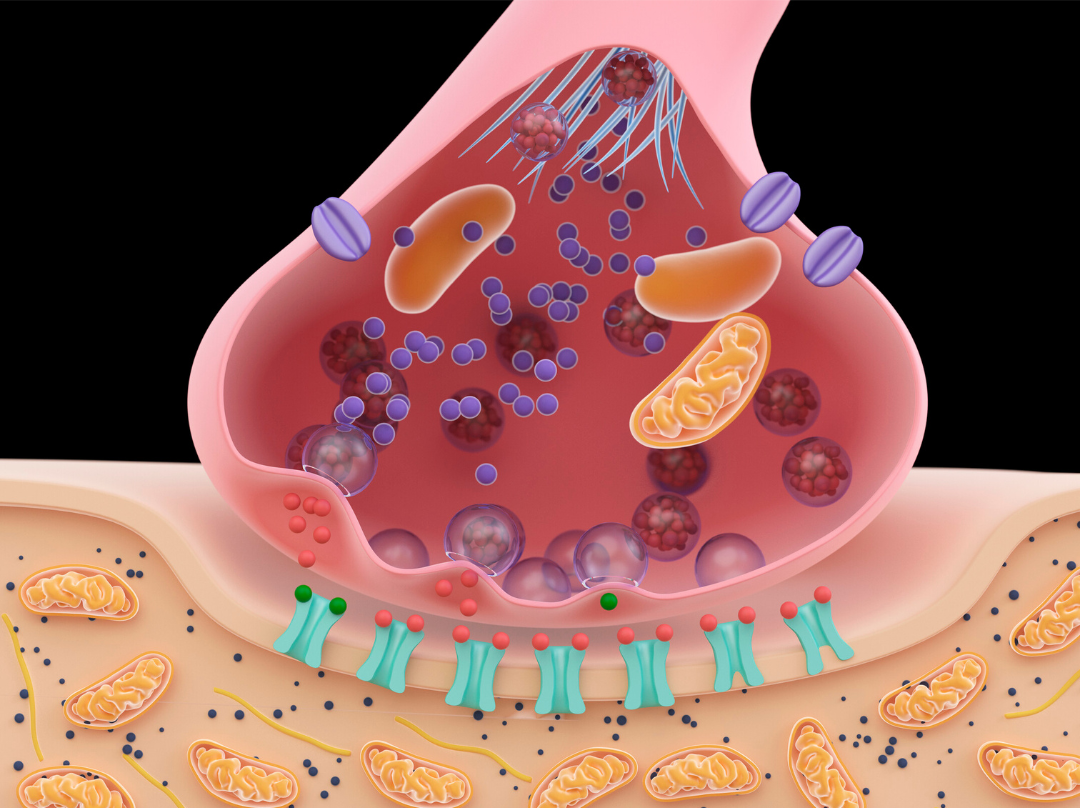
Illustration of a synapse cross-section, showing the presence of mitochondria. (source: Canva Pro)
Mitochondria are present in neurone axons. They are essential for providing energy and regulating calcium levels, which are crucial for axonal function and synaptic transmission. While mitochondria are found throughout the neurone, their distribution and behaviour differ between axons and dendrites.
What to know:
Presence in axons:
Mitochondria are a prominent component of axonal transport systems, meaning they are actively transported along the axon.
Function:
They play a vital role in producing ATP (cellular energy) and regulating calcium levels, both critical for neuronal signaling and maintaining axonal health.
Distribution and dynamics:
Axonal mitochondria exhibit distinct motility patterns, including saltatory and bidirectional movement. They can be stationary or mobile, and their movement is influenced by various factors like neuronal activity and synaptic demands.
Morphology:
In axons, mitochondria tend to be smaller and more sparsely distributed compared to their elongated counterparts in dendrites.
Importance for axonal function:
Mitochondrial distribution and movement are essential for maintaining axonal health, supporting synaptic transmission, and responding to neuronal activity.
How to Support Your Mitochondria
While the article focuses on the science, here are some evidence-based ways to support your mitochondria:
Exercise: Regular physical activity stimulates mitochondrial growth and efficiency.
Balanced Diet: Nutrients like B vitamins, CoQ10, and omega-3 fats support mitochondrial function.
Adequate Sleep: Rest is essential for mitochondrial repair.
Stress Management: Chronic stress can impair mitochondrial health; mindfulness and relaxation practices can help.
Avoid Toxins: Environmental pollutants and certain medications can damage mitochondria.
There’s much more you can do to support your mitochondria. Research highlights several additional strategies and emerging therapies that can further enhance mitochondrial health and function. One well-supported approach is intermittent fasting or caloric restriction. Reducing your calorie intake for specific periods or following structured fasting routines has been shown to stimulate the creation of new mitochondria, improve their efficiency, and help clear out damaged ones — a process known as autophagy. These practices also reduce oxidative stress and inflammation, both of which can harm mitochondria over time.
Targeted supplementation is another area with growing evidence. Certain nutrients and compounds, such as NMN (nicotinamide mononucleotide), resveratrol, spermidine, and fisetin, have been shown to support mitochondrial repair, support energy production, and reduce the build-up of cellular damage as we age. Supplements such as acetyl-L-carnitine, alpha-lipoic acid, and NAD+ precursors also play a role in supporting mitochondrial function, particularly in older adults or those with specific nutritional deficiencies.
Antioxidants are particularly important for mitochondrial health. Mitochondria naturally produce reactive oxygen species (ROS) as a by-product of energy production, which can damage their own DNA and proteins. Antioxidants such as vitamin C, vitamin E, CoQ10, and polyphenols from foods like berries and green tea help neutralise these harmful molecules and protect mitochondrial integrity (e.g., resveratrol).
Magnesium is another key mineral, essential for hundreds of biochemical reactions, including those that take place in mitochondria to produce energy.
The Future of Mitochondrial Science
Mitochondria are much more than powerhouses; they are the masterminds and social networks of our cells, orchestrating health, ageing, and disease in ways we are only beginning to understand. As research advances, therapies targeting mitochondrial function hold promise for treating everything from metabolic disorders to neurodegeneration.
By appreciating and supporting these remarkable organelles, we can unlock new levels of health, energy, and longevity.
References
Barcelos, I. Shadiack, E. Ganetzky, RD. et al. (2020). Mitochondrial medicine therapies: Rationale, evidence, and dosing guidelines. Current Opinions in Pediatry. 32(6), pp. 707-718. doi:10.1097/MOP.0000000000000954
Bassi, G. Sidhu, SK. Mishra, S. (2021). The expanding role of mitochondria, autophagy and lipophagy in steroidogenesis. Cells. 10(8), 1851. doi:10.3390/cells10081851
Bohovych, I. Khalimonchuk, O. (2016). Sending out an SOS: Mitochondria as a signaling hub. Frontiers in Cell and Developmental Biology. 4, 109. doi:10.3389/fcell.2016.00109
Brand, MD. Orr, AL. Perevoshchikova, IV. et al. (2013). The role of mitochondrial function and cellular bioenergetics in ageing and disease. British Journal of Dermatology. 169(Suppl. 2).pp. 1-8. doi:10.1111/bjd.12208
Duarte, A. Poderoso, C. Cooke, M. et al. (2012). Mitochondrial fusion is essential for steroid biosynthesis. PLoS One. 7(9), e45829. doi:10.1371/journal.pone.0045829
Duchen, MR. (2000). Mitochondria and calcium: From cell signalling to cell death. Journal of Physiology. 529(Pt 1), pp. 57-68. doi:10.1111/j.1469-7793.2000.00057.x
Johnson, GA. Krishnamoorthy, RR. Stankowska, DL. (2023). Modulating mitochondrial calcium channels (TRPM2/MCU/NCX) as a therapeutic strategy for neurodegenerative disorders. Frontiers in Neuroscience. 17, 1202167. doi: 10.3389/fnins.2023.1202167
Kowaltowski, AJ. Menezes-Filho, SL. Assali, EA. et al. (2019). Mitochondrial morphology regulates organellar Ca2+ uptake and changes cellular Ca2+ homeostasis. FASEB Journal. 33(12), pp. 13176-13188. doi:10.1096/fj.201901136R
Miller, WL. (2013). Steroid hormone synthesis in mitochondria. Molecular and Cellular Endocrinology. 379(1-2), pp. 62-73. doi: 10.1016/j.mce.2013.04.014
Mori Sequeiros Garcia, MM. Paz, C. Castillo, AF. (2023). New insights into signal transduction pathways in adrenal steroidogenesis: Role of mitochondrial fusion, lipid mediators, and MAPK phosphatases. Frontiers in Endocrinology (Lausanne). 14, 1175677. doi:10.3389/fendo.2023.1175677
Mottis, A. Herzig, S. Auwerx, J. (2019). Mitocellular communication: Shaping health and disease. Science. 366(6467), pp. 827-832. doi: 10.1126/science.aax3768
Osellame, LD. Blacker, TS. Duchen, MR. (2012). Cellular and molecular mechanisms of mitochondrial function. Best Practice & Research Clinical Endocrinology & Metabolism. 26(6), pp. 711-23. doi:10.1016/j.beem.2012.05.003
Picard, M. (2025). The social lives of mitochondria. Scientific American. [Online]
Raimundo, N. Krisko, A. (2019). Editorial: Mitochondrial communication in physiology, disease and aging. Frontiers in Cell and Developmental Biology. 7, 54. doi:10.3389/fcell.2019.00054
Romero-Garcia, S. Prado-Garcia, H. (2019). Mitochondrial calcium: Transport and modulation of cellular processes in homeostasis and cancer (Review). International Journal of Oncology. 54(4), pp. 1155-1167. doi:10.3892/ijo.2019.4696
Rossi, A. Pizzo, P. Filadi, R. (2019). Calcium, mitochondria and cell metabolism: A functional triangle in bioenergetics. BBA Molecular Cell Research. 1866(7), pp. 1068-1078. doi:10.1016/j.bbamcr.2018.10.016
Tait, SW. Green, DR. (2012). Mitochondria and cell signalling. Journal of Cell Science. 125(Pt 4), pp. 807-15. doi:10.1242/jcs.099234
Velarde, MC. (2014). Mitochondrial and sex steroid hormone crosstalk during aging. Longevity and Healthspan. 3(1), 2. doi:10.1186/2046-2395-3-2
Williams, GS. Boyman, L. Chikando, AC. et al. (2013). Mitochondrial calcium uptake. Proceedings of the National Academy of Sciences of the United States of America. 110(26), pp. 10479-10486. doi:10.1073/pnas.1300410110
Zhang, M. Wei, J. He, C. et al. (2024). Inter- and intracellular mitochondrial communication: Signaling hubs in aging and age-related diseases. Cellular & Molecular Biology Letters. 29(1), 153. doi:10.1186/s11658-024-00669-4
Zong, Y. Li, H. Liao, P. et al. (2024). Mitochondrial dysfunction: Mechanisms and advances in therapy. Signal Transduction and Targeted Therapy. 9, 124. doi:10.1038/s41392-024-01839-8