
Are Consumers Empowered to Make Informed Food Choices?
In a world where factory-farmed meat dominates supermarket shelves and ultra-processed foods are more affordable than ever, are consumers truly equipped to make informed decisions about their diets?
With rising health concerns and the growing prevalence of diet-related diseases, this article explores the challenges that shape consumer food choices, the effectiveness of public health campaigns, and the need for innovative strategies to promote healthier eating habits.
The Complexity of Food Choices: What Drives Consumer Decisions?
Many factors influence food choices, including price, convenience, cultural norms, and marketing. For many UK (and worldwide) households, affordability remains a major barrier to accessing nutrient-rich meals. Ultra-processed manufactured food products (UPFs) are often cheaper and more convenient than fresh produce or sustainably sourced ingredients, creating a cycle where unhealthy options dominate the average diet.

How does it make you feel? That’s the true meaning of advertising!
A few examples:
Milk Chocolate Digestive Biscuits (300g) - £0.80 + Flavoured Crisps/Tortilla Chips (46g/200g) - £0.50 + Chocolate Snack Bar (21g) - £0.31 + Can of Ultra-sweetened Fizzy Drink - £0.50 = £2.11 (Tesco)
Salad Bowl with Industrial dressing (275-300g): £2.80 (Waitrose), £3.00 (Sainsbury’s), £4.00 (Ocado), £5.50 (M&S) — add £1 for added animal protein
Salad Bag Mixed Leaves Organic (200g): £2.85 (Ocado), (100g) £2.50 (Waitrose)
This displays the giant problem supermarkets have created and their undeniable role in the decline in human health. Supermarkets = Loss of high street food stores (butcher, fishmonger, etc.) and communities.
No supermarkets, no UPFs!
Your wallet and food choices dictate what goes on in the world!
“We tend to eat with our eyes and not for nourishment. Eating with your eyes is a mindset. We tell ourselves, ‘That looks good,’ so in other words, ‘That must taste good.’
In actuality, we need to change our mindset and ask, ‘Is that an essential nourishment for my body?’ How do we stop eating with our eyes and have a livable solution to a healthy diet?”
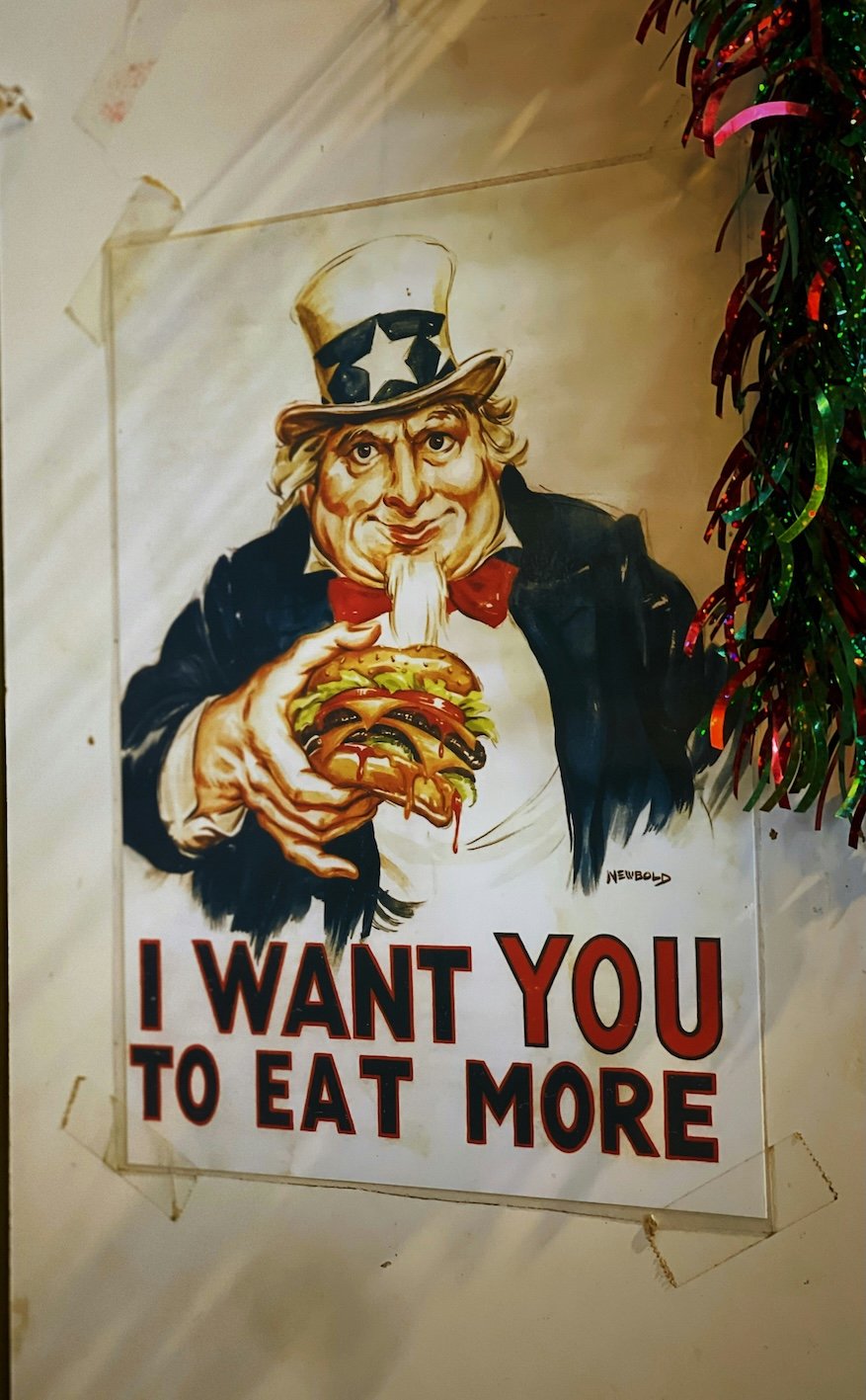
Could this be the perfect example of a marketing campaign? Psychology is used at every step of food design, and that includes colourful labels, brand names and the choice of colours — and then developing additives to make consumers addicted to junk food. Food manufacturers are currently developing triggering ingredients to bypass Ozempic and similar compounds because people on these drugs tend to eat less and buy less. This again proves that their revenues are more important than your health.
Psychological factors also play a significant role. Stress and mood can profoundly influence dietary patterns, often leading to unhealthy habits. For example, prolonged work stress may result in skipping meals, constant snacking (grazing), or overconsuming calories when sleep is disturbed and the eating window is expanded. Studies show that stress can reduce concerns about weight control and increase cravings for high-calorie foods. This highlights the need for targeted interventions addressing emotional and practical barriers to healthier eating.
Public Health Campaigns: Are They Effective?
The UK has launched several initiatives to improve public health through dietary changes, including 5-A-Day, Change4Life and EatWell by the NHS, and Check the Label (FSA). These campaigns set aspirational targets and encourage lifestyle modifications but often fail to address systemic inequalities in food access.
Contrast this with Spain’s Right to Food campaign, which takes a more holistic approach by examining political, economic, and cultural barriers to nutrition. This initiative promotes traditional recipes alongside education about industrialisation’s impact on eating habits. Such strategies could be equally beneficial in the UK, where convenience and industrialised food systems dominate consumer behaviour.
The National Institute for Health and Care Research (NIHR) suggests that “media campaigns appear more effective when intense, long-running and well-targeted to a population group.” Scare tactics have proven successful in campaigns against smoking or promoting vaccinations but have shown limited impact on eating behaviours. This raises questions about whether current efforts to promote healthy eating are sufficient or require a more innovative approach.
“An obesity crisis is being caused by increasingly unhealthy changes in our food environment. This includes what food products are available to buy, their affordability and what they are made from. It also includes other factors, such as our exposure to marketing and promotions, the time available to buy and prepare food and whether we eat at home or out of the home.
Over more than 30 years, in relative terms, food and drink in the UK has become cheaper, more calorie dense, and higher in saturated fat, salt and sugar. Products high in fat, salt and sugar (HFSS) have become more available, more promoted and more advertised. These shifts in the food environment have had corresponding impacts on purchasing behaviours and food and nutrient intakes. The National Diet and Nutrition
On average, the UK population does not meet government recommendations for a well-balanced and healthy diet.”
“On average, the UK population does not meet government recommendations for a well-balanced and healthy diet.”
This is an extract of the Government response to the House of Lords Food, Diet and Obesity Committee’s report 'Recipe for health: A plan to fix our broken food system.’ Published 30 January 2025.[1]
The paper also highlights that in 2022, around 64% of adults in England were living above a healthy weight, that by the time children finish primary school, 22.1% are obese, that obesity prevalence increases with deprivation, and that inequalities in weight outcomes have gradually risen over time. Children aged 11 years living in the most deprived parts of England are over twice as likely to be living with obesity compared with the least deprived areas.
These are serious challenges to our health, the NHS and the economy. Obesity is one of the main causes of ill health, economic inactivity and premature mortality.
Here is the government claim: ”Through the health mission and 10-Year Health Plan, we will shift our NHS away from a model geared towards late diagnosis and treatment, to a model where the NHS focuses on prevention, with more services delivered in local communities. Our goals will only be achieved through stronger, more proactive action on prevention.”
Despite being a great initiative, it still needs to be seen. As long as the deep pockets of the ultra-processed food industry are overflowing, spilling into the donation boxes of political parties, there are bound to be many challenges and delays on the way. The report notes that the FSA, cited as an example, “should be transparent and independent of industry,” and everyone at the highest levels of the government should be responsible and accountable.
Wouldn’t this be the right pathway to health?
This is what the report suggests:
“The Government should introduce a new overarching legislative framework for a healthier food system.
This legislation should require that the Government publish a new, comprehensive and integrated long-term food strategy, setting out targets for the food system and the Government’s plans to introduce, implement and enforce policy interventions to achieve those targets.
As part of this new legislative framework, the Food Standards Agency (FSA) should be given oversight of the food system. This oversight role should be transparent and independent of industry. It should include monitoring and reporting annually to Parliament against targets for sales of healthier and less healthy foods, on the overall healthiness of diets, on related national health outcomes, and on progress against Government strategy.
The Secretary of State for Health and Social Care should be accountable to Parliament for progress made against these objectives.
The Prime Minister and the Chancellor of the Exchequer should play key leadership roles in enforcing and delivering this programme.”
Here is another point made to highlight the role of the food industry
“The government must:
Now make a decisive shift away from voluntary measures to a system of mandatory regulation of the food industry.
Fundamentally reshape the incentives for the food industry through a coherent and integrated set of policy interventions to reduce the production and consumption of less healthy foods, and drive production and sales of healthier foods.
Exclude food businesses that derive more than a proportion of sales (to be defined by the Food Standards Agency) from less healthy products from any discussions on the formation of policy on food, diet and obesity prevention.
Devise and publish by the end of 2025 a code of conduct on ministerial and officials’ meetings (whether in-person or virtually) with food businesses, to be employed consistently across all government departments.”
Do you see this happening? Wouldn’t the food industry take the food chain hostage?
This is hinted at in the report:
“The government engages with a wide range of food industry stakeholders which is vital to understand changes and risks in the food supply chain. A good example of the value of this engagement was during the COVID-19 pandemic when there were significant disruptions to food availability. Engagement to understand how policy can impact different parts of the food system is an important part of the process to inform effective policy development and an essential step towards future goals.”
Let’s see what the future brings. For now, let’s focus on another issue:
Factory-Farmed Meat vs. Lab-Grown Alternatives: A Nutritional Debate
The debate over lab-grown meat highlights the complexity of consumer attitudes toward food innovation. While factory-farmed meat is widely consumed despite its nutritional shortcomings, lab-grown meat faces significant resistance due to its perceived “unnaturalness.”
It is big business! Optimistic suggestions give the global cultivate-meat market a potential size of $25 billion by 2030. Yet, a survey revealed that 35% of meat eaters and 55% of vegetarians find lab-grown meat unappealing.[2]
There is also a great concern about the final product and processes used along the way. “Since developing the first prototypes, companies have been able to reduce production costs by 99 per cent.”[2] This is extremely worrying and just shows that, as always, cost is the driver, not quality, not nutrition and certainly not public health.
If lab-grown meat is supposed to be the alternative to a better environment by erasing grazing animals from the face of the earth, then consumers are missing the point entirely because the machinery and processes will require raw products to be shipped to a factory from various parts of the world, use a humongous amount of energy and pollute the atmosphere — and dispatch the final product to many countries, creating an environmental disaster. Currently, cows, for example, do not pollute the atmosphere, as we are led to believe by a bunch of people with a clear agenda: The masses should not be allowed to eat “real” meat; this is a luxury for the elite only (refer to the last COP29 menu, a so-called meeting to address climate change with over 400 private jets used by attendees).[3] Their obvious attempt to feed us cricket (and cricket flour) under the pretext it is more environmentally friendly and good for us when all there is that it is cheap to produce and requires no effort whatsoever…
Lab-grown meat is produced by cultivating animal stem cells in controlled environments. It offers ethical advantages by eliminating the need for slaughter. Is that all? What happened to the environmental impact of grazing animals and the current aim to destroy their gut by giving them drugs to stop them farting…?
However, concerns about cost, safety, and nutritional value persist. The Food Standards Agency (FSA) works closely with companies to ensure these products meet rigorous safety standards before hitting UK shelves within two years. (Plenty of time to write cheques, wouldn’t you say?).[4]
Interestingly, there is limited public awareness about how farming practices affect meat’s nutritional quality. Grass-fed meats contain higher levels of Omega-3s than factory-raised meat — organic adds another layer as meat does not contain traces of antibiotics and growth hormones —, yet this information is primarily promoted by naturopaths rather than mainstream health bodies. Consumers may struggle to make informed choices without proper education about the nutritional differences between factory-farmed and lab-grown options.
Changing Mindsets Around Healthy Eating
Why do unhealthy foods often win over healthier options? The answer lies in marketing psychology. Studies show that high-calorie foods like burgers or sugary treats trigger faster neurological responses than images of fruits or vegetables. This suggests that promoting healthy foods requires more creative marketing strategies.
Well, if we look at current advertising campaigns, they always target reward systems and psychological triggers like “you deserve a break” and “open happiness.” You know it is not true, but you still unconsciously fail for it.
The aim is to promote healthy eating and dramatically reduce the advertisement of high-calorie foodstuff and ultra-sweetened sodas. These products should never be advertised on kids’ TV programmes and video platforms.
Key Strategies for Promoting Healthy Eating:
Visual Appeal: Use vibrant imagery on social media to make healthy meals look enticing.
Descriptive Labeling: Highlight taste and indulgence alongside health benefits.
Cultural Reframing: Shift perceptions of healthy eating from restrictive to enjoyable.
For example, some subscription-based meal delivery companies have successfully marketed convenience alongside nutrition by offering customisable plans tailored to individual needs. Similar innovative approaches could be used to promote fresh produce and whole foods.
The Role of Policy in Shaping Food Environments
Government policies play a crucial role in creating healthier food environments. Recent measures include banning high-caffeine energy drinks for children under 16 and restricting promotions of unhealthy foods at checkouts and aisle ends. These regulations aim to reduce calorie consumption among children while generating long-term savings for the NHS.
Additionally, local authorities have stronger powers to block new fast-food outlets near schools.[1] This represents a bold step toward tackling childhood obesity but raises questions about whether similar restrictions should apply more broadly across communities.
The government’s Food Data Transparency Partnership (FDTP) is another promising initiative to hold large food businesses accountable for selling unhealthy products. By mandating reporting on the healthiness of food sales based on the Nutrient Profiling Model, policymakers hope to incentivise healthier offerings across retail settings.
“Large food businesses must be held to account for selling unhealthy food and drink.”
Empowering Consumers: Education as the Key
To truly empower consumers, education must go beyond basic public health campaigns. It requires addressing misconceptions about nutrition while providing actionable tools for making better choices.
Practical Steps for Consumer Empowerment:
Nutritional Literacy: Teach consumers how to read labels and understand ingredient lists.
Accessible Resources: Provide free workshops or online meal planning and cooking courses.
Community Support: Foster local initiatives that connect consumers with farmers’ markets or regenerative agriculture programs.
Investing in education also means leveraging technology like augmented reality (AR) or virtual reality (VR) to create immersive experiences that showcase healthy food options. For example, interactive apps could allow users to visualise recipes using seasonal produce or calculate nutrient profiles for meals they plan to prepare.
Eating should be taught at school from a very young age. Basic cooking was part of the school curriculum for French pupils aged 9-11.
Bridging Awareness and Action
Consumers face significant challenges in making informed food choices due to economic pressures, marketing influences, and limited access to nutrition education. While public health campaigns have made strides in promoting healthier lifestyles, much work must be done to address systemic barriers and reshape mindsets around food.
By combining policy-driven changes with innovative marketing strategies and learning from global examples like Spain’s holistic approach, the UK and other countries can create a more informed population capable of making choices that benefit their health and the planet.
The path forward requires collaboration among policymakers, educators, marketers, and consumers. Together, we can build a future where nutrition takes centre stage—not just as an individual responsibility (by making them feel guilty for burdening healthcare systems) but as a societal priority.
Wouldn’t you agree?
Sources
1. Department of Health & Social Care (UK). (2025). Government response to the House of Lords Food, Diet and Obesity Committee’s report ‘Recipe for health: A plan to fix our broken food system.’ Available at: https://buff.ly/2OWPl7S [Accessed 3 Apr 2025]
2. Brennan, T. Katz, J. Quint, Y. et al. (2025). Cultivated meat: Out of the lab, into the frying pan. Available at: https://www.mckinsey.com/industries/agriculture/our-insights/cultivated-meat-out-of-the-lab-into-the-frying-pan [Accessed 3 Apr 2025]
3. Euronews. (2024).
4. Cupriak, A. (2025). Lab-grown food set to hit British shelves in two years. Farmers Guide. Available at: https://www.farmersguide.co.uk/business/food-drink/lab-grown-food-set-to-hit-british-shelves-in-two-years [Accessed 3 Apr 2025]