
Why You Can’t Slow Down Even When Exhausted: The Dysregulated Nervous System Trap (And How to Escape It)
You collapse onto the sofa, utterly spent. Yet instead of feeling calm, your mind races. Your shoulders tighten up. Sleep becomes a problem. Even “doing nothing” feels wrong.
This isn’t laziness or failure. It’s sympathetic dominance; a dysregulated nervous system stuck in survival mode, refusing to downshift even when your tank is empty.
In polyvagal terms, your system is caught between fight‑or‑flight (sympathetic activation) and functional freeze (dorsal vagal shutdown), neither of which is true rest. The result is a body that appears to function but feels perpetually wired, tense and depleted.
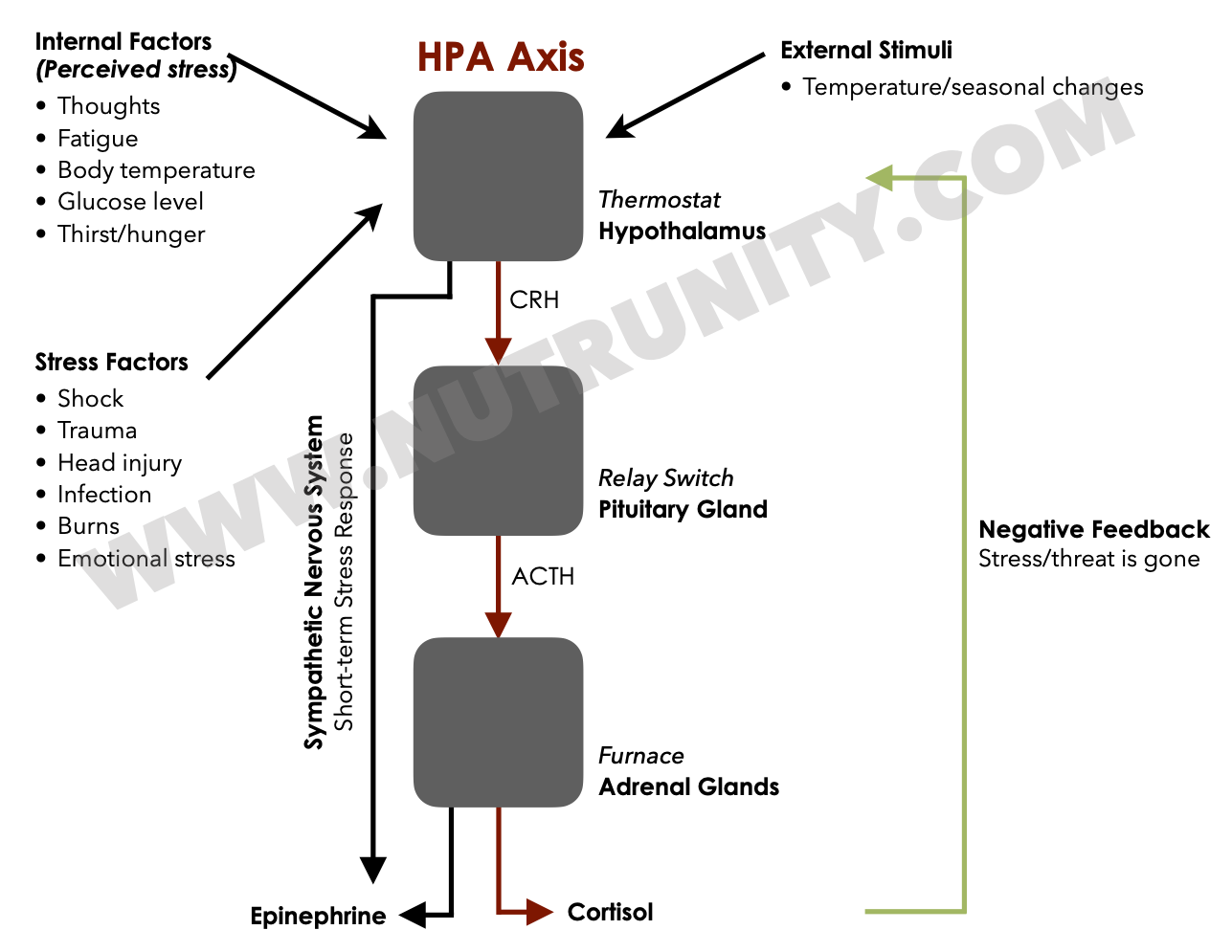
The Physiology of “Tired But Wired”
Your autonomic nervous system has three main states:
Ventral vagal (social engagement): Safe, connected, creative, present. This is where rest and recovery (healing and repair) happen.
Sympathetic (fight/flight): Mobilised for action. Useful in short bursts, exhausting when chronic.
Dorsal vagal (shutdown): Protective freeze. Energy conservation at the cost of numbness, dissociation and fatigue.
Chronic stress, inflammation, and chronic infections, trauma, sensory overload and essential nutrient depletion tip most people into sympathetic dominance or functional freeze. You feel exhausted because your body is exhausted, but it can’t rest because it doesn’t feel safe enough to try.
Signs You’re Stuck in Sympathetic Dominance
These patterns are your nervous system’s SOS:
Physical tension despite fatigue: Tight jaw (or grinding teeth during sleep), shoulders up to your ears, shallow, rapid breathing, clenched fists.
Mental agitation: Racing thoughts, irritability, inability to “switch off,” constant low‑hum worry.
Sleep issues: Trouble falling asleep (sympathetic), or waking feeling unrefreshed (freeze).
Digestive chaos: IBS, bloating, reflux (digestion gets deprioritised in survival mode).
Emotional flatness: Numbness, disconnection, “going through the motions” without joy or spark.
If this sounds familiar, your system isn’t “broken.” It’s over‑adapted to threat (real or perceived) and needs deliberate recalibration.
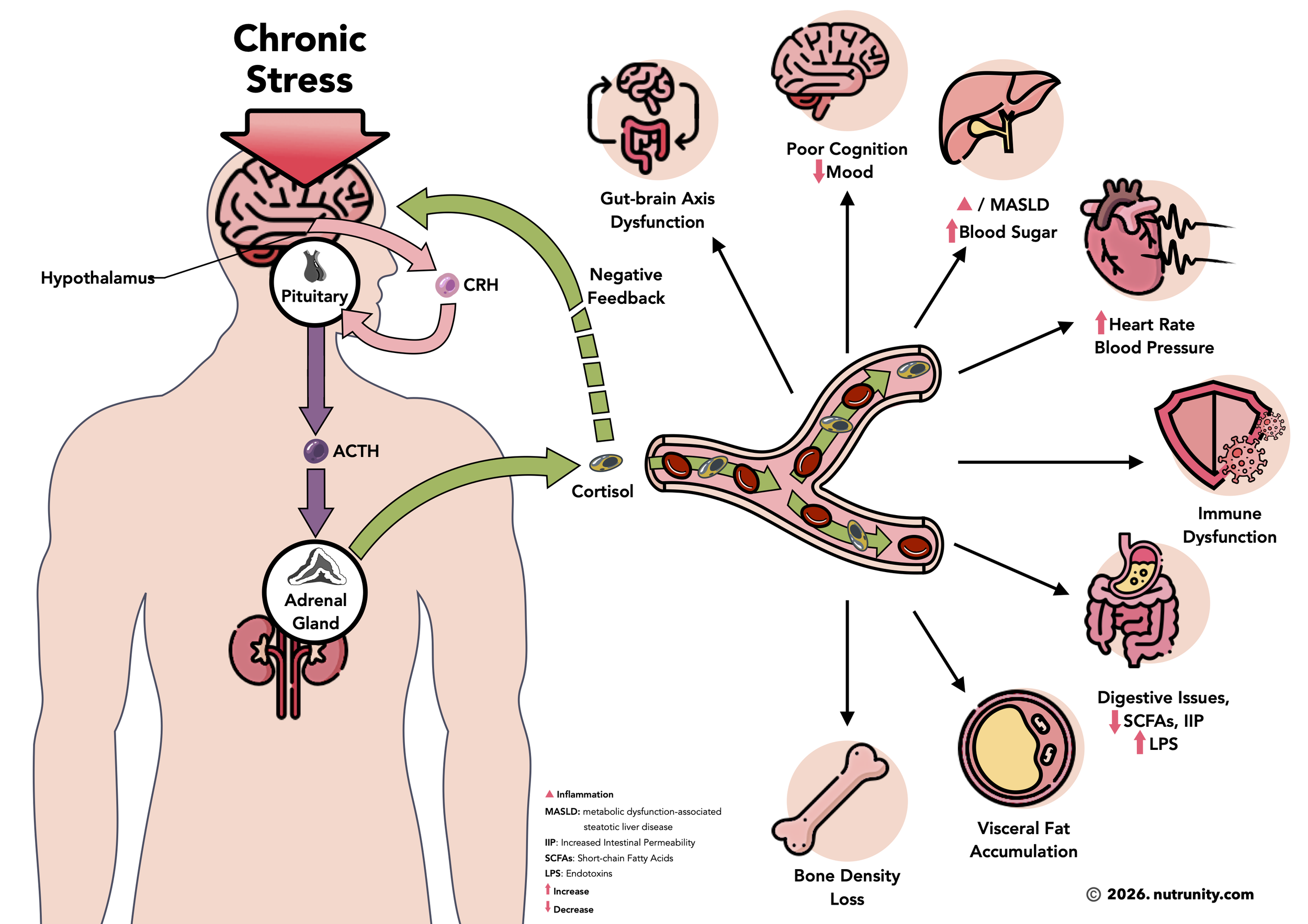
Why Your Nervous System Won’t Let You Relax
There may be a few factors involved or a combination of them:
Threat detection system. Your brain scans for danger 24/7. Unresolved stress, shame, lack of purpose, or uncertainty keeps the “red light” flashing.
Ego. Imaginary futures (“What if I fail?”) feel as dangerous as tigers. The sympathetic system treats them the same.
Nutrient depletion. Chronic stress requires vast amounts of energy, magnesium, potassium and B vitamins, which are needed to turn off the stress response.
Absence of negative feedback. Without ventral vagal activation (connection, safety), the system stays in defence.
The irony? You push harder, thinking it will “fix” exhaustion. It just makes it worse, and your symptoms affect your day-to-day activities, deeply impacting your quality of life.
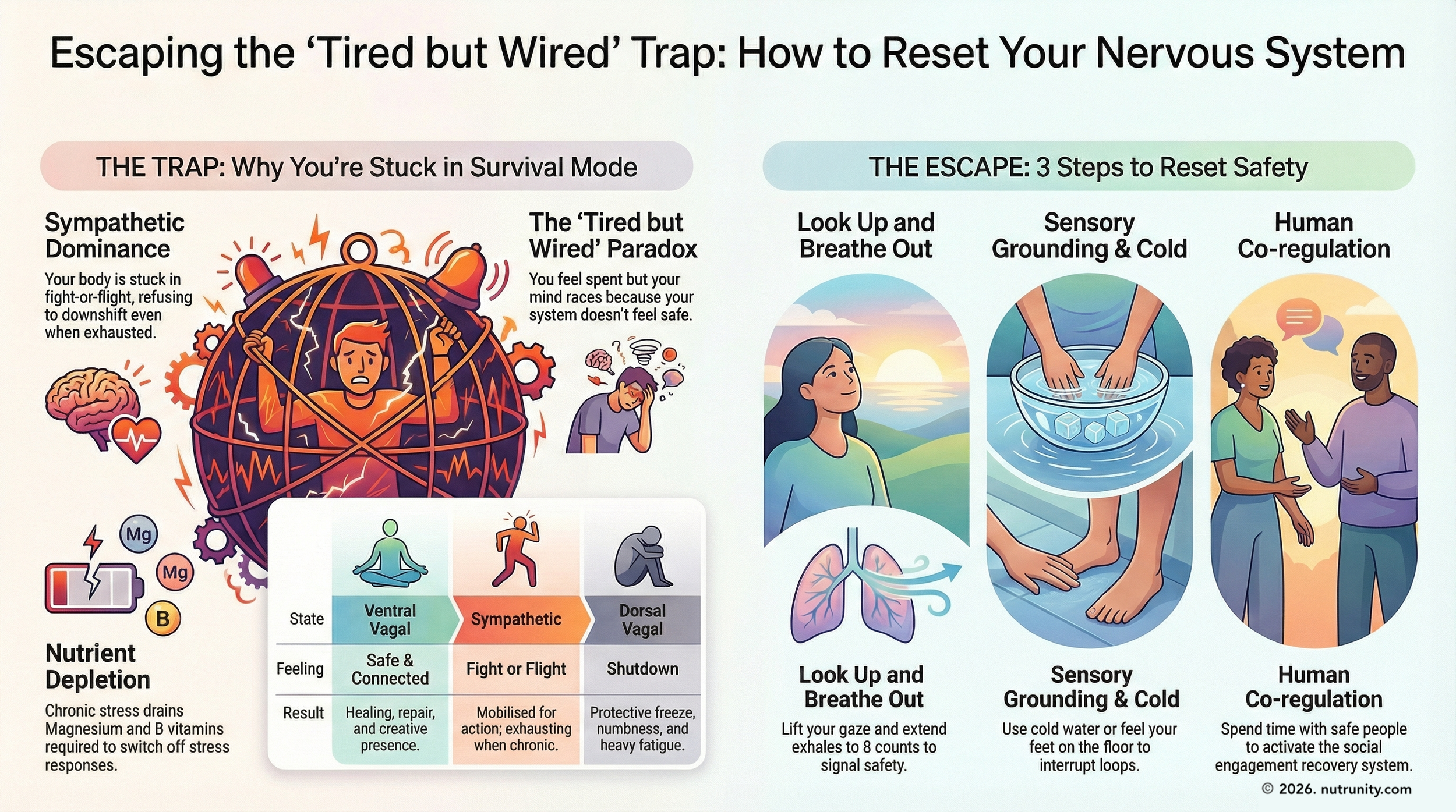
7 Steps to Reset Your Nervous System
Escape requires physiological signals of safety, not just “relax more.”
1. Choose Safety (1–2 minutes, multiple times daily)
Pause. Look around slowly, left to right. If you notice yourself looking down too often, lift your gaze. This tricks the brain into seeking positivity because it assumes danger lies ahead. This explains why anxious or depressed people hunch their shoulders and look down. The brain doesn’t expect you to look up because you are looking away, and you can only do that if you feel safe. Looking up gently reminds your brain that you are safe and in control. That’s why looking up is associated with positivity.
Looking up may also bring to your attention things you probably missed. For example, architectural ornaments on a building, the moon in the afternoon sky, or a flock of birds flying in harmony.
Name 3 things you can see, 2 you can hear, and 1 you can feel.
Say to yourself: “I am here. I am safe.”
This interrupts freeze and sympathetic loops by activating the ventral vagal pathway.
2. Extended Exhalation Breathing (3–5 minutes)
Sympathetic dominance = short, shallow breaths. Flip it:
Inhale for 4 counts through the nose.
Exhale for 6–8 counts through pursed lips.
Repeat 10 rounds.
Longer exhales stimulate the vagus nerve and signal “no danger.” Humming also works if you feel you can’t exhale for long.
3. Sensory Grounding in Ordinary Moments
Tune into your body instead of fleeing it:
Feel your feet on the floor.
Notice the weight of your hands.
Taste your next sip of water fully. Is it ice cold or warm? How does it feel? Use all your senses.
Presence tells your brain “this moment is safe,” expanding time perception.
4. Cold Exposure (30–60 seconds)
Cold water on face, cold shower end, or hands in ice water:
Shocks the sympathetic system into reset, increases dopamine levels and builds stress resilience.
5. Co‑regulation (Human Connection)
Spend time with someone whose presence feels safe:
A walk with a trusted friend.
Hugging (releases oxytocin).
Eye contact and real listening.
Ventral vagal thrives on safe social engagement.
6. Magnesium + Cofactors for Tension
Depleted magnesium keeps sympathetic firing. Stack it with:
B6, vitamin D, zinc, and K2 for absorption and function.
Foods: pumpkin seeds, spinach, dark chocolate.
Calms nerves, improves sleep, and reduces muscle tension.
7. Micro‑movements (Not Intense Exercise)
Gentle swaying, rocking, slow walking in nature:
Proprioceptive input soothes dorsal vagal freeze without sympathetic activation. Think Pilates or Qi Gong.
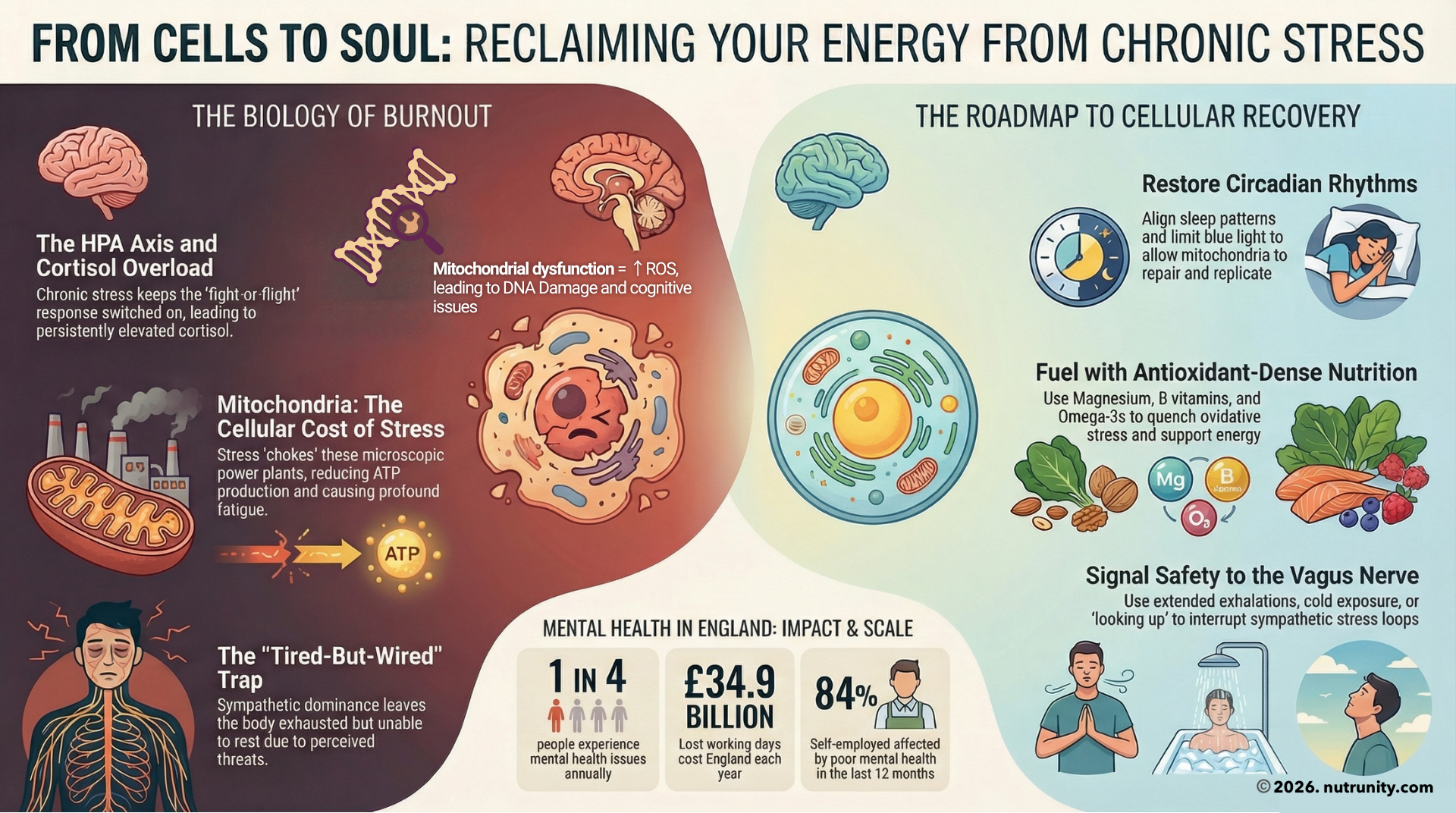
The Real Reason You Haven’t Fixed This Yet
Most advice is surface‑level: “breathe,” “meditate,” “exercise.”
Those help if your system trusts them. But when sympathetic dominance is entrenched, they feel like “one more thing to do,” reinforcing the cycle of exhaustion.
You need a protocol that physiologically convinces your body it is safe to rest, recover and reconnect. That’s where comprehensive stress management comes in.
The Invitation to Wholeness
Plato believed humans were split in half, forever searching for their missing piece.
Neuroscience reveals the truth: wholeness is a physiological state. A nervous system that trusts its environment. A brain that can rest, create and connect. A body that feels like home.
You are not broken. You are over‑adapted.
The decision before you is simple: keep surviving, or start living?
A comprehensive stress management consultation maps your unique dysregulation, rebuilds your safety signals, and gives you the tools for a life that feels spacious, vital, and whole.
Book now. Your nervous system — and your life ahead — is waiting.