
Are you looking to contribute to our platform?
For recipes and healthy eating
Access articles by categories
- Mental Health 50
- Stress 45
- Inflammation 40
- Gut Health 34
- Health 29
- Mindfulness 25
- Burnout 21
- Stress Management 20
- Anxiety 18
- Detox 13
- Diet 13
- Nutrition 12
- Sleep 12
- Neuroinflammation 11
- Toxins 11
- Healthy Eating 10
- Health Tips 9
- Hormones 9
- Immunity 9
- Liver 8
- Obesity 8
- Core Values 7
- Magnesium 7
- Metabolic Syndrome 7
- UPFs 7
- Brain Health 6
- Leaky Gut 6
- Mental Health Awareness 6
- Mental Health and Well-being 6
- Metabolic Health 6
- Pollution 6
- Self-care 6
- Self-growth 6
- Vitamins and Minerals 6
- Depression 5
- Gut Microbiome 5
- IBS 5
- Journaling 5
- Neurodegeneration 5
- Resilience 5
- Weight Loss 5
- Alzheimer's 4
- Collagen 4
- Detoxification 4
- Diabetes 4
- Digestion 4
- Emotional Freedom 4
- Energy 4
- Exercise 4
- Fatigue 4
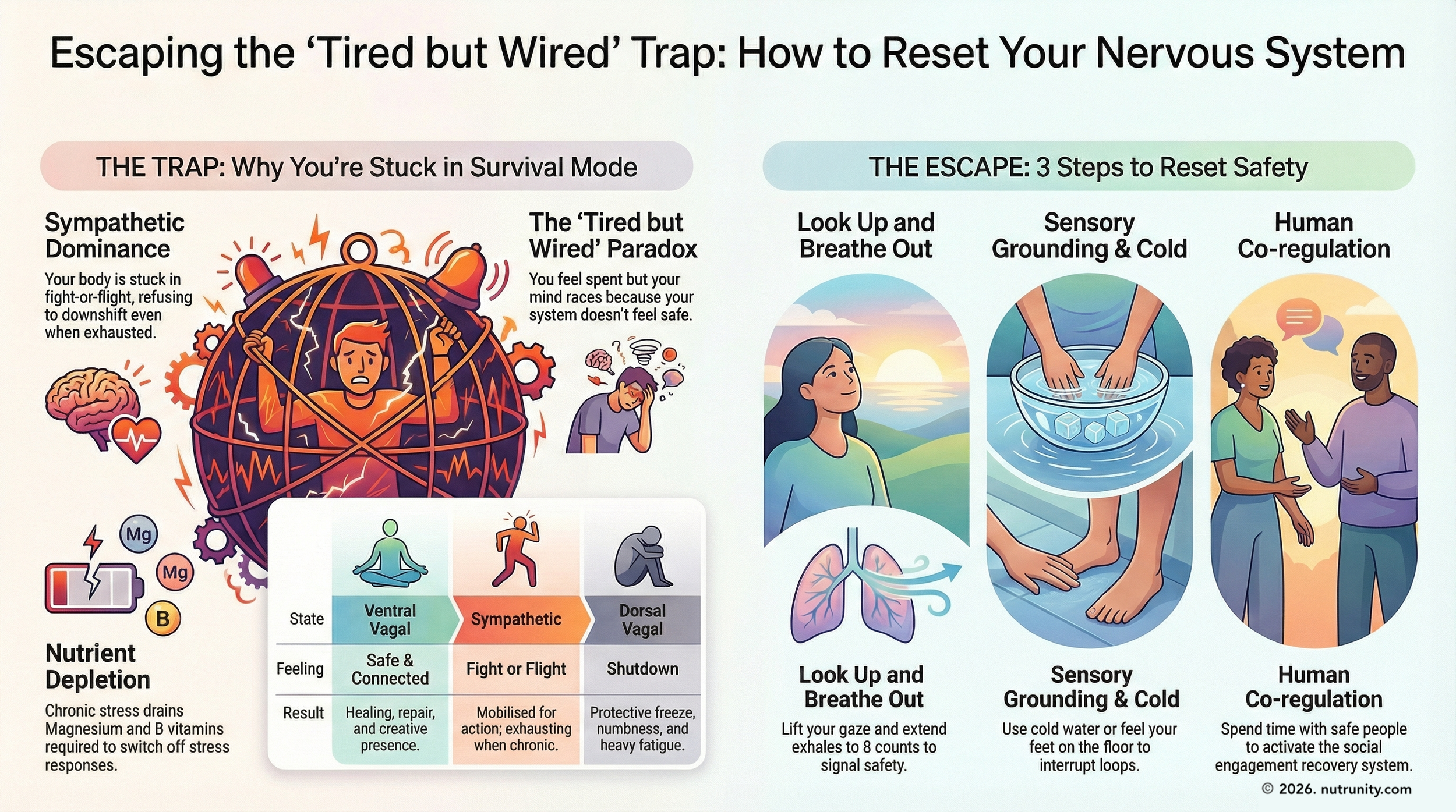
Why You Can’t Slow Down Even When Exhausted: The Dysregulated Nervous System Trap (And How to Escape It)
Why You Can’t Slow Down Even When Exhausted: The Dysregulated Nervous System Trap (And How to Escape It)
You collapse onto the sofa, utterly spent. Yet instead of feeling calm, your mind races. Your shoulders tighten up. Sleep becomes a problem. Even “doing nothing” feels wrong.
This isn’t laziness or failure. It’s sympathetic dominance; a dysregulated nervous system stuck in survival mode, refusing to downshift even when your tank is empty.