
How to Regain Your Focus. 5 Ways to Take Back Your Body and Soul in the Age of AI
This is not my first article on AI and its impact on our lives and mental health, and it won’t be the last, as we increasingly see the sudden predominance of AI in everything we do.
You can track your sleep, optimise your productivity, monitor your glucose, and manage your calendar down to the minute, and still feel unwell, restless and burned out.
We now live in a time when personal technology can help us streamline nearly everything. Efficiency, productivity, and data-driven well-being are all at our fingertips. But what happens when convenience replaces connection? When does even self-care become performance?
Beneath the surface lies an undercurrent of tension; our minds over-stimulated, and our values increasingly outsourced. Authenticity is no longer at the centre of everything we do. Does this mean we’re losing our soul, everything that makes us intelligent beings, humans even?
This article explores how digital systems designed to enhance our lives can lead, systemically, toward fatigue, anxiety, and disconnection, and how we can consciously realign with what makes us feel alive, rather than merely operational.
The Silent Cost of Convenience
Technology often helps us with the tasks we would rather not do. With a few taps, we order meals, attend meetings, and manage our day without ever engaging our brain or even the body in meaningful ways. While these systems may reduce effort, they also strip away the micro-movements and intuitive feedback we once relied on to maintain balance.
We no longer ask: How do I feel? We check a display. Fitness scores, sleep trackers, hydration reminders, and recovery metrics have turned internal signals into quantified outputs.
However, these tools can narrow our relationship with bodily awareness. Sleep tracking can make rest a chore, something that we must do when prompted. Heart rate monitoring can turn movement into micromanagement. Even the act of eating is increasingly governed by macros, glucose curves, and gut apps, many of which have poor science backing them.
Research into interoception, our ability to perceive internal bodily states, suggests that chronic interaction with screens and devices may dramtically affect this sensitivity. Over time, we struggle to notice when we’re exhausted, satiated, or emotionally dysregulated until our systems crash.
The body becomes data, and in the process, we forget what it means to inhabit it.
The Attention Economy is Stealing More Than Your Time
We tend to think of distraction as an annoyance. Time is money after all, right? We witnessed the rise of the self-made “entrepreneur,” CEO of their own life, working every angle to make it, monetise it, go viral trying, or break.
For a select few, it paid off. But what about everyone else?
The majority never break through. Not because they’re lazy or they don’t have a good concept, but because the system was never built for most of us to win. The attention economy rewards volume, virality, voracity and velocity, not depth, balance, or care because they are stained by relentlessness and ruthlessness. Distraction isn’t just a lapse in focus anymore. It may a condition of survival for those forced to perform constantly, burning the candle at both end, just to stay afloat in a world where stillness looks like failure.
We’re not just losing time. We’re losing what anchors us; our focus, our attention to meaning, relationships, and rest. The grind promises glory and delivers burnout. And somehow, we’re still told the problem is we’re not trying hard enough.
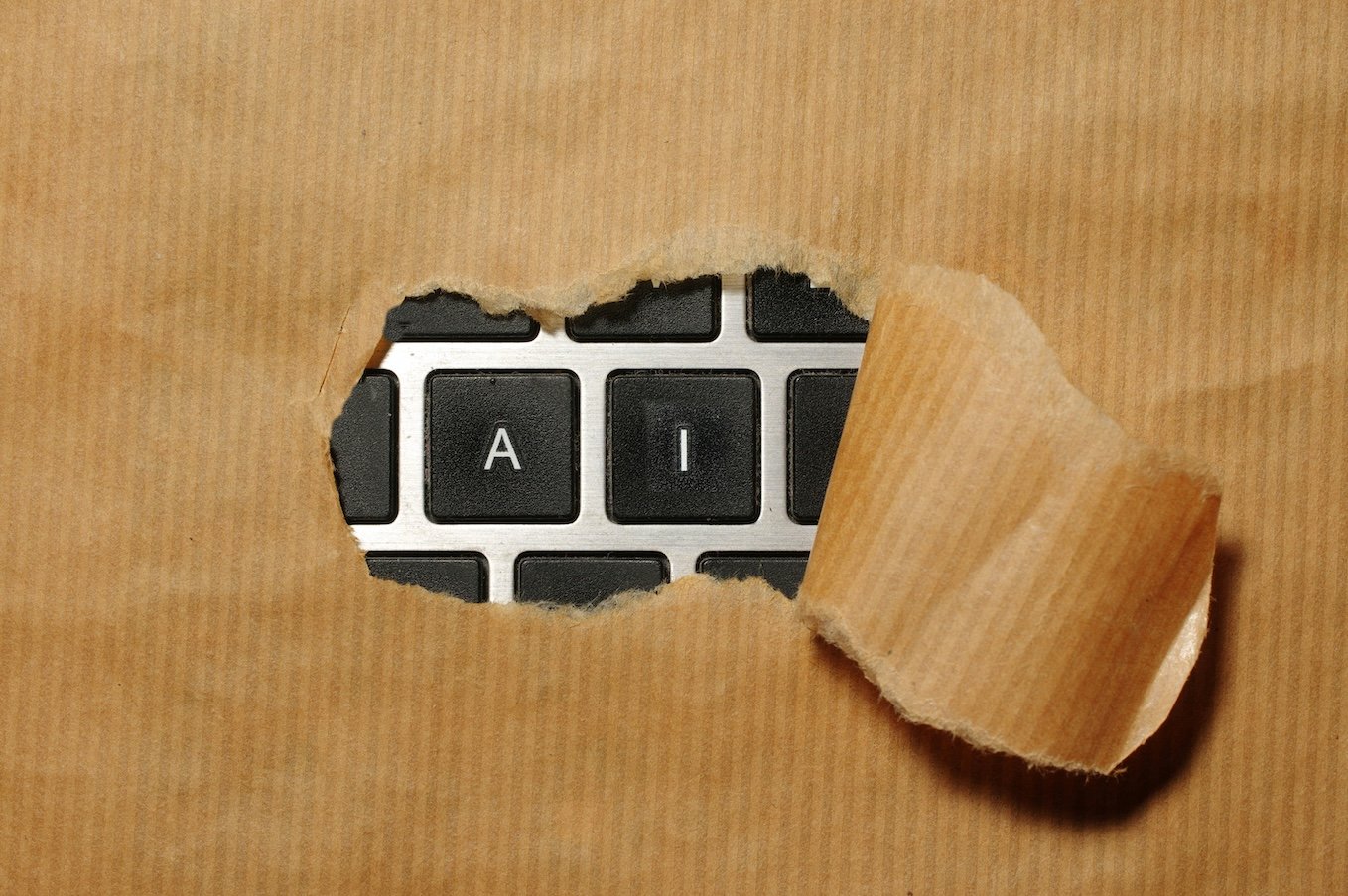
Can you still call it pride in results if the credit belongs to AI?
“The attention economy rewards volume, virality, and velocity, not depth, balance, or care. Distraction isn’t just a lapse in focus anymore. It’s a condition of survival for those forced to perform constantly, just to stay afloat in a world where stillness looks like failure.”
Humans evolved to focus in bursts, alternating between engagement and rest. Today, we live in a world monopolising our attention; we are constantly bombarded by information; information that requires something from us (our attention, our money or an emotional response, including from our devices, road signs, ads, the news, etc.). Notifications, rapid context switching, and feeds packed with emotional triggers hijack cognitive bandwidth and long-term memory consolidation. What’s easily scrolled through isn’t easily retained.
Put a few seconds or a minute of advertising in between, and your brain is completely overwhelmed.
Studies in cognitive neuroscience show that frequent digital multitasking reduces working memory, impairs task-switching efficiency, and increases stress-related biomarkers. But more than cognitive fatigue, there’s an existential cost: we’re left feeling busy yet inexplicably unfulfilled.
In relationships, even micro-distractions prevent us from being present. Putting your phone on the dining table or looking at your phone mid-conversation can corrode trust and emotional safety and lead to resentment. Psychologists now describe this as “technoference,” the intrusions of digital technology that disrupt human connection.
And in solitude, algorithmic content feeds can distort identity itself. Social media disproportionately amplifies beauty or success, and flattens nuance. We’re inundated with fragments of other lives, while detaching from the full texture (and context) of our own.
“Psychologists now describe this as “technoference,” the intrusions of digital technology that disrupt human connection.”
Self-Optimisation as a New Form of Burnout
When everything can be tracked, gamified, and improved, even rest becomes a task to measure. The wellness industry has, paradoxically, created an arms race of self-improvement that often bypasses actual well-being.
You may notice signs of this yourself: setting alarms for relaxation or remind you to drink water, ranking sleep with a readiness score, or feeling guilty for not meditating “enough.” Most concerningly, emotional exhaustion becomes challenging to identify because the external results look fine; you’re productive, you’re organising your days, you’re “keeping up.” Yet inside? You’re drained, physially and emotionally, and there isn’t an app for this.
This isn’t a weakness. It’s a sign of misalignment.
Burnout, as defined in occupational health literature, is a state of emotional depletion, reduced efficacy, and a disconnection from your sense of meaning — you’ve lost your life purpose and, often, why you were pushing so hard in the first place. When tools begin to dictate your sense of success rather than reflect it, you trade authenticity for efficiency, and pay with your vitality, and your mental health.
Claims That AI Efficiency Will Save Us Are Neither New nor True
As artificial intelligence continues to capture the public imagination, alternating between dazzling breakthroughs and conspicuous failures, its most ardent advocates point to promised productivity gains as reason enough to tread lightly on regulation. But this optimism, while not unfounded, risks overlooking a crucial truth: exponential tools demand exponential responsibility.
Venture fund ARK Invest predicts that “during the next eight years, AI software could boost the productivity of the average knowledge worker by nearly 140%, adding approximately $50,000 in value per worker, or $56 trillion globally.” Accenture claims that “AI has the potential to boost labour productivity by up to 40 per cent in 2035 . . . enabling people to make more efficient use of their time.”
But are we really benefiting, now and in the long term?
The tension between accelerating innovation and safeguarding public interest is no longer theoretical. AI systems already influence hiring decisions, cancer diagnoses, creative industries, and geopolitical narratives. When they fail — and they do — the consequences aren’t just technical; they’re social, economic, and deeply human. More and more, AI comes up with answers like: “I lie to you because I didn’t want you to be disappointed.” Now what happens when a doctor, instead of using his training, asks AI instead and AI, like a human, lies about the treatment protocol? What happens to the patients?
The recent Global Innovation Index raises concerns that “considerable investments in technology, innovation, and entrepreneurship [are] failing to deliver the kind of productivity improvements that improve the lot of people across society.”
A future of AI-enabled progress is worth pursuing. But it requires more than efficiency gains to justify the risks. It requires thoughtful design, transparent governance, and a public conversation that doesn’t confuse capability with wisdom.
“New technologies like AI are framed as offering us various forms of empowerment and liberation: We’ll be able to work more productively, spend less time doing our chores, and anything we want will be a click or tap away. But those promises never paint an accurate picture of how that tech is transforming the world around us or the true cost of those supposed benefits.”
History suggests that technological efficiency doesn’t always translate into liberation, especially for those already stretched thin. Instead of reducing burdens, many innovations raise expectations, norms, and standards and the amount of work required to attain them.
The Parkinson’s Law is the idea that “work expands to fill the time available for its completion.” Efficiency gains rarely mean doing less, they often mean being expected to do more faster, with fewer breaks and narrower margins for error.
Let’s compare this to AI, a worker that doesn’t eat, sleep, or require wages. Rather than building tools that increase human rhythm and capacity, we’re told to adapt ourselves to the machines. “Machine intelligence” has become an ideal to aspire to: always focused, never emotional, unrelentingly productive. But as we’ve already seen with smartphones and laptops, these devices don’t just change how we work, they reshape our nervous systems, attention spans, and impact our physical and mental health. The cost of constant adaptation is biological, psychological, and — at a deeper level — existential.
The question isn’t just how we use AI. It’s how we protect what is distinctly human in the process.
The Illusion of Wisdom in a World Full of Answers
Artificial intelligence can filter noise, generate content, recommend meals, and guide decision-making across almost every domain. It can even schedule your workday, read and reply to emails, and create basic presentations from scratch. But as we outsource more cognitive effort, we risk diminishing distinct human capabilities: wisdom, knowledge, and pride in our worth.
Wisdom is not information. It’s not based on output or accuracy. Wisdom involves contradictory truths, ambiguity, value alignment, emotional intelligence, and moral perception. No algorithm, however precise, has access to the richness of human depth.
“We are currently surrounded by throngs of zealous ... one-eyed prophets who see only what new technologies can do and are incapable of imagining what they will undo. We might call such people Technophiles. They gaze on technology as a lover does on his beloved, seeing it as without blemish and entertaining no apprehension for the future.”
In healthcare, this difference is especially evident. AI can cross-reference probabilities, predict disease risk, and deliver timely recommendations — ssuming the data it’s trained on is accurate and representative and a collated patchwork of data collected from a narrow range of resources. Furthermore, AI cannot hold someone’s grief, recognise a shift in tone, or guide healing through a sense of shared humanity. A model can process, but it cannot intuit.
When we defer too much to machines, whether for emotional navigation, creative decision-making, or moral clarity, we risk devolving into what philosopher Günther Anders called “second-order beings”: humans shaped by tools meant to serve them.
To preserve our creative and moral agency, we must reaffirm the distinction between assistance and authorship.
“Current AI technology is very focused on text and language, not on the real world.
Current AI systems do not understand the real world, do not have persistent memory, and cannot really reason and plan.
They cannot learn new skills with the same speed and efficiency as humans or even animals.”
Global Voices of Digital Wisdom
High-tech societies often push for “more,” more productivity, more speed, more optimisation. Yet, other cultures are experimenting with different paradigms.
In Bhutan, digital expansion is evaluated alongside Gross National Happiness, affirming emotional and spiritual well-being as a national priority, not just economic output.
In South Korea, “Phone-Free Cafes” invite people to connect without devices and reclaim communal rituals lost to screen time.
Indigenous knowledge systems, from First Nations oral traditions to Andean ritual practice, offer culturally rich models of presence, story, and embodiment that resist the wear of time.
In Japan, the cultural phenomenon of karoshi (death by overwork) has led to growing movements that prioritise rest as a public health measure, not just a personal responsibility.
These examples shed light on a critical truth: technology is a tool, but culture determines how it’s used. It is not inevitable that digitisation leads to disconnection. But intentionality is required to prevent it.
The AI Productivity Myth
The dominant narrative around AI tells us that by automating routine tasks, artificial intelligence will boost efficiency and unlock human potential. Freed from “hard work,” we’ll have more time for meaningful work or leisure, creativity, and community. This vision is often framed as a promise of human flourishing.
But that promise is, for most, an illusion. A lie!
“By amplifying human intelligence, AI may bring not just a new industrial revolution, but a new renaissance, a new period of enlightenment for humanity.”
History has already shown us. Automation doesn’t liberate the many; it enriches the few. Productivity gains rarely translate into more rest or autonomy. Instead, they increase expectations, intensify output demands, and deepen inequality. The rewards of efficiency flow upward. Meanwhile, the average worker is left with less control, greater precarity, and a shrinking margin for error.
The AI revolution may reshape the future of work, but not in the egalitarian terms we’re being sold. Unless checked by policy and driven by values beyond profit, it is unlikely to reduce workloads or democratise leisure. More likely, it will widen the gap between those who own the systems and those who serve them.
It seems we’ve learned little from history; we’ve forgotten the lessons of industrialisation.
Back then, machines took over jobs that once provided stability, leaving many unemployed or forced to retrain, often in service of the very systems that replaced them (they had to learn how to repair those machines, develop softwares, etc.). Fast forward to the present, and we’re seeing a familiar pattern, except now, it’s artificial intelligence displacing roles once thought future-proof.
Today, AI developers refine models for speed and precision, while roles in programming, content creation, and recruitment, jobs once considered high-skill and high-value, are steadily being automated or devalued. We’ve created tools that not only mimic human input but increasingly shape the standards for what counts as “good enough.”
The irony is hard to miss: people are now using AI to write better CVs, only for those same CVs to be rejected by AI filters. The system has become circular, and for many, impenetrable.
With millions in the UK struggling to find work, even with sharp, algorithmically-optimised profiles, it’s becoming clear that efficiency doesn’t always equal opportunity. The pipeline has shifted, but we’ve barely paused to ask: at what cost?
5 Ways to Restore Depth in a Digital Life
These steps are not detoxes or rigid programs. They are practices of reengagement, invitations to inhabit the space that digital efficiency often flattens.
1. Return to Embodiment
Don’t just track your body, use it. Walk without a step count. Stretch without a streaming video. Move because it feels good, not because your tracker approves.
2. Concentrate on Rest
Designate your bedroom as a screen-free zone. Replace nightly scrolling with stillness or stories. Let sleep be a return to your body’s rhythms, not another performance metric. To sleep is to let go.
3. Rethink Your Information Diet
Breakout of your social media bubble. Unfollow clutter. Limit notifications. Choose media that inspires action, not comparison or despair.
Ask: Does this input help with my focus or disturb it? Consider an information diet as you choose your food, in the same way you choose healthy food, instead of junk.
4. Create Presence Rituals
Eat with people without distraction. Watch the sun. Light a candle. Cook mindfully. These moments signal to the nervous system: I am here, I am safe, I am human. The opportunity to reconnect with yourself, your environment, nature, food, and, most importantly, people (be more social in a meaningful way).
5. Keep AI in Its Lane
Let technology assist, but don’t let it author your sense of self. Use AI to lighten cognitive load, not dictate emotional or moral decisions. Your intuition is not outdated tech.
Always review and critique AI’s answers as if they were lies. Check the sources. If you ask AI to create content, make it more human, don’t only copy and paste. What is the point if you post things that have nothing of you, nothing that is of value?
— What Are You Reclaiming?
Pause right here. Of these five practices, which resonates most urgently? Which one feels missing, not just from your schedule, but from your way of living?
This isn’t about adding another goal. It’s about remembering what’s already yours and getting it back.
Final Reflection: Alignment Over Optimisation
You can log your workouts, meet your goals, and still lie awake wondering why you’re unfulfilled, having no purpose. That question is not a failure, it’s a signal (that you’re disconnected).
In recent years, I moved through life with precision: work and chores completed, rituals observed, practices followed. Yet something felt off balance. I realised I’d been managing my mind and body like a system, but not engaging them like a whole person. My calendar was full, and so was my spirit, but not in a good way. It was, in fact, overcrowded, and too many alarms reminded me constantly of this. On top of that, I worked extremely long hours—sometimes as much as 36 hours straight. Was that what was expected of me? Absolutely. Did I set any boundaries? Not at all. Did I ever voice my concerns to my employers? No. I simply did what was asked of me.
As the sole chef for high-net-worth individuals on their megayachts or mansions, I didn’t have a choice. I would travel to any of their homes at a moment’s notice, suitcase always packed and ready. The hardest part was never feeling settled or knowing where I truly belonged. I was always on the move, always available, but rarely at home with myself. Worst of all, I sometimes wouldn’t see my family for as long as three years. Being in a relationship was out of the question; I might be gone for six months or even a year at a time, with no chance to settle down or build something lasting. Over time, I became completely disconnected, not just from my family, but from myself and from real human connection. Constantly moving, always waiting for the next call or assignment, I lost touch with what it felt like to be truly present and alive. At the end of the day, they could replace at the snap of their fingers anytime they wanted something new.
Many people may see their lives reflected in mine, working every hour, yet still watching opportunity slip away as technology transforms the world around us. This may also include, entrepreneurs trying to break it, pouring every ounce of effort into a venture that barely gets noticed. This sense of disconnect is hard to ignore.
Technology is not the enemy. But it must be guided.
Restoration isn’t about passively bouncing back from digital exhaustion. It’s about actively choosing what matters: seeking rest that truly restores, focus that nourishes, effort that arises from intention, and work that feels purposeful.
Your nervous system knows the difference between presence and performance. Your heart, even more so.
Let your tools serve you, but never let them define you. The measure of a good life isn’t productivity or efficiency, but whether you’re living by your own values and connecting with what really matters.
No matter how crowded your calendar, or how advanced the technology becomes, reclaiming your sense of meaning is always possible. Start small. Choose what restores you today and let that guide your next step forward.
Let the tools serve, but never let them lead. This is the role of your values.
Sources
Silicon Valley Global News. (2025)
SubscribeSign in
The American Psychoanalytic Association. (2025)
WHO. (2025). Global action plan on physical activity 2018–2030: more active people for a healthier world.
References
Aquino, YSJ. Rogers, WA. Braunack-Mayer, A. et al. (2023). Utopia versus dystopia: Professional perspectives on the impact of healthcare artificial intelligence on clinical roles and skills. International Journal of Medical Informatics. 169, 104903. doi:10.1016/j.ijmedinf.2022.104903
Arnold, AJ. Winkielman, P. Dobkins, K. (2019). Interoception and social connection. Frontiers in Psychology. 10, 2589. doi:10.3389/fpsyg.2019.02589
Baron, KG. Abbott, S. Jao, N. et al. (2017). Orthosomnia: Are some patients taking the quantified self too far? Journal of Clinical Sleep Medicine. 13(2), pp. 351-354. doi:10.5664/jcsm.6472
Chang, AM. Aeschbach, D. Duffy, JF. et al. (2015). Evening use of light-emitting eReaders negatively affects sleep, circadian timing, and next-morning alertness. Proceedings of the National Academy of Sciences of the United States of America. 112(4), pp. 1232-1237. doi:10.1073/pnas.1418490112
Fardouly, J. Vartanian, LR. (2016). Social media and body image concerns: Current research and future directions. Current Opinion in Psychology. 9, pp. 1–5. doi:10.1016/j.copsyc.2015.09.005
Li, CJ. Shah, YB. Harness, ED. et al. (2023). Physician burnout and medical errors: Exploring the relationship, cost, and Solutions. American Journal of Medical Quality. 38(4), pp. 196-202. doi:10.1097/JMQ.0000000000000131
McDaniel, BT. Coyne, SM. (2014). Technoference: The interference of technology in couple relationships and implications for women’s personal and relational well-being. Psychology of Popular Media Culture. 5(1), pp. 85–98. doi:10.1037/ppm0000065
Maslach, C. Leiter, MP. (2016). Understanding the burnout experience: Recent research and its implications for psychiatry. World Psychiatry. 15(2), pp. 103-111. doi:10.1002/wps.20311
Mehling, WE. Price, C. Daubenmier, JJ. et al. (2012). The multidimensional assessment of interoceptive awareness (MAIA). PLoS One. 7(11), e48230. doi:10.1371/journal.pone.0048230
Ophir, E. Nass, C. Wagner, AD. (2009). Cognitive control in media multitaskers. Proceedings of the National Academy of Sciences of the United States of America. 106(37), pp. 15583-15587. doi:10.1073/pnas.0903620106
Pavuluri, S. Sangal, R. Sather, J. et al. (2024). Balancing act: The complex role of artificial intelligence in addressing burnout and healthcare workforce dynamics. BMJ Health & Care Informatics. 31, e101120. doi:10.1136/bmjhci-2024-101120
Postman, N. (1993). Technopoly: The Surrender of Culture to Technology. New York: Vintage Books.
Rajpurkar, P. Chen, E. Banerjee, O. et al. (2022). AI in health and medicine. Nature Medicine. 28, pp. 31–38. doi:10.1038/s41591-021-01614-0
Topol, EJ. (2019). High-performance medicine: The convergence of human and artificial intelligence. Nature Medicine. 25, pp. 44–56. doi.10.1038/s41591-018-0300-7