
Heavy Metal Detox: How Magnesium actively binds (chelates) Lead, Mercury & More, and supports elimination
Heavy metals like arsenic, cadmium, lead, mercury, and aluminium are found in various levels in water, food, air, and even supplements, accumulating in your brain, bones, and mitochondria. They inflame tissues, disrupt neurotransmitters, and contribute to fatigue, brain fog, and neurodegeneration.
Magnesium, your body’s master mineral, aids detox by competing with these toxins, supporting glutathione production and function, powering liver enzymes, and promoting urinary excretion. As a registered naturopath specialising in functional detox and IBS, I’ll explain the science, signs, and protocols to safely mobilise metals and eliminate them from the body.
Impact of Heavy Metals on the Body
Heavy metals bioaccumulate and cause widespread toxicity by generating reactive oxygen species (ROS), depleting antioxidants (e.g. glutathione), disrupting enzymes/DNA, and inflaming tissues, even at low chronic doses.
Core Mechanisms of Damage
All heavy metals share pathways:
ROS overload → lipid peroxidation, mitochondrial dysfunction, apoptosis, subfertility, reproductive and developmental toxicity.
Enzyme/protein binding → impaired detox (phase I/II), energy production.
DNA damage → mutations, cancer risk (classified carcinogens by IARC).
System-Specific Impacts
Nervous System:
Neurodegeneration, cognitive decline, neuropathy, anxiety/fatigue
Common Metals Involved: Hg, Pb, Al
Cardiovascular System:
Hypertension, endothelial damage, atherosclerosis
Common Metals Involved: Cd, Pb, As
Renal System:
Tubular damage, proteinuria, chronic kidney disease
Common Metals Involved: Cd, Hg, Pb
Gastrointestinal System:
Nausea, colic, altered motility, dysbiosis, increased intestinal permeability
Common Metals Involved: As, Pb, Hg
Immune/Reproductive System:
Autoimmunity, hormonal disruption, decreased spermatogenesis, and infertility
Common Metals Involved: Cd, Pb, Ni
Liver:
Fatty liver, fibrosis, enzyme disruption
Common Metals Involved: As, Cd, Hg
Skin:
Dermatitis, xerosis, pigmentation changes, and increased skin ageing
Common Metals Involved: As, Ni, Hg
+ increased risk of bladder, lung, prostate, kidney, and skin cancer
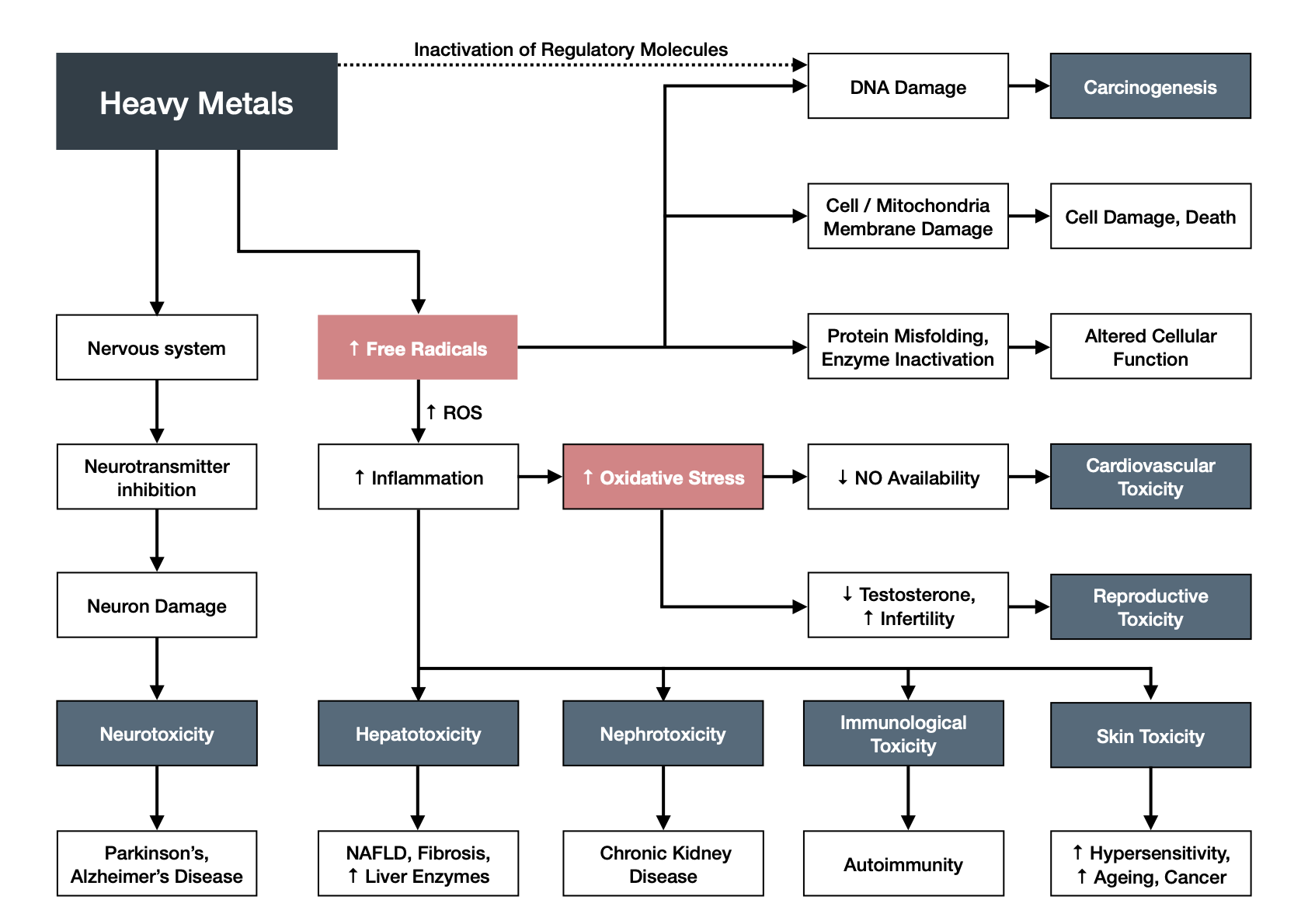
Impact of heavy metals on the body
Dose and Exposure Context
Acute high dose: GI distress, organ failure.
Chronic low dose: Subtle neurodegeneration, cancer, mimics autoimmunity (e.g. MS, Alzheimer’s). Cumulative effects from multiple metals worsen outcomes (e.g., Pb + Hg synergistic).
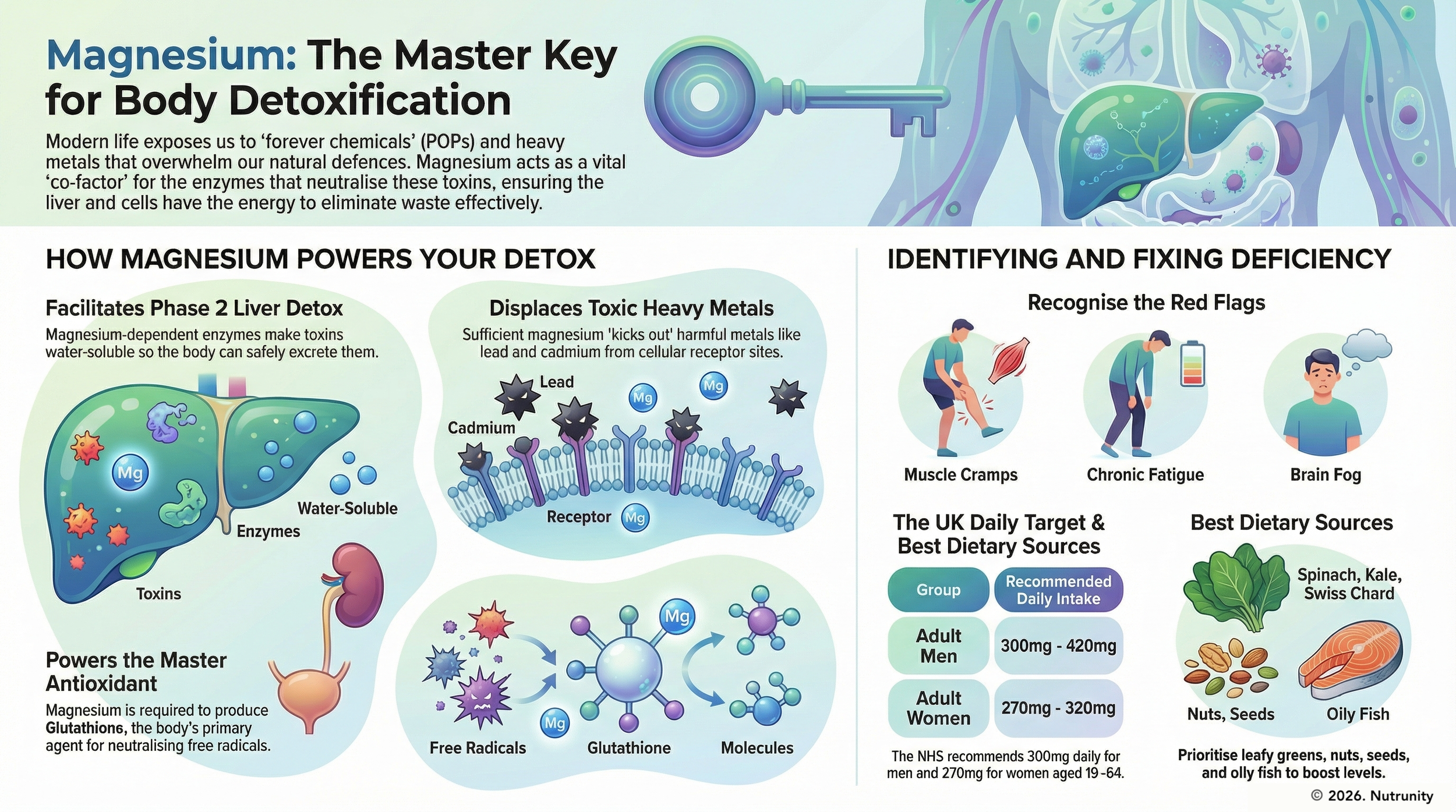
How Magnesium Chelates Heavy Metals: 4 Key Mechanisms
Magnesium (Mg) doesn’t just “detox,” it actively binds (chelates) metals and supports elimination pathways. Here’s how:
Mg competes with lead/cadmium for absorption sites and binds them for urinary excretion. Studies show it reduces blood/bone levels of these metals.
Mg activates enzymes that produce glutathione (the body’s master antioxidant), which neutralises mercury/arsenic and makes them water‑soluble for bile/urine export.
Liver ATP Power: Phase II detox needs energy; Mg fuels ATP, so your liver conjugates toxins for safe removal.
Mg quells oxidative stress from metals, protecting neurons and mitochondria during mobilised detox. Glutathione also supports mitochondrial function, controlling free radicals, natural byproducts of energy production.
Caution: Rapid detox without support can redistribute metals (e.g., to the brain). Always pair with binders, hydration, and professional guidance.
Heavy Metal Detox Pathways: Where Magnesium Fits
Each metal follows body‑specific routes. Magnesium is needed in every step:
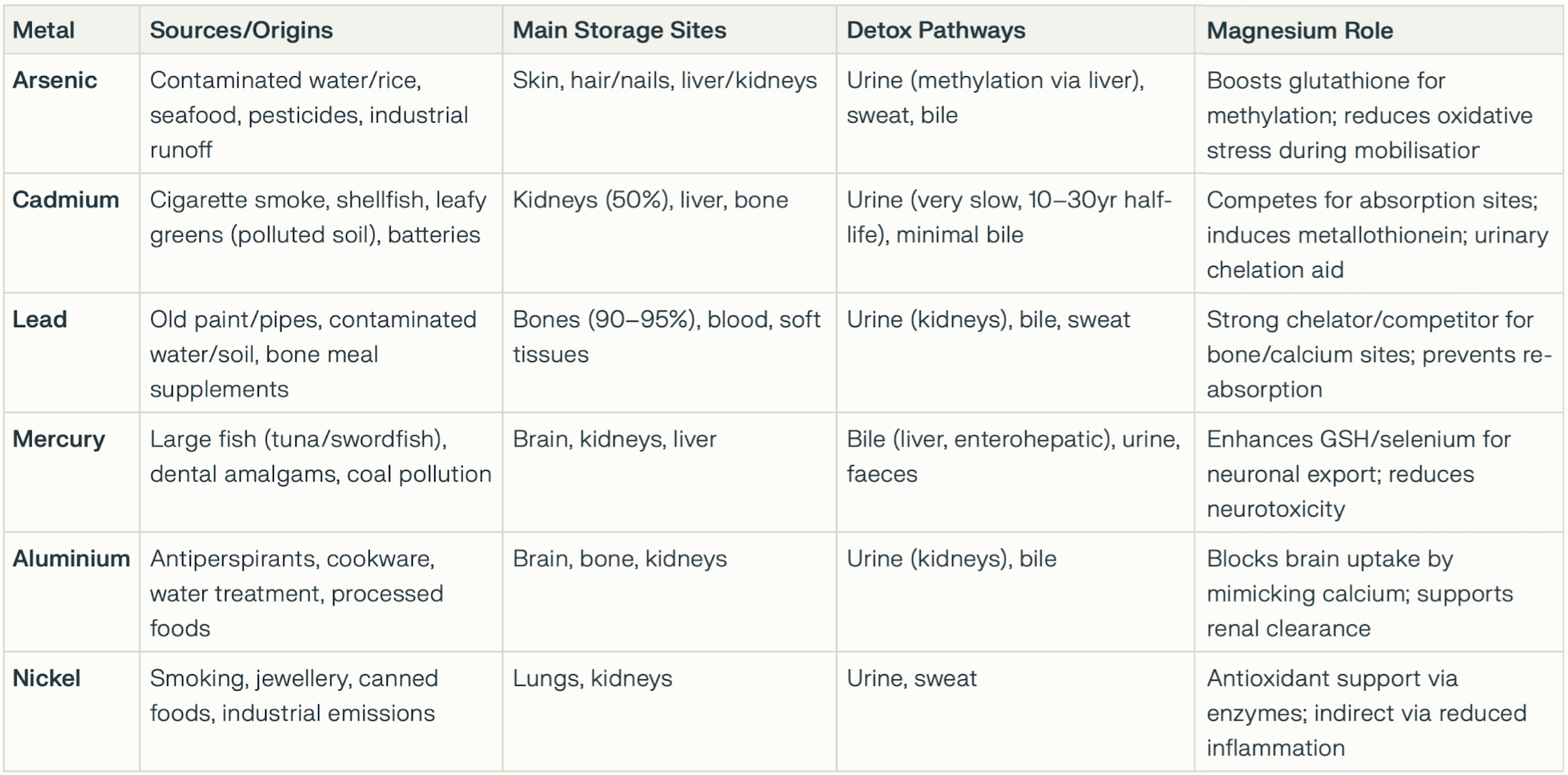
Heavy metals: Sources, main storage sites, elimination channels and the role of Magnesium
8 Signs You Need Magnesium‑Supported Heavy Metal Detox
Chronic exposure and low magnesium manifest as:
Persistent fatigue/brain fog (mito damage).
Muscle cramps, spasms, or restless legs.
Insomnia or anxiety (GABA/cortisol imbalance).
Headaches/migraines (vascular tension).
Gut issues: bloating, constipation (inflammation).
Mood swings/irritability (neurotransmitter disruption).
Hormonal chaos (oestrogen mimicry by cadmium).
Cognitive decline hints (e.g., memory lapses).
Test via hair/urine/stool analysis if clusters appear.
Best Magnesium Sources for Heavy Metal Detox
Prioritise bioavailable forms in food, then look to supplements.
Top Foods (per 100g serving):
Pumpkin seeds: 535mg (chelation powerhouse).
Spinach/kale: 80–150mg (chlorophyll aids liver).
Almonds/cashews: 260–270mg (fats protect cells).
Black beans/chickpeas: 120–160mg (fibre binds toxins).
Dark chocolate (85%+): 230mg (antioxidants).
Avocado/quinoa: 30–80mg (versatile).
Best Supplements:
Magnesium Glycinate/Bisglycinate: Gentle, brain/sleep support (300–400mg elemental daily).
Magnesium Citrate: Gut motility aid (for constipation).
Epsom Salt Baths: Transdermal absorption (2 cups, 20min soak 3x/week).
Synergists: Pair with zinc/selenium (antagonise metals), vitamin C (GSH boost), and binders like chlorella/zeolite.
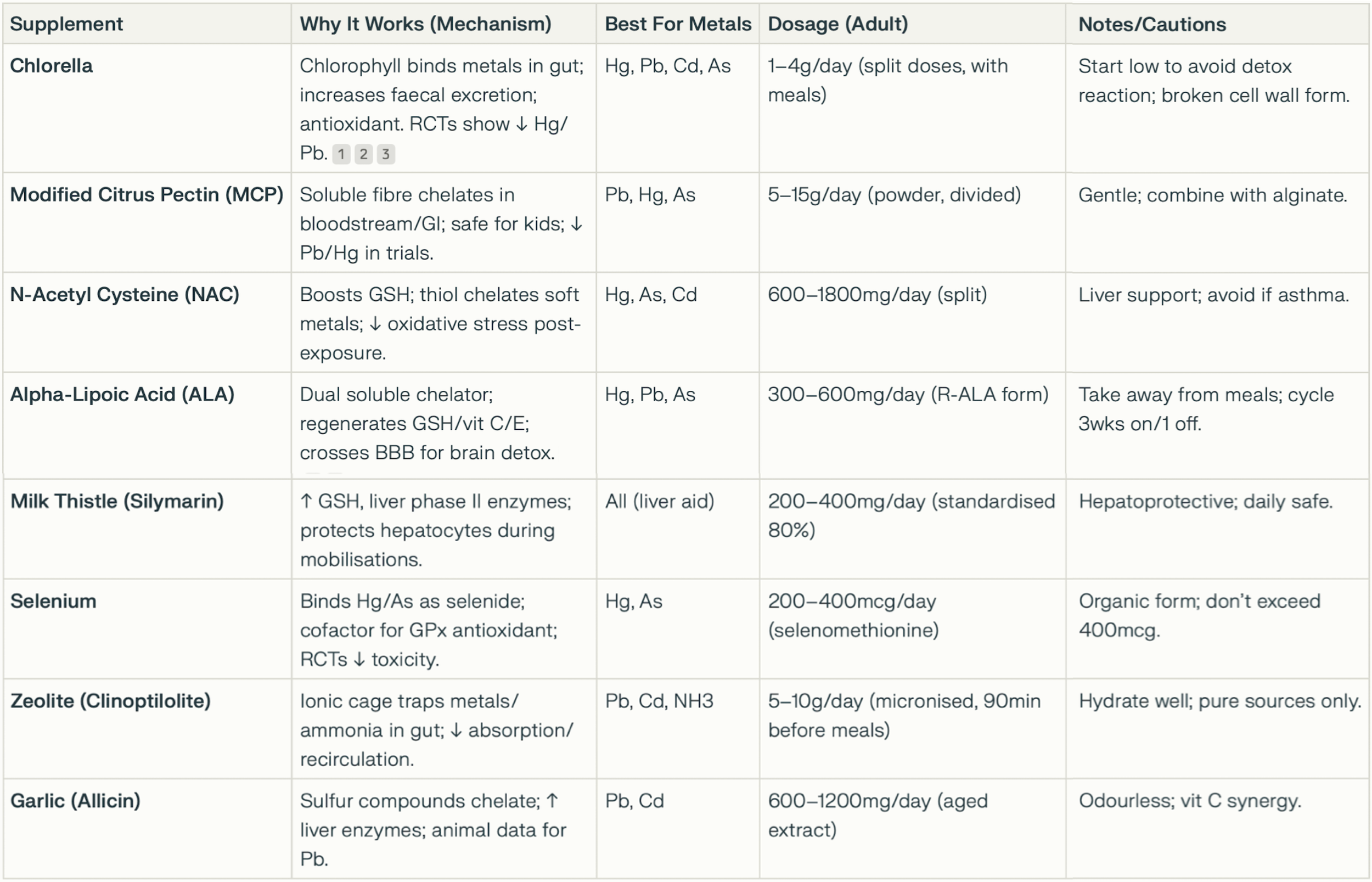
Supplements for Heavy Metal Detox, including dosage. For information purposes only. Do not supplement/detox unsupervised.
Safe 4‑Week Magnesium Detox Protocol
Week 1: Prep
Mg-rich foods + 200 mg glycinate nightly; hydrate (3L water); add infrared sauna/sweat, etc.
Week 2–3: Mobilise
400mg Mg split doses; coriander/chlorella (binders); liver support (milk thistle).
Week 4: Rebuild
Test minerals; replenish zinc/iron; monitor symptoms.
Avoid: High‑dose chelators (DMSA/EDTA) without practitioner oversight; they deplete essential nutrients.
FAQ: Magnesium Heavy Metal Detox
What are the signs and symptoms of heavy metal toxicity/poisoning
Chronic fatigue
Autoimmune diseases, including Lyme disease
Poor recovery from exercise and weakness
Skin irritation
Neurological disorders
Brain fog, trouble concentrating, difficulty learning and poor memory
Depression, manic depression and/or anxiety
Dementia
Insomnia
Digestive issues, such as irritable bowel syndrome
Chronic aches and pains, such as those associated with fibromyalgia
Tremors
Impaired motor control, hearing, speech, vision and gait.
Anaemia.
Higher risk for heart attacks
Does magnesium chelate mercury and lead?
Yes, via competition and urinary promotion, enhanced by glutathione.
How much magnesium for detox?
300–600mg elemental daily from food/supps; test RBC levels first.
Can baths detox heavy metals?
Yes, transdermal Mg may be absorbed through the skin (while relaxing muscles).
What are the risks of DIY detox?
1. Redistribution
Mobilised metals recirculate via the bloodstream/bile before excretion, worsening symptoms:
Brain fog, anxiety, tremors (Hg/Al to CNS).
Fatigue, nausea, headaches (systemic ROS surge).
Can last days–weeks if binders/support are lacking.
2. Mineral Depletion
Binders/chelators non-selectively grab zinc, copper, Mg, selenium:
Weakened immunity, thyroid, and detox enzymes.
Worsens methylation/gut barrier, already discussed.
3. Organ Strain
Kidneys/liver overload → elevated enzymes, acute injury (especially zeolite/NAC excess).
Low BP, dehydration from diarrhoea/sweating.
4. False Testing & Overkill
• Home kits unreliable; unneeded detox harms microbiome.
• Vulnerable groups (pregnant, elderly, kidney issues) risk foetal/organ damage.
Ready for Guided Heavy Metal Detox?
About the Author
Olivier Sanchez, Registered Naturopath, Nutritionist, Iridologist. Clinical focus: methylation, neurotoxins, gut detox, IBS.
References:
Balali-Mood, M., Naseri, K., Tahergorabi, Z. et al. (2021). Toxic mechanisms of five heavy metals: Mercury, lead, chromium, cadmium, and arsenic. Frontiers in Pharmacology. 12, 643972. doi:10.3389/fphar.2021.643972
Briffa, J., Sinagra, E., Blundell, R. (2020). Heavy metal pollution in the environment and their toxicological effects on humans. Heliyon. 6(9), e04691. doi:10.1016/j.heliyon.2020.e04691
Jaishankar, M., Tseten, T., Anbalagan, N. et al. (2014). Toxicity, mechanism and health effects of some heavy metals. Interdisciplinary Toxicology. 7(2), pp. 60-72. doi:10.2478/intox-2014-0009
Jomova, K., Alomar, SY., Nepovimova, E. et al. (2025). Heavy metals: Toxicity and human health effects. Archives of Toxicology. 99(1), pp. 153-209. doi:10.1007/s00204-024-03903-2
Rajkumar, V., Lee, VR., Gupta, V. (2023). Heavy Metal Toxicity. In: StatPearls [Internet]. Treasure Island (FL): StatPearls Publishing. Available at: https://www.ncbi.nlm.nih.gov/books/NBK560920
Sears, ME. (2013). Chelation: Harnessing and enhancing heavy metal detoxification — A review. Scientific World Journal. 2013, 219840. doi:10.1155/2013/219840
Witkowska, D., Słowik, J., Chilicka, K. (2021). Heavy metals and human health: Possible exposure pathways and competition for protein-binding sites. Molecules. 26(19), 6060. doi:10.3390/molecules26196060