
Magnesium: The Essential Mineral for Cellular Detoxification, Mitochondrial Health, and Liver Function
Magnesium is an essential mineral that plays a pivotal role in countless physiological processes. Despite its abundance in nature and the human body, magnesium deficiency is widespread and often overlooked. Its involvement in cellular detoxification, mitochondrial health, and liver function is particularly significant, with implications for overall health and disease prevention. This article examines magnesium’s mechanisms in these areas, highlighting the scientific evidence that demonstrates its importance.
Magnesium is also classified as an essential electrolyte involved in numerous bodily reactions that influence cellular activity, nerve signalling, and more. The proper functioning of your brain, heart, and muscles depends greatly on having adequate magnesium levels.
Magnesium also plays a crucial role in maintaining the balance of other electrolytes, such as sodium, calcium, and potassium. When magnesium levels drop (a condition known as hypomagnesemia), it often occurs in conjunction with low calcium (hypocalcemia) and low potassium (hypokalemia) in the blood.
It’s important to note that while the majority of your body’s magnesium is stored in the bones, only a small fraction is dissolved in extracellular fluid — primarily in blood plasma — and is readily accessible for use by your cells and organs.
Magnesium deficiency
Magnesium deficiency is common due to a combination of dietary, agricultural, and lifestyle factors. The primary reason is that a significant portion of the population does not consume enough magnesium-rich foods, such as whole grains, leafy green vegetables, nuts, and seeds. In the United States, for example, approximately 50% of the population consumes less than the recommended amount of magnesium from food, and similar trends are observed in other developed countries.
A major contributor to this shortfall is the decline in magnesium content in fruits and vegetables over the past century, largely due to soil depletion resulting from modern agricultural practices (e.g., monoculture, overuse of chemical fertilisers and pesticides, and disturbance of the soil microbiota, which affects the exchange of nutrients and energy between microorganisms and plants). This means that even individuals who eat a diet rich in plant-based foods may not be getting adequate magnesium because the food itself contains less of the mineral than in previous generations.
Additionally, the rise in consumption of ultra-processed foods, which are typically low in magnesium (and essential nutrients. Essential because they are vital to our health), further exacerbates the problem. Processed foods not only lack magnesium but can also impede its absorption, making it even harder for people to meet their daily requirements.
Other factors that contribute to widespread magnesium deficiency include increased losses through urine and sweat, especially in people with certain health conditions (such as diabetes), those taking specific medications (like diuretics), and individuals under chronic stress and those drinking an excessive amount of caffeine and alcohol (also acting as diuretics). The prevalence of magnesium deficiency is particularly high among people with chronic diseases, obesity, and the elderly, who may have additional risk factors for poor magnesium status.
The Critical Role of Magnesium in Cellular Detoxification and Methylation
Cellular detoxification is a complex process involving the neutralisation and removal of toxins and metabolic byproducts. Magnesium is a fundamental cofactor in these processes, especially in the synthesis of glutathione, the body’s master antioxidant. Glutathione acts as a detoxifying agent, neutralising reactive oxygen species (ROS - free radicals) and facilitating the excretion of heavy metals and xenobiotics. Magnesium-dependent enzymes, such as gamma-glutamyl transpeptidase, play a crucial role in the recycling of glutathione and its subsequent function.
Methylation is another vital cellular process that involves the transfer of methyl groups to DNA, proteins, and other molecules. This process is essential for gene regulation, neurotransmitter synthesis, and detoxification. Magnesium is required for the activity of methionine adenosyltransferase 1A (MAT1A), the enzyme responsible for producing S-adenosylmethionine (SAMe), a universal methyl donor. SAMe is integral to DNA repair, neurotransmitter balance, and the breakdown of homocysteine, a potentially toxic amino acid.
Furthermore, magnesium supports the function of catechol-O-methyltransferase (COMT), an enzyme that metabolises catecholamines such as dopamine, norepinephrine, and adrenaline. Efficient COMT activity prevents the accumulation of neurotoxic metabolites and helps regulate stress responses. Individuals with impaired methylation capacity, such as those with MTHFR gene mutations, are particularly susceptible to magnesium deficiency and its consequences, including impaired detoxification and increased oxidative stress.
Examining the illustration below, you can also observe that magnesium plays a crucial role in ATP production and cellular energy metabolism. ATP (adenosine triphosphate), the primary energy carrier in cells, must be bound to magnesium to be biologically active; in fact, the functional form used by enzymes is typically Mg-ATP. Magnesium acts as a cofactor for numerous enzymes involved in ATP synthesis, including those of the mitochondrial electron transport chain and the tricarboxylic acid (TCA) cycle. Without sufficient magnesium, ATP cannot be efficiently produced or utilised by cells, leading to impaired energy metabolism.
Magnesium stabilises ATP’s structure, preventing its premature breakdown and making it available for essential cellular processes such as muscle contraction, nerve transmission, and protein synthesis. It is also required for the activity of adenylate kinase, an enzyme that catalyses the conversion of ADP and AMP into ATP, further supporting cellular energy supply. Additionally, magnesium homeostasis within mitochondria is crucial for maintaining ATP synthesis and its subsequent export to the cytosol, where it powers numerous metabolic reactions.

Methylation Cycle, including the transfer of a methyl group from the folate cycle to the Methionine Cycle, the production of SAMe, the universal methyl donor; and the production of glutathione via the Transsulphuration pathway (requires serine, glutamine and glycine). CH3, the methyl group, is donated to key substrates, including nucleic acids (DNA and RNA), proteins, phospholipids, and monoamine neurotransmitters (catecholamines). Illustration extracted from “Detox before Energise” by Sanchez Olivier. All rights reserved.
Magnesium’s Impact on Mitochondrial Health and Energy
Mitochondria are the powerhouses of the cell, responsible for producing adenosine triphosphate (ATP), the energy currency of life. As discussed, magnesium is indispensable for mitochondrial function at multiple levels. It stabilises the structure of ATP, ensuring its bioavailability for cellular processes. Without adequate magnesium, ATP synthesis is compromised, leading to cellular energy deficits.
Magnesium also plays a crucial role in maintaining the integrity of mitochondrial membranes and the efficiency of the electron transport chain (ETC). It acts as a cofactor for several enzymes within the ETC, facilitating the transfer of electrons and reducing the production of harmful ROS. Studies have shown that magnesium supplementation can decrease mitochondrial ROS production by 30–50% and restore mitochondrial membrane potential, which is essential for ATP synthesis and cell survival.
Magnesium also helps control calcium levels inside mitochondria. While calcium is vital for many cell functions, too much calcium inside mitochondria can cause damage. Magnesium acts like a gatekeeper, preventing excess calcium from entering and protecting the mitochondria from harm. In experimental models of diabetes and metabolic syndrome, magnesium supplementation has been shown to restore ATP levels, reverse mitochondrial structural damage, and enhance overall mitochondrial health.
Another important role of magnesium is protecting mitochondria from oxidative stress. This stress occurs when harmful molecules called free radicals accumulate and damage cells. Magnesium supports the production of antioxidants that neutralise these harmful molecules, helping to keep mitochondria healthy.
When magnesium is lacking, mitochondria can become damaged, energy production drops, and cells may eventually die. This can contribute to various health problems, including tiredness, muscle weakness, and chronic diseases.
In short, magnesium is essential for the energy-producing factories in our cells to function properly. Ensuring we obtain sufficient magnesium through our diet or supplements can help maintain healthy mitochondria and support overall energy and well-being.

Mitochondria and ATP production via aerobic and anaerobic respiration, including the electron transport chain.
The Link Between Magnesium, Mitochondria, Neuroinflammation and Neurodegenerative Diseases
Magnesium is increasingly recognised as a key player in brain health, and the prevention of neuroinflammation and neurodegenerative diseases. It is involved in hundreds of biochemical reactions that keep our brain cells energised, resilient, and able to communicate effectively.
By blocking the mitochondrial permeability transition pore, magnesium prevents the release of cytochrome c, a step that can lead to cell death and is implicated in neurodegenerative conditions. When magnesium is lacking, mitochondria become more vulnerable, energy production falters, and cells are more likely to die prematurely.
“Mg2+ plays a role in the brain, which involves all biochemical pathways. It is needed to transmit nerve signals and maintain ionic balance. Here, Mg2+ acts as an antagonist for calcium (Ca2+) by controlling the influx of Ca2+ via the regulation of voltage-gated Ca2+ channels. It also inhibits the release of Ca2+ in the cytosol. Therefore, by controlling the levels of Ca2+ ions in the brain, Mg2+ influences the activity of synapses and memory formation.”
This quote from the Journal Advances in Human Biology sounds quite technical. What it means is that, in the same way magnesium controls calcium levels in the mitochondria, it also does it in the brain, particularly at the synaptic cleft, where two neurones communicate and transfer nerve impulses (information).
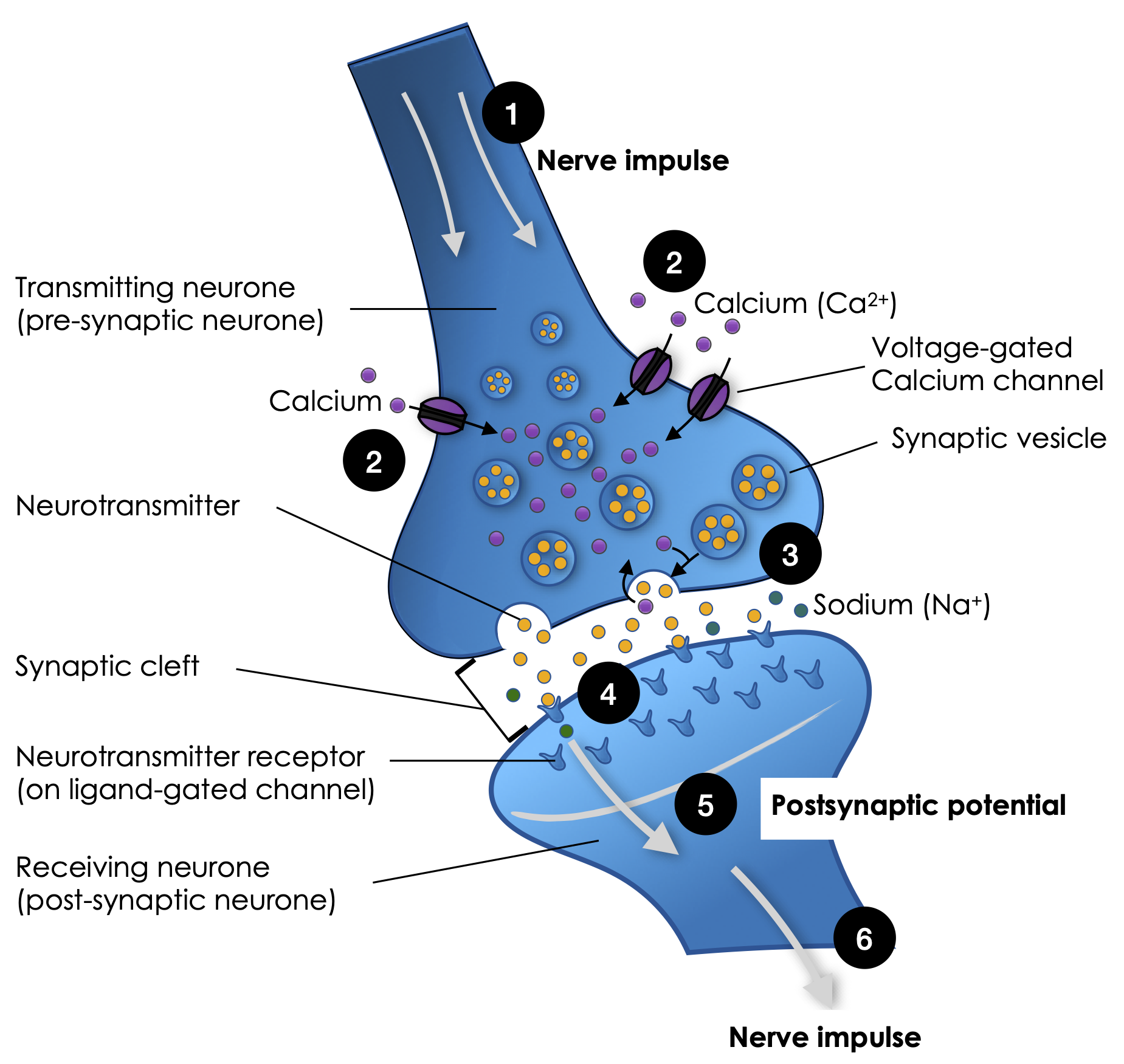
Schematic illustration of synaptic transmission. 1. Action potential (nerve impulse) arrives at axon terminal. 2. Voltage-gate calcium channels open and calcium enters the axon terminal. 3. Calcium causes neurotransmitter-containing synaptic vesicles to release their content by exocytosis. 4. Neurotransmitters diffuse across the synaptic cleft and bind to ligand-gated ion channels on the postsynaptic membrane. 5. Binding of neurotransmitters open the channel, resulted in graded potentials. 6. The nerve impulse is transmitted until the message it carries is applied.
Magnesium also plays a direct role in reducing neuroinflammation, which is now understood to be a major driver of diseases like Alzheimer’s, Parkinson’s, and multiple sclerosis. Low magnesium levels are associated with increased inflammation in the brain and a breakdown of the blood-brain barrier. This inflammation and barrier dysfunction can accelerate the progression of neurodegenerative diseases.
On a cellular level, magnesium helps balance calcium and other ions, supports the action of calming neurotransmitters like GABA, and prevents overstimulation of brain cells by blocking NMDA receptors. This helps protect neurones from excitotoxicity, a process that damages or kills nerve cells and is a feature of many brain disorders.
Recent research has shown that people with higher magnesium intake have greater brain volume and better cognitive function as they age, with a lower risk of dementia, especially in women. Supplementing magnesium can increase levels of brain-derived neurotrophic factor (BDNF), a protein essential for learning, memory, and neuroplasticity. It may also improve outcomes in models of acute brain injury and cognitive decline.
Ensuring an adequate intake of magnesium, through a varied diet or supplements, may help maintain cognitive function, protect against age-related decline, and support overall brain health throughout life
Magnesium’s Role in Liver Detoxification and Disease Prevention
The liver is the body’s primary detoxification organ, responsible for metabolising drugs, hormones, and environmental toxins. Magnesium is integral to both phase I and phase II detoxification pathways in the liver. In phase I, magnesium activates cytochrome P450 enzymes, which initiate the breakdown of toxins. In phase II, magnesium supports conjugation reactions such as glucuronidation, sulfation, and methylation, which render toxins water-soluble for excretion.
Magnesium also plays a protective role against heavy metal toxicity. It competes with toxic metals like lead and mercury for binding sites within cells, reducing their absorption and facilitating their elimination. This competitive inhibition is significant in environments with high exposure to heavy metals.
In the context of liver disease, magnesium has been shown to have protective effects against the development of fibrosis and cirrhosis. For example, magnesium lithospermate B, a magnesium-containing compound, has been shown in some studies to suppress the expression of transforming growth factor-beta 1 (TGF-β1) and collagen, thereby slowing the progression of liver fibrosis by up to 40%.
Clinical studies have found that magnesium deficiency is associated with elevated liver enzymes (AST and ALT) and an increased risk of non-alcoholic steatohepatitis (NASH). Supplementation with magnesium has been shown to preserve liver function, reduce inflammation, and lower mortality rates in patients with liver disease.

Liver phases and required nutrients.
Certain gut bacteria can produce excessive amounts of ethanol (alcohol) endogenously through fermentation processes. Elevated levels of this microbially derived ethanol have been linked to NAFLD, contributing to liver injury similarly to alcoholic liver disease but without alcohol consumption. This endogenous ethanol exacerbates oxidative stress, mitochondrial dysfunction, and inflammation in hepatocytes, further disturbing liver function (including detoxification) and aggravating NAFLD severity and progression to nonalcoholic steatohepatitis (NASH).
NAFLD is estimated to be the number one cause of liver transplant.
“Maintenance of hepatic homeostasis is crucial for the proper functioning of the liver, and in this context, adequate nutrition with macro- and micronutrient intake is mandatory. Among all known macro-minerals, magnesium has a key role in energy metabolism and in metabolic and signaling pathways that maintain liver function and physiology throughout its life span.”
Magnesium is increasingly recognised as a key factor in the development and progression of non-alcoholic fatty liver disease (NAFLD). NAFLD is a condition where excess fat builds up in the liver (not due to alcohol consumption), and it is closely linked to obesity, type 2 diabetes, and metabolic syndrome. Research shows that people with NAFLD are often low in magnesium, and deficiency can worsen liver health and increase the risk of the disease progressing to more serious forms.
Magnesium plays several protective roles in the liver. It helps regulate blood sugar and improve the body’s response to insulin, both of which are essential for preventing fat from accumulating in liver cells. When magnesium levels are low, insulin resistance tends to worsen, making it easier for fat to accumulate in the liver. Magnesium also supports the body’s natural antioxidant defences, which protect liver cells from harm caused by oxidative stress and inflammation. Two key processes that drive NAFLD towards more severe conditions, such as non-alcoholic steatohepatitis (NASH) and even liver cancer.
Recent studies have found that higher magnesium intake is linked to a lower risk of NAFLD and diabetes, and a reduced risk of dying from liver disease. For example, research from the NHANES III study showed that every 100 mg increase in daily magnesium intake was associated with a 49% reduction in the risk of liver disease-related death, especially among people with fatty liver and those who drink alcohol. However, increasing magnesium in the diet may not fully correct deficiency in everyone, and supplements or targeted therapy may be needed, particularly for those with advanced liver disease or confirmed deficiency.
At the cellular level, magnesium is essential for normal liver metabolism. It activates enzymes that break down fats and helps prevent their accumulation in liver cells. Magnesium also helps maintain the balance of other minerals and supports DNA repair, which is crucial for preventing mutations that can lead to liver cancer. In NAFLD and NASH, the liver’s ability to retain magnesium is often impaired, partly because of increased activity of proteins that remove magnesium from liver cells, making them more vulnerable to inflammation and scarring.
In summary, magnesium deficiency is common in NAFLD and can exacerbate the disease by promoting fat accumulation, inflammation, and oxidative stress in the liver. Ensuring you get enough magnesium (through a healthy diet and supplements) may help protect your liver, slow the progression of fatty liver disease, and reduce the risk of complications. This highlights the importance of magnesium in preventing and managing NAFLD.
Nutrition Tips
Begin by incorporating more magnesium-rich foods into your daily diet. Leafy green vegetables, such as spinach, Swiss chard, and kale, as well as nuts and seeds like almonds, pumpkin seeds, and chia seeds, are all excellent sources. Additionally, fish such as mackerel and sardines (if you eat the bones), as well as avocados and bananas, whole grains, and legumes, are also good sources. If you’re concerned about your magnesium levels or a test has shown suboptimal levels, you may need to supplement. However, it is essential to split the dosage into regular intakes (typically 100 mg 3 times daily). Be aware that not all magnesium supplements are created equal, and not all forms of magnesium have the same function in the body. Contact us if you are worried about supplementing.
It’s also wise to limit processed foods and sugary drinks, as these can play a key role in the onset and progression of fatty liver disease and often lack essential nutrients, such as magnesium. Reducing alcohol intake is another important step, as alcohol can increase magnesium loss and put extra strain on your liver.
By prioritising a balanced diet, staying active, and taking care of your overall health, you can make a significant difference to your liver function and reduce your risk of complications from NAFLD. Remember, small, consistent changes can have a big impact; your liver and the rest of your body will thank you for it.
Magnesium is not only important for liver health but is also essential for the health of your mitochondria and, by extension, the health of every cell in your body. For mitochondria to work efficiently, they need a steady supply of magnesium. Magnesium also helps protect mitochondria from damage caused by oxidative stress and excessive calcium, which can damage cells if left unchecked. It also plays a role in activating enzymes that are crucial for energy production and detoxification.
If you don’t get enough magnesium, your mitochondria can’t produce energy as effectively. This can lead to a drop in ATP (energy) production, an increase in harmful free radicals, and greater vulnerability to inflammation and cell damage. Over time, this can affect not just your liver but your overall health, as every organ relies on healthy mitochondria.

Learn to love the “green” stuff!
So, aim to fill your plate with a variety of magnesium-rich foods (50-75% of your plate should be vegetables; at least 1/4 should be green vegetables) throughout the week. For example, add a handful of nuts or seeds to your breakfast, include leafy greens in salads and stir-fries, swap white rice for wholegrain or quinoa, and enjoy a piece of high-cocoa dark chocolate as an occasional treat.
Remember, a balanced diet rich in magnesium not only helps keep your liver and mitochondria healthy but is also linked to better brain function, improved mood, and protection against age-related cognitive decline, especially in women. Making these small, consistent changes can have a lasting impact on your overall well-being.
If you need guidance and nutritional support, contact us today.
Sources
NIH. (2021). Magnesium. Fact Sheet for Consumers. Available at: https://ods.od.nih.gov/factsheets/Magnesium-Consumer
NHS UK
References
Alateeq, K. Walsh, EI. Cherbuin, N. (2023). Dietary magnesium intake is related to larger brain volumes and lower white matter lesions with notable sex differences. European Journal of Nutrition. 62(5), pp.2039-2051. doi:10.1007/s00394-023-03123-x
Bravo, M. Simón, J. González-Recio, I. et al. (2023). Magnesium and liver metabolism through the lifespan. Advances in Nutrition. 14(4), pp. 739-751. doi:10.1016/j.advnut.2023.05.009
Fan, L. Zhu, X. Zhang, X. et al. (2025). Magnesium depletion score and mortality in individuals with metabolic dysfunction associated steatotic liver disease over a median follow-up of 26 years. Nutrients. 17(2), 244. doi:10.3390/nu17020244
Fang, J. Yu, CH. Li, XJ. et al. (2022). Gut dysbiosis in nonalcoholic fatty liver disease: Pathogenesis, diagnosis, and therapeutic implications. Frontiers in Cellular and Infection Microbiology. 12, 997018. doi:10.3389/fcimb.2022.997018
Gupta, H. Min, BH. Ganesan, R. et al. (2022). Gut microbiome in non-alcoholic fatty liver disease: From mechanisms to therapeutic role. Biomedicines. 10(3), 550. doi:10.3390/biomedicines10030550
Jasirwan, COM. Lesmana, CRA. Hasan, I. et al. (2019). The role of gut microbiota in non-alcoholic fatty liver disease: Pathways of mechanisms. Bioscience of Microbiota, Food and Health. 38(3), pp. 81-88. doi:10.12938/bmfh.18-032. Epub 2019 May 8
Khan, A. Ding, Z. Ishaq, M. et al. (2021). Understanding the effects of gut microbiota dysbiosis on nonalcoholic fatty liver disease and the possible probiotics role: Recent updates. International Journal of Biological Sciences. 17(3), pp. 818-833. doi:10.7150/ijbs.56214
Li, W. Zhu, X. Song, Y. et al. (2018). Intakes of magnesium, calcium and risk of fatty liver disease and prediabetes. Public Health Nutrition. 21(11), pp. 2088-2095. doi:10.1017/S1368980018000642
Maier, JAM. Locatelli, L. Fedele, G. et al. (2022). Magnesium and the brain: A focus on neuroinflammation and neurodegeneration. International Journal of Molecular Science. 24(1), 223. doi:10.3390/ijms24010223
Powell, EE. Wong, VW. Rinella, M. (2021). Non-alcoholic fatty liver disease. Lancet. 397(10290), pp. 2212-2224. doi:10.1016/S0140-6736(20)32511-3
Rahnuma, A. Mainul, H. (2025). Magnesium: A micronutrient for brain health. Advances in Human Biology 15(2), pp 147-151. doi:10.4103/aihb.aihb_32_25
Rivlin, RS. (1994). Magnesium deficiency and alcohol intake: mechanisms, clinical significance and possible relation to cancer development (a review). Journal of the American College of Nutrition. 13(5), pp. 416-423. doi:10.1080/07315724.1994.10718430
Salamon, M. (2023). Magnesium-rich foods might boost brain health, especially in women. Harvard Health Publishing. Harvard Medical School. Available at: https://www.health.harvard.edu/mind-and-mood/magnesium-rich-foods-might-boost-brain-health-especially-in-women
Vatsalya, V. Khushboo, SG. Maithili, M. (2020). Lower serum magnesium concentrations are associated with specific heavy drinking markers, pro-inflammatory response and early-stage alcohol-associated liver injury. Alcohol and Alcoholism. 55(2), pp. 164–170. doi:10.1093/alcalc/agaa001
Wu, L. Zhu, X. Fan, L. et al. (2017). Magnesium intake and mortality due to liver diseases: Results from the Third National Health and Nutrition Examination Survey Cohort. Scientific Reports. 7(1), 17913. doi:10.1038/s41598-017-18076-5
Yamanaka, R. Tabata, S. Shindo, Y. et al. (2016). Mitochondrial Mg(2+) homeostasis decides cellular energy metabolism and vulnerability to stress. Scientific Reports. 6, 30027. doi:10.1038/srep30027
Younossi, ZM. Koenig, AB. Abdelatif, D. et al. (2016). Global epidemiology of nonalcoholic fatty liver disease - Meta-analytic assessment of prevalence, incidence, and outcomes. Hepatology. 64(1), pp. 73-84. doi:10.1002/hep.28431