
Functional and Medicinal Mushrooms: A Science-Based Guide to Benefits, Dosage, and Safety
While mushrooms have been used for centuries in traditional medicine systems, such as Traditional Chinese Medicine and Ayurveda, their reputation in the West was once limited mostly to culinary uses. Today, a growing body of scientific research is validating what ancient cultures have long known: certain mushrooms are far more than just food; they are potent allies for health, resilience, and longevity.
Functional and medicinal mushrooms have indeed garnered significant scientific interest due to their unique bioactive compounds, including polysaccharides (e.g., beta-glucans), triterpenoids, antioxidants, and nerve growth stimulators. These fungi offer benefits beyond basic nutrition, targeting immune function, neurological health, and the prevention of chronic diseases.
Unlike common edible mushrooms found in supermarkets, “functional” or “medicinal” mushrooms refer to species with unique bioactive compounds that offer benefits beyond basic nutrition. These mushrooms contain a diverse array of active compounds in addition to the polysaccharides (notably beta-glucans), triterpenoids, lectins, phenolic compounds, sterols, and even rare antioxidants like ergothioneine. Their effects are wide-ranging, from modulating immune responses and reducing inflammation to supporting brain function, balancing blood sugar, and even exhibiting anti-tumour and antiviral properties.
What sets medicinal mushrooms apart is their ability to act as adaptogens, natural substances that help the body adapt to stress and restore balance. As the modern world grapples with rising rates of chronic diseases, neurodegenerative disorders, and immune system challenges, mushrooms such as Reishi, Lion’s mane, Turkey tail, Cordyceps, Chaga, Shiitake, and Maitake are being rigorously studied for their therapeutic potential. For example, Lion’s Mane is gaining recognition for its ability to stimulate nerve growth and support cognitive health. At the same time, Turkey tail is being investigated for its immune-supporting and anti-cancer effects, and Reishi is celebrated for its calming, anti-inflammatory, and longevity-promoting properties.
The benefits of these mushrooms are not limited to a single organ system. Instead, they work holistically, supporting the gut-brain axis and mitochondrial function, regulating the immune system, and protecting against oxidative stress and inflammation. This makes them uniquely suited to address the interconnected nature of modern health challenges.
However, as with any potent natural remedy, proper usage, sourcing, and awareness of contraindications are essential. While many people can benefit from incorporating medicinal mushrooms into their wellness routines, certain populations should exercise caution or avoid them altogether due to potential interactions or side effects.
In the following sections, we’ll explore the most researched functional mushrooms, their proven benefits, optimal forms and dosages, and important safety considerations, empowering you to make informed decisions about these remarkable gifts from the fungal kingdom.
However, you must source products from trusted suppliers, preferably those recommended by your healthcare practitioner, so you receive the actual dosage as written on the label, ensuring it is free of toxic additives and fillers (such as rice and corn, as well as other pro-inflammatory unwanted ingredients). Making a quick note, many studies have used contaminated therapeutic mushroom products to prove that these had no anti-inflammatory effect on the body, and that they did not deliver on the “promises.” Very often, the researchers use powders containing rice (from conventional farming, often GMO, and ultra-processed to the point it is toxic to the human body) and other questionable additives, rendering the product as bad as the next bag of crisps. Your chosen (or recommended) supplement must be organic (preferably) or sourced from farms using trees as a medium for growth and not some substrate mix (straw or hardwood sawdust are common substrates) that will remove all the possible benefits of the synergetic alliance between the fungus and the plant. For example, Chaga only becomes a potent therapeutic aid if it is grown on (and collected from) birch trees.
Below, we detail the most researched species, their evidence-backed benefits, optimal dosages, and critical safety considerations.
— Reishi (Ganoderma lucidum)
Reishi (Ganoderma lucidum), also known as “Lingzhi” in Chinese and “the mushroom of immortality,” is a woody, shelf-like fungus that grows on decaying hardwood trees, especially in humid forests of Asia. It has been revered for over 2,000 years in traditional Chinese medicine as a symbol of health, longevity, and spiritual potency. Unlike common edible mushrooms, Reishi is rarely eaten fresh due to its tough texture and bitter taste. Instead, it is typically consumed as dried slices, teas, tinctures, or concentrated extracts.
Bioactive Compounds
Reishi’s therapeutic properties are attributed to a rich profile of bioactive substances, chiefly:
Polysaccharides (notably beta-glucans): Support immune modulation and anti-tumour activity.
Triterpenoids (ganoderic acids): Provide anti-inflammatory, antioxidant, and liver-protective effects.
Peptidoglycans, sterols, and other secondary metabolites: Contribute to its adaptogenic and anti-fatigue properties.
Traditional and Modern Uses:
Traditionally, Reishi has been used to “nourish the spirit,” calm the mind, support sleep, and boost resistance to illness. Modern herbalists and integrative practitioners use Reishi for:
Immune support (modulating both overactive and underactive immune responses)
Reducing fatigue and improving vitality
Supporting cardiovascular and liver health
Adjunctive therapy in cancer care
Managing stress and promoting restful sleep
Reishi is now one of the most studied medicinal mushrooms, with a growing body of laboratory, animal, and human research exploring its potential.
Mechanism:
Triterpenoids (ganoderic acids) inhibit NF-κB signalling, reducing pro-inflammatory cytokines by 40–60%. Beta-glucans (1,3)(1,6)-β-d-glucans) activate dendritic cells via dectin-1 receptors.
Clinical Evidence:
A 2023 meta-analysis of 12 trials (n=1,200) showed Reishi reduced fatigue in cancer patients by 38% vs. placebo.
Daily doses of 1.8–5.4 g standardised extract lowered HbA1c in diabetics by 0.8–1.2% in 6 months.
Dosage:
Maintenance: 1–2 g/day dried fruiting body
Therapeutic: 4.5–6 g/day for immune support (split doses)
Delivery: Dual-extracted (alcohol/water) for complete triterpenoid bioavailability.
Safety Profile and Risks
Adverse Effects: Generally well-tolerated, but isolated reports link excessive, long-term intake to:
Hepatotoxicity (including fatal liver failure)
Nausea, insomnia, and diarrhoea
Contraindications
Avoid in patients with bleeding disorders (Reishi inhibits platelet aggregation).
Not recommended pre-/post-surgery due to bleeding risk.
Discontinue if liver enzyme elevations occur.
Dosage and Practical Use
Effective Doses: 1–3 g/day of standardised extract for fatigue or immune support.
Quality Matters: Opt for dual-extracted (alcohol/water) products with a polysaccharide content of ≥30% and a triterpene content of ≤5% to ensure optimal bioavailability.
Reishi exhibits clinically meaningful benefits for fatigue-related conditions and cancer support; however, evidence for its metabolic or neurological applications remains weak. Hepatotoxicity risks necessitate caution, particularly with long-term use.
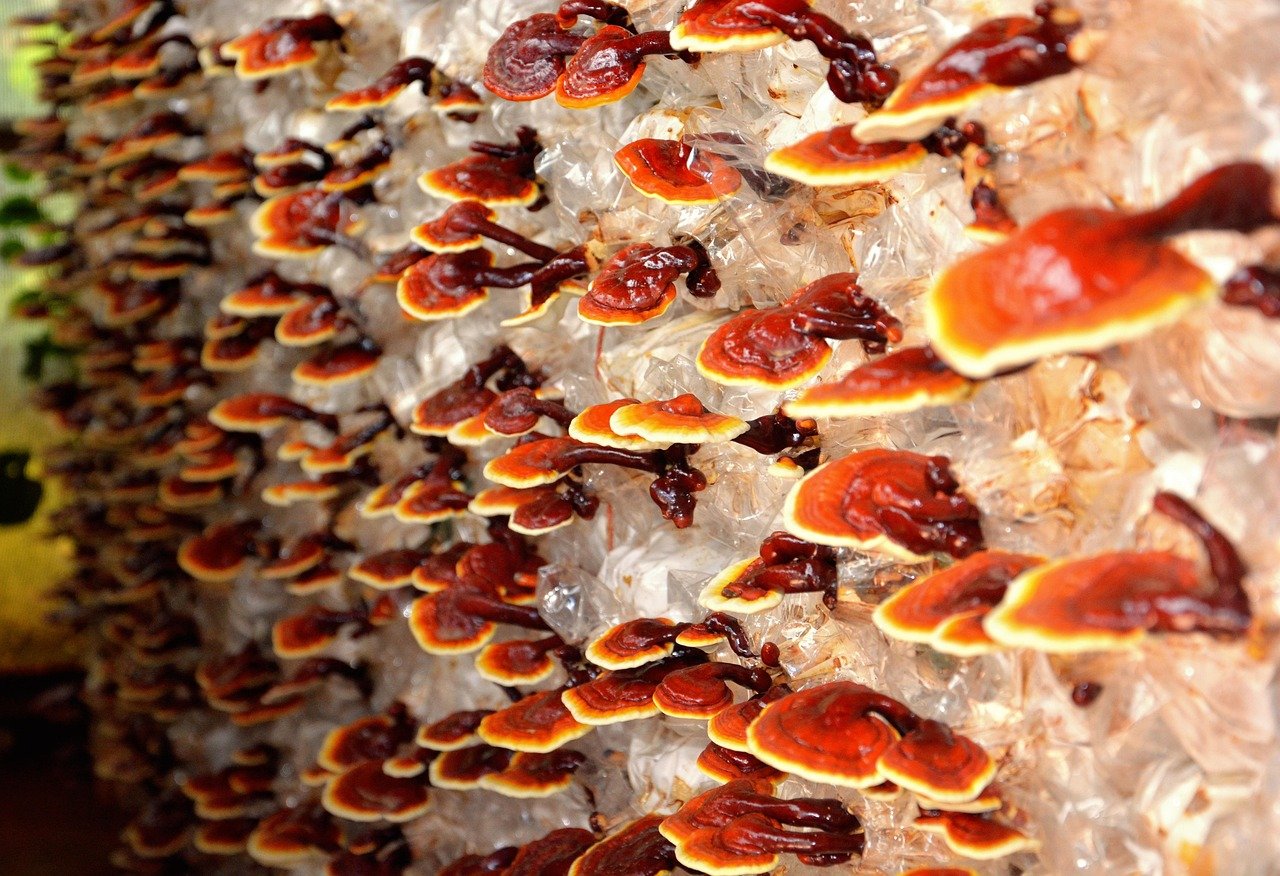
Reishi mushrooms growing on some plastic-wrapped substrate
— Lion’s Mane (Hericium erinaceus)
Lion’s Mane is a striking and rare fungus, easily recognised by its cascading, icicle-like spines that resemble a white lion’s mane or a frozen waterfall. Also known as Bearded Tooth, Tree Hedgehog Fungus, Pom-Pom Mushroom, and Monkey Head Mushroom, it is native to temperate forests in North America, Europe, and Asia, where it primarily grows on dead or dying hardwood trees, especially beech and oak. In the UK, Lion’s Mane is so rare and ecologically important that it is protected by law, making it illegal to pick wild specimens. However, it is cultivated worldwide and is available as both a gourmet mushroom and a dietary supplement.
Botanical Features:
Lion’s Mane forms a single, roundish fruiting body covered in soft, pendant spines up to 5 cm long, with a colour that ranges from white to cream, yellowing with age. Unlike most mushrooms, it has no gills or pores; instead, it releases spores from the tips of its spines. The mushroom has a mild, slightly musty aroma and a meaty texture that many compare to lobster or crab, making it popular in vegan and gourmet cuisine.
Traditional and Modern Uses:
Lion’s Mane has a long history in traditional Chinese medicine, where it is valued for supporting digestive health, strengthening the spleen, and as a tonic for overall vitality. In modern times, it has become one of the most researched medicinal mushrooms, especially for its potential effects on the brain and nervous system. It is commonly consumed as a food, tea, or extract, and is available in capsule and powder forms.
Bioactive Compounds:
Hericenones and erinacines: These are believed to stimulate the production of nerve growth factor (NGF), a protein essential for the growth, maintenance, and survival of neurons.
Polysaccharides (beta-glucans): Support immune function and have antioxidant and anti-inflammatory properties.
Other antioxidants and secondary metabolites: Contribute to its neuroprotective and adaptogenic effects.
Culinary and Safety Notes:
Lion’s Mane is considered a choice edible mushroom with no known toxic lookalikes, though it should not be harvested from the wild in protected regions. It can be cultivated at home from spawn plugs and is often available fresh in Asian supermarkets or as a supplement.
Clinical Evidence:
Modern research has focused on Lion’s Mane’s effects on cognitive health, neuroprotection, and mood:
Cognitive Function and Memory: Several human studies suggest that Lion’s Mane supplementation may improve mild cognitive impairment, memory, and attention, likely due to its ability to stimulate NGF production and support neurogenesis.
Mood and Mental Health: Preliminary clinical trials indicate potential benefits for reducing symptoms of depression and anxiety, possibly through anti-inflammatory effects and modulation of neurotransmitters.
Neuroprotection: Laboratory studies have shown that Lion’s Mane extracts protect nerve cells from oxidative stress and inflammation, supporting its traditional use for neurological health.
Other Effects: Some studies suggest potential benefits for gut health, immune modulation, and even anti-cancer properties.
Dosage in Studies:
Most clinical trials use extracts or powders equivalent to 500 mg to 3 g per day, often divided into two or three doses.
Safety:
Lion’s Mane is generally well tolerated, with no significant adverse effects reported in clinical trials. However, as with any supplement, individuals with mushroom allergies or those taking medications for chronic conditions should consult a healthcare professional before use.
Neurogenic Mechanism:
Erinacines A-C cross the blood-brain barrier, increasing nerve growth factor (NGF) synthesis by 150–200%.
Human Studies:
Fifty Japanese adults with mild cognitive impairment took 3 g/day for 16 weeks: Cognitive function scores improved by 12.7% compared to 4.1% in the placebo group.
A 2024 RCT showed that 2.4 g/day reduced depression scores by 31% in 8 weeks.
Optimal Protocol:
500 mg–3 g/day standardised extract (≥30% polysaccharides)
Synergistic with omega-3s for BDNF upregulation
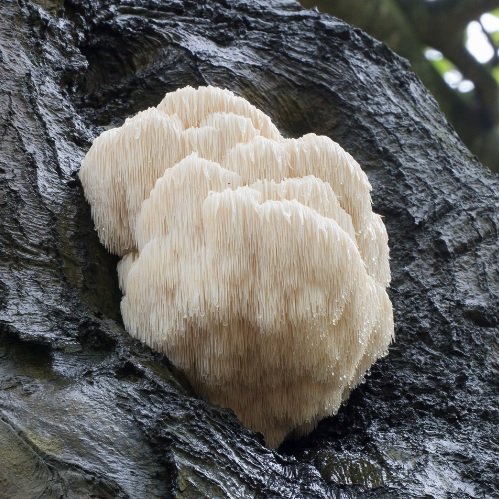
Lion’s mane growing on a tree
— Turkey Tail (Trametes versicolor)
Also known as Coriolus versicolor or Polyporus versicolor, Turkey tail is one of the most common and recognisable bracket fungi in the world. Its name comes from the vivid, concentric bands of colour on its fan-shaped caps, which closely resemble the tail feathers of a wild turkey. This small, tough, and leathery mushroom is found year-round on dead hardwood logs, stumps, and fallen branches across temperate, subtropical, and tropical regions worldwide, including the UK, Europe, North America, and Asia. It plays a vital ecological role as a saprotroph, breaking down wood and recycling nutrients in forest ecosystems.
Botanical Features:
Turkey tail forms thin, semi-circular or rosette-like caps, typically 2–8 cm across, with a velvety, faintly hairy surface and striking zones of brown, grey, yellow, purple, green, and black, always with a pale cream or white margin. The underside is covered in tiny, round, white pores (3–5 per mm), distinguishing it from similar-looking but smooth species, such as Stereum ostrea (False Turkey tail). The mushroom is inedible due to its tough texture and lack of distinctive taste or smell, but it has a long history of use in traditional medicine.
Traditional and Modern Uses:
Turkey Tail has been used in Southeast Asian and Chinese medicine since at least the 2nd century BC, typically as a decoction or tea for a variety of health issues. In modern times, it has gained attention for its potential medicinal properties, especially for immune support and as an adjunct in cancer therapy. In Japan, an extract called polysaccharide-K (PSK) derived from Turkey Tail is approved as an adjuvant treatment for cancer, particularly in supporting the immune system during chemotherapy.
Bioactive Compounds:
Polysaccharide-K (PSK, Krestin): An immunomodulatory protein-bound polysaccharide used in Japanese cancer therapy.
Polysaccharide Peptide (PSP): Another protein-bound polysaccharide studied for immune and antiviral effects.
Other beta-glucans and antioxidants: Contribute to its immune-supporting and anti-inflammatory properties.
Culinary and Safety Notes:
Turkey tail is commonly prepared as a tea or taken as a powdered or encapsulated supplement. It is generally considered safe for most people; however, as with all supplements, quality and sourcing are crucial. Individuals with underlying health conditions should consult a healthcare professional before use.
Clinical Evidence:
Modern research has focused on Turkey tail’s effects on the immune system and its role as an adjunct in cancer therapy:
Immune Support: Both PSK and PSP have been shown in laboratory and clinical studies to stimulate immune cells, such as T-cells and natural killer (NK) cells, and to modulate cytokine production, supporting the body’s defence against infections and possibly tumours.
Cancer Therapy: In Japan and China, PSK is widely used alongside conventional cancer treatments, with studies suggesting it may improve survival rates and quality of life in patients with certain cancers, including gastric, colorectal, and breast cancer. However, PSK is not approved for this use in the US or UK, and more research is needed to confirm its effectiveness in Western populations.
Antiviral and Gut Health: PSP has shown promise in laboratory studies for antiviral activity and for supporting gut microbiome balance.
Key Compound:
Polysaccharide-K (PSK) binds to TLR2 receptors, enhancing NK cell cytotoxicity.
Cancer Applications:
Gastric cancer: PSK + chemotherapy increased 5-year survival from 52% to 68% (n=800)
Breast cancer: 3 g/day reduced recurrence by 29% in stage II/III patients
Dosing:
Clinical trials have employed a wide range of doses, but standard supplemental amounts typically range from 1 to 3g of extract per day, often standardised to PSK or PSP content.

Turkey's tail mushrooms growing on moss