
Ultra-Processed Foods Dominate UK and US Diets: What It Means for Health and Policies
Ultra-processed foods (UPFs) have quietly taken over supermarket shelves and family dinner tables across the UK, the US, and much of the developed world. Once an occasional treat, these factory-made products, packed with additives, refined sugars, and industrial ingredients, now account for more than half of all food purchases in both countries. Health experts warn that this seismic shift in our diets is driving a surge in obesity, chronic disease, and early mortality, especially among the most vulnerable communities.
In this article, we explore the latest research, consumer trends, and government responses, drawing on the most recent data from the UK, EU, and US. We’ll also examine how UPFs are defined, why they are so prevalent, and what can be done to reverse their grip on our food system.
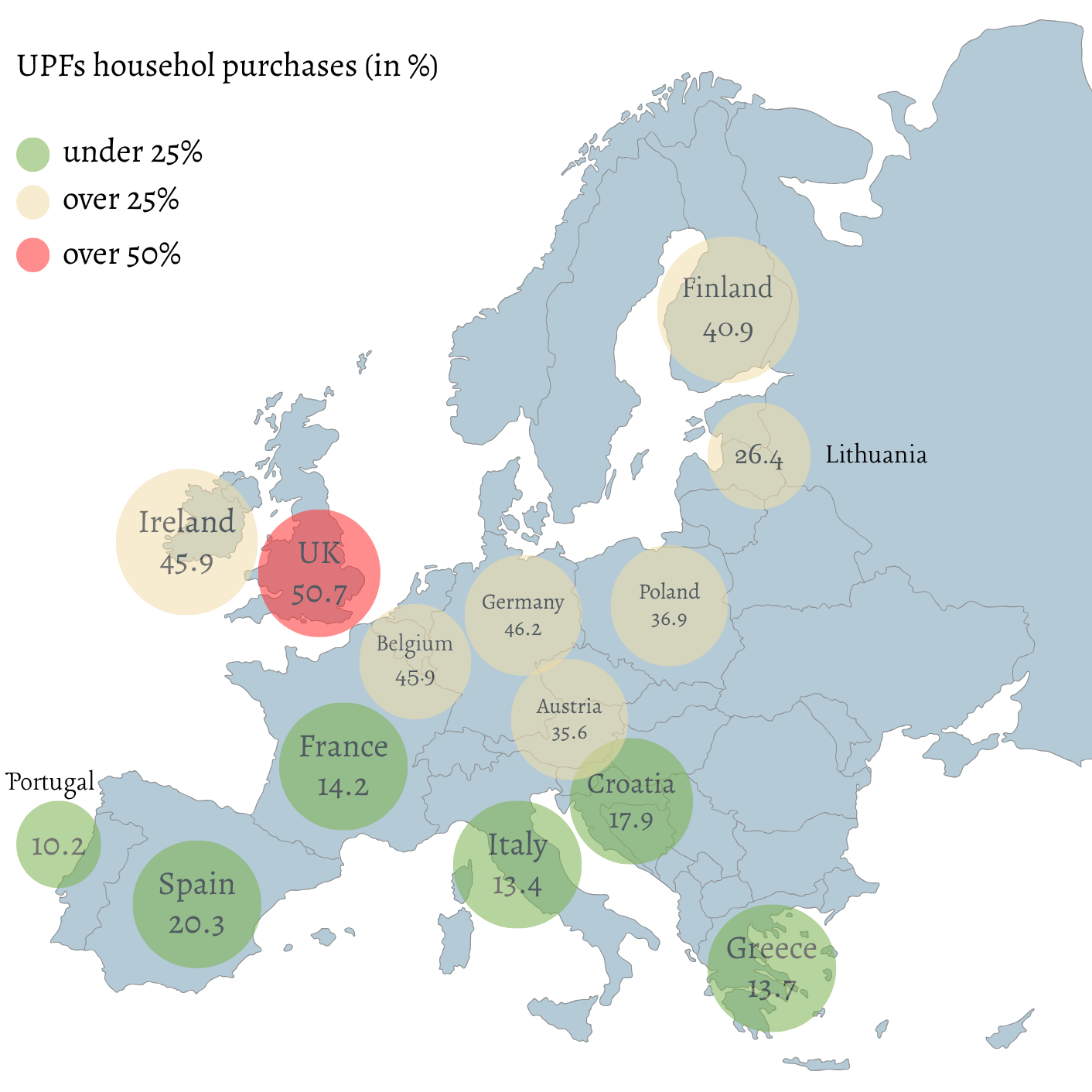
Source: Public Health Nutrition. Illustration by Olivier Sanchez.
What Are Ultra-Processed Foods? Understanding the NOVA Classification
Ultra-processed foods are not simply “processed” in the traditional sense, like cheese, yoghurt, or tinned tomatoes. Instead, they are industrial formulations, often made with ingredients rarely found in a home kitchen, such as emulsifiers, flavour enhancers, colourings, and preservatives, which are primarily designed to extend shelf life and increase palatability (so they can be made to be highly addictive).
According to the NOVA classification, UPFs are:
“Industrial formulations made from substances extracted from foods (oils, fats, sugar, starch, proteins), food constituents (hydrogenated fats, modified starch), or synthesised ingredients (flavour enhancers, colours, food additives) — all used to make the product hyper-palatable.”
The NOVA Debate and Scientific Uncertainty
Ultra-processed foods are defined using the NOVA classification, which groups foods according to the extent and purpose of their processing:
Group 1: Unprocessed or minimally processed foods (e.g., fresh fruit, vegetables, meat, milk).
Group 2: Processed culinary ingredients (e.g., sugar, oils, salt).
Group 3: Processed foods (e.g., cheese, cured meats, canned vegetables).
Group 4: Ultra-processed foods—industrial formulations made from substances extracted from foods (oils, fats, sugar, starch, protein isolates) or synthesised in laboratories (flavour enhancers, colours, emulsifiers, preservatives).
While the NOVA system is widely used, some experts and government panels note limitations:
It is not always clear whether health risks are due to the processing itself or the poor nutritional content of UPFs.
There is ongoing debate about how best to classify foods and whether all UPFs are equally harmful.
The UK’s Eatwell Guide already recommends minimising foods high in saturated fat, salt, and sugar — many of which are UPFs.
Who Is Most Affected? Socioeconomic and Demographic Disparities
Young people and lower-income families are the biggest consumers of UPFs in both the UK and the US.
In the US, households with lower income and education purchase more UPFs, and non-Hispanic white and Black adolescents have the highest intake.
These patterns persist even when controlling for income, indicating the influence of deep-rooted cultural, economic, and marketing factors.
Consumer Awareness: A Nation Overwhelmed
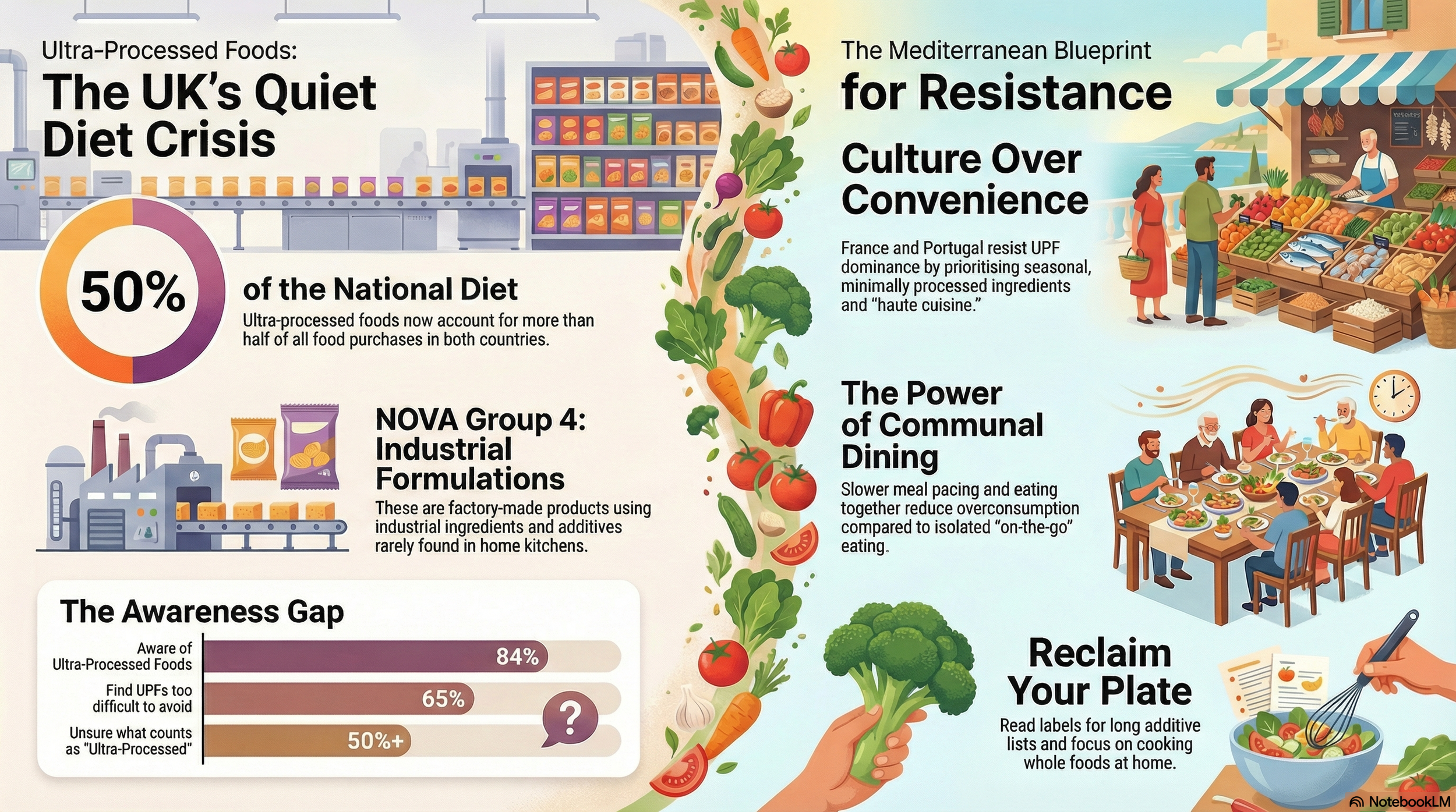
84% of Britons are aware of UPFs, but 65% say they’re too hard to avoid, and over half admit they’re unsure what counts as ultra-processed.
60% are unaware of the long-term health impacts, and only 41% prioritise UPF avoidance when shopping, compared to 20% who focus on a balanced diet.
The conversation is growing: 94% of UK consumers have heard of UPFs, and 64% of those express negative views about them.
Industry Response: Reformulation and Responsibility
Food companies argue that their products can be part of a balanced diet and point to reformulation efforts, reducing sugar, using “natural” colours, and adding vitamins. However, experts remain sceptical:
“That’s a classic reformulation. They are baked with whole grain and vegetable oils. I think they add absolutely no value to the diet whatever. Have a piece of wholegrain bread if you want a healthy snack.”
Policy and Recommendations: What Needs to Change?
— UK Government and SACN Recommendations
The SACN advises reducing the intake of processed foods high in calories, saturated fat, salt, and sugar, and increasing the consumption of fruits, vegetables, and wholegrains.
There is a call for clearer labelling, more transparent data on additives, and ongoing monitoring of UPF consumption and its health impacts.
The Eatwell Guide remains the UK’s main dietary model, but experts suggest more targeted messaging on food processing and additives. The guide is not good enough to help consumers make healthy choices.
— US Policy Landscape
Unlike the UK and some EU countries, the US lacks federal regulations specifically targeting UPFs.
Researchers and public health advocates call for urgent policy action to address the dominance of UPFs and the associated health disparities.
US government bodies have never been known for their transparency, and having food industry representatives at every level makes it hard to design policies that protect consumers and the nation’s health.
What Can Consumers Do? Practical Tips for Reducing UPFs
Read ingredient labels: Avoid products with long lists of additives, emulsifiers, and ingredients you wouldn’t use at home.
Cook more at home: Focus on whole foods: vegetables, fruits, whole grains, lean meats, fish, eggs, nuts, and seeds.
Limit snacks, sugary drinks, and ready meals, including soups and sauces: These categories are the biggest sources of UPFs.
Educate children early: Help young people develop a taste for real, minimally processed foods.
Advocate for change: Support policies and brands that prioritise transparency and healthier formulations.

A diet based on fresh produced not chemical formulations.
The French Paradox and the Resilience of Mediterranean Diets: Why France and Portugal Resist Ultra-Processed Foods
The French Paradox: A Clash of Science and Culture
The French Paradox refers to the seemingly contradictory observation that the French population exhibits low rates of coronary heart disease despite a diet historically rich in saturated fats (e.g., cheese, butter, and red meat). This phenomenon, first highlighted in the 1980s, challenges the conventional wisdom that links saturated fats directly to heart disease. Key factors contributing to this paradox include:
Moderate Wine Consumption: Red wine, rich in polyphenols such as resveratrol, is associated with improved cardiovascular health by reducing inflammation and oxidative stress.
Traditional Dietary Patterns: The French diet emphasises fresh, minimally processed foods: vegetables, fruits, whole grains, and lean proteins, rather than industrial formulations.
Cultural eating habits, including smaller portion sizes, slower meal pacing, and communal dining, reduce overconsumption and promote metabolic efficiency.
Ultra-Processed Foods (UPFs) in France and Portugal: Defying Global Trends
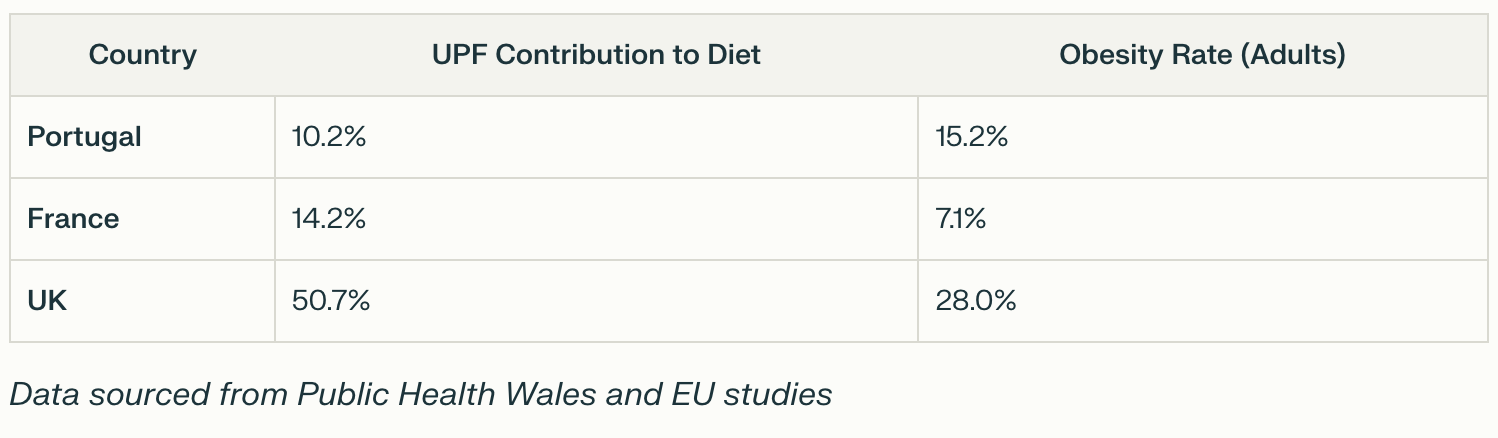
While UPFs dominate over 50% of diets in the UK and US, France and Portugal stand out for their resistance:
Reasons for Low UPF Consumption
Culinary Heritage:
France: The "haute cuisine" tradition prioritises fresh, seasonal ingredients and home-cooked meals. Even processed foods like cheese and charcuterie are minimally altered.
Portugal: Mediterranean dietary roots are reflected in the consumption of extra-virgin olive oil, fish, legumes, and vegetables, with a strong cultural pride in traditional dishes like grilled sardines and bacalhau (salted cod).
Policy Interventions:
France introduced NutriScore labelling (2017) to highlight nutritional quality and banned junk food ads targeting children.
Both countries subsidise fresh produce and tax sugary drinks, aligning with EU-wide efforts to curb UPFs.
Scepticism of Industrial Foods:
French MPs have pushed to limit food additives from 338 to 48 by 2025, reflecting public distrust of "cocktail effects" from synthetic ingredients.
Portuguese households prioritise local markets and artisanal products, resisting the influence of multinational food corporations.
Social and Economic Factors:
Meal Structure: Extended family meals reduce reliance on convenience foods. Mediterranean people tend to eat together at the table, a habit that is not reflected in the UK or the US, where parents and kids often eat at different times and while doing something else.
Urban-Rural Divide: Rural regions in both countries maintain stronger ties to traditional diets, whereas urban areas exhibit slightly higher UPF intake.
Why Mediterranean Diets Endure in the Age of Convenience
Despite global UPF market growth, France and Portugal resist due to:
Cultural Identity: Food is a pillar of national pride. In France, the UNESCO-listed "gastronomic meal" ritual reinforces communal eating.
Health Literacy: Public campaigns (e.g., France’s PNNS nutrition program) educate citizens on the risks of UPFs and the benefits of whole foods.
Economic Accessibility: Farmers’ markets and local produce remain affordable, unlike in countries where UPFs are cheaper than fresh options.
Conclusion: Lessons from the Mediterranean Basin
The French Paradox is not just about wine or saturated fats; it’s a testament to the protective power of food culture and policy. By valuing tradition over convenience, France and Portugal demonstrate that resisting UPFs is possible without sacrificing culinary enjoyment. As obesity and chronic diseases surge globally, their models offer a blueprint for balancing modernity with health.
Conclusion: Reclaiming Real Food for Healthier Lives
The evidence is clear: ultra-processed foods have become the backbone of diets in the UK, US, and beyond, with significant consequences for public health. While the science continues to evolve, the message from experts is consistent—reducing UPF consumption and returning to real, minimally processed foods is likely to benefit everyone, especially the most vulnerable.
As Professor Monteiro cautions, “The honest answer is we don’t know what is going on.” But with obesity, chronic disease, and early deaths rising alongside UPF consumption, the stakes for individuals, families, and policymakers could not be higher.
References:
Calixto Andrade, G. Julia, C. Deschamps, V. et al. (2021). Consumption of ultra-processed food and its association with sociodemographic characteristics and diet quality in a representative sample of French adults. Nutrients. 13(2), 682. doi:10.3390/nu13020682
Elizabeth, L. Machado, P. Zinöcker, M. et al. (2020). Ultra-processed foods and health outcomes: A narrative review. Nutrients. 12(7), 1955. doi:10.3390/nu12071955
Ferrières, J. (2004). The French paradox: Lessons for other countries. Heart. 90(1), pp. 107-111. doi:10.1136/heart.90.1.107
Harb, AA. Shechter, A. Koch, PA. et al. (2023). Ultra-processed foods and the development of obesity in adults. European Journal of Clinical Nutrition. 77(6), pp. 619-627. doi:10.1038/s41430-022-01225-z
Julia, C. Martinez, L. Allès, B. et al. (2018). Contribution of ultra-processed foods in the diet of adults from the French NutriNet-Santé study. Public Health Nutrition. 21(1), pp. 27-37. doi:10.1017/S1368980017001367
Koiwai, K. Takemi, Y. Hayashi, F. et al. (2021). Consumption of ultra-processed foods and relationship between nutrient intake and obesity among participants undergoing specific health checkups provided by National Health Insurance. Nihon Koshu Eisei Zasshi. 68(2), pp. 105-117. [Japanese]. doi:10.11236/jph.20-044
Marino, M. Puppo, F. Del Bo, C. et al. (2021). A systematic review of worldwide consumption of ultra-processed foods: Findings and criticisms. Nutrients. 13(8), 2778. doi:10.3390/nu13082778
Marrón-Ponce, JA. Sánchez-Pimienta, TG. Louzada, MLDC. et al. (2018). Energy contribution of NOVA food groups and sociodemographic determinants of ultra-processed food consumption in the Mexican population. Public Health Nutrition. 21(1), pp. 87-93. doi:10.1017/S1368980017002129
Monteiro, CA. Cannon, G. Levy, RB. et al. (2019). Ultra-processed foods: What they are and how to identify them. Public Health Nutrition. 22(5), pp. 936-941. doi:10.1017/S1368980018003762
Parodi, PW. (1997). The French paradox unmasked: The role of folate. Medical Hypotheses. 49(4), pp. 313-318. doi:10.1016/s0306-9877(97)90197-3
Peden, J. Bishop, J. (2018). Rapid Review of Ultra-Processed Food and Obesity. Public Health Wales NHS Trust. Available at: https://phw.nhs.wales/topics/overweight-and-obesity/rapid-review-of-ultra-processed-food-and-obesity [Last Accessed: 31 May 2025]
Sandoval-Insausti, H. Jiménez-Onsurbe, M. Donat-Vargas, C. et al. (2020). Ultra-processed food consumption is associated with abdominal obesity: A prospective cohort study in older adults. Nutrients. 12(8),2368. doi: 10.3390/nu12082368
Sources:
Agriculture and Horticulture Development Board.
Food Standards Agency. (2025). Ultra-processed foods.
NHS UK
The British Heart Foundation. (2025). Available at: https://www.bhf.org.uk/informationsupport/heart-matters-magazine/news/behind-the-headlines/ultra-processed-foods [Last Accessed: 31 May 2025]
Santé Publique France. (2025). Available at: https://www.santepubliquefrance.fr/docs/consumption-of-ultra-processed-food-and-its-association-with-sociodemographic-characteristics-and-diet-quality-in-a-representative-sample-of-french [Last Accessed: 31 May 2025]
Satista (UK Statistics). (2025). Purchase frequency of ultra-processed foods during the last year in the United Kingdom in 2024, by age group. Available at: https://www.statista.com/statistics/1497366/purchase-frequency-of-ultra-processed-foods-in-the-uk-by-age/#:~:text=In%202024%2C%20when%20asked%20in,frequency%20among%20all%20age%20groups.
UK Office for Health Improvement & Disparities. (2025). Processed foods and health: SACN's rapid evidence update summary. Available at: https://www.gov.uk/government/publications/processed-foods-and-health-sacns-rapid-evidence-update/processed-foods-and-health-sacns-rapid-evidence-update-summary [Last Accessed: 31 May 2025]