
Strategic Framework: Optimising Workforce Energy and Mental Health through Gut Health Intervention
1. The Strategic Link: Gut Health as a Pillar of Corporate Performance
In the high-stakes corporate environment, human capital is the most volatile asset. While traditional wellness initiatives often focus on surface-level metrics, digestive health serves as the foundational “physiological report card” for an individual’s resilience and cognitive capacity. For modern organisations, addressing gut health is a strategic imperative that directly influences the bottom line; it is the difference between a workforce operating in a state of chronic “Presenteeism” and one characterised by sustained high-level performance.
The “7 Signs Your Gut Is Unhealthy” are not merely personal inconveniences; they are direct inhibitors of professional output. Symptoms such as unexplained fatigue, poor sleep, and frequent infections indicate a systemic failure that erodes an employee’s “Cognitive Endurance.”
When the gut microbiome is compromised, it fails to facilitate the production of 90% of the serotonin required for mood regulation and executive function. Furthermore, malabsorption of critical nutrients (specifically B12 and Iron) creates a state of “resource scarcity” for the brain, manifesting as anaemia-related brain fog and a sharp decline in discretionary effort.
Symptom-to-Performance Impact Matrix
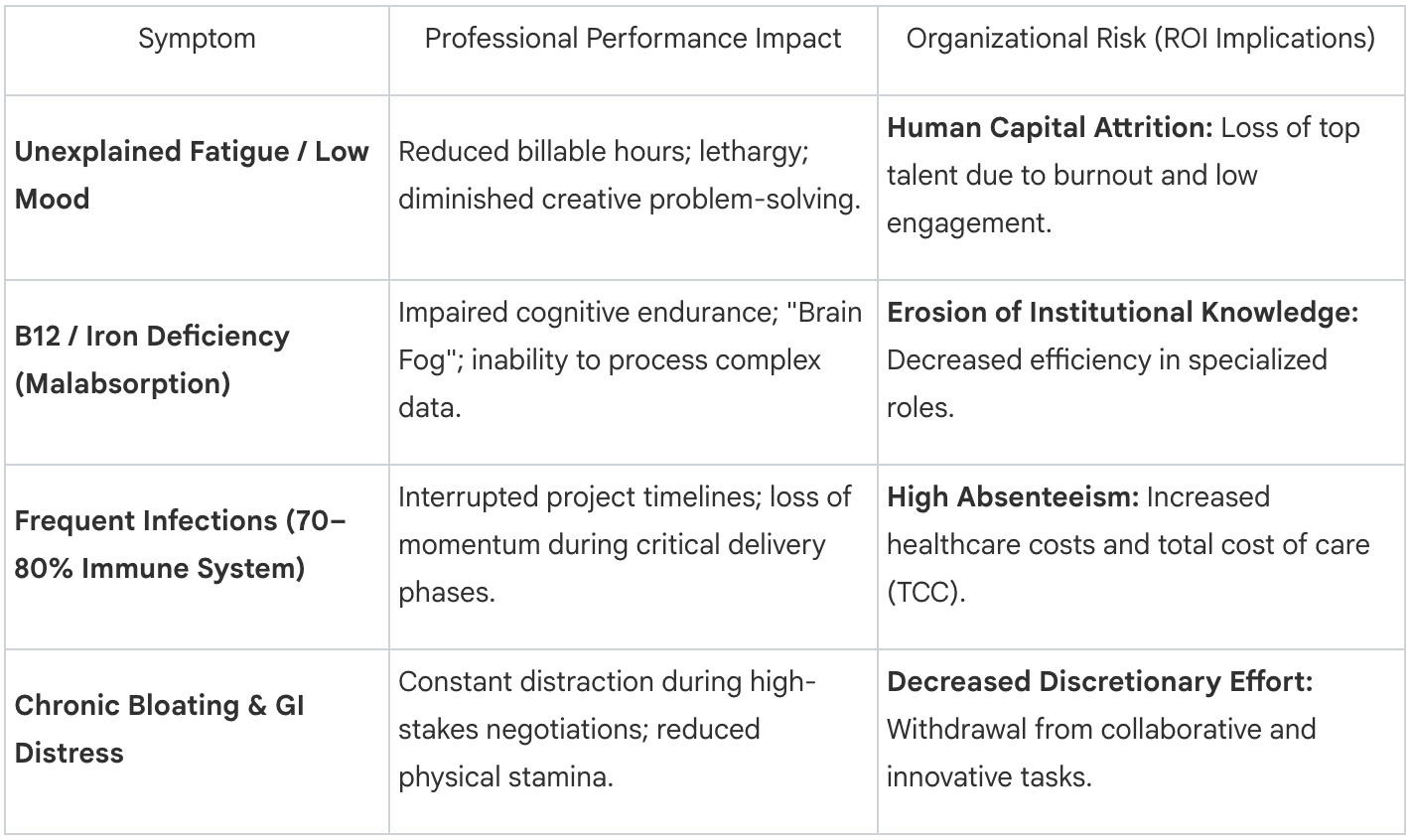
These observable performance deficits are the external results of the internal communication highway known as the gut-brain axis.
2. The Physiology of Productivity: Navigating the Gut-Brain Axis
The gut-brain axis is a bidirectional communication network that positions the enteric nervous system as a primary driver of mental clarity and emotional regulation. In a corporate framework, the gut must be viewed as an endocrine powerhouse. The relationship between gut microbes and neurotransmitters, specifically the production of serotonin, dictates an employee’s capacity for stress management and cognitive flexibility.
The physical conduit for this relationship is the vagus nerve. Under persistent corporate pressure, “vagus nerve dysfunction” triggers a detrimental feedback loop that degrades mental health. A critical indicator of this state is the colon's “guarding” mechanism. During high-stress periods, the Autonomic Nervous System (ANS) signals the colon to remain contracted, effectively reducing the lumen (internal diameter). This physiological response results in altered, thin, or sausage-shaped stools. These changes are not just digestive anomalies; they are objective proxy metrics for an employee’s internal stress levels and ANS state. These biological markers are systematically categorised via the Bristol Stool Chart.
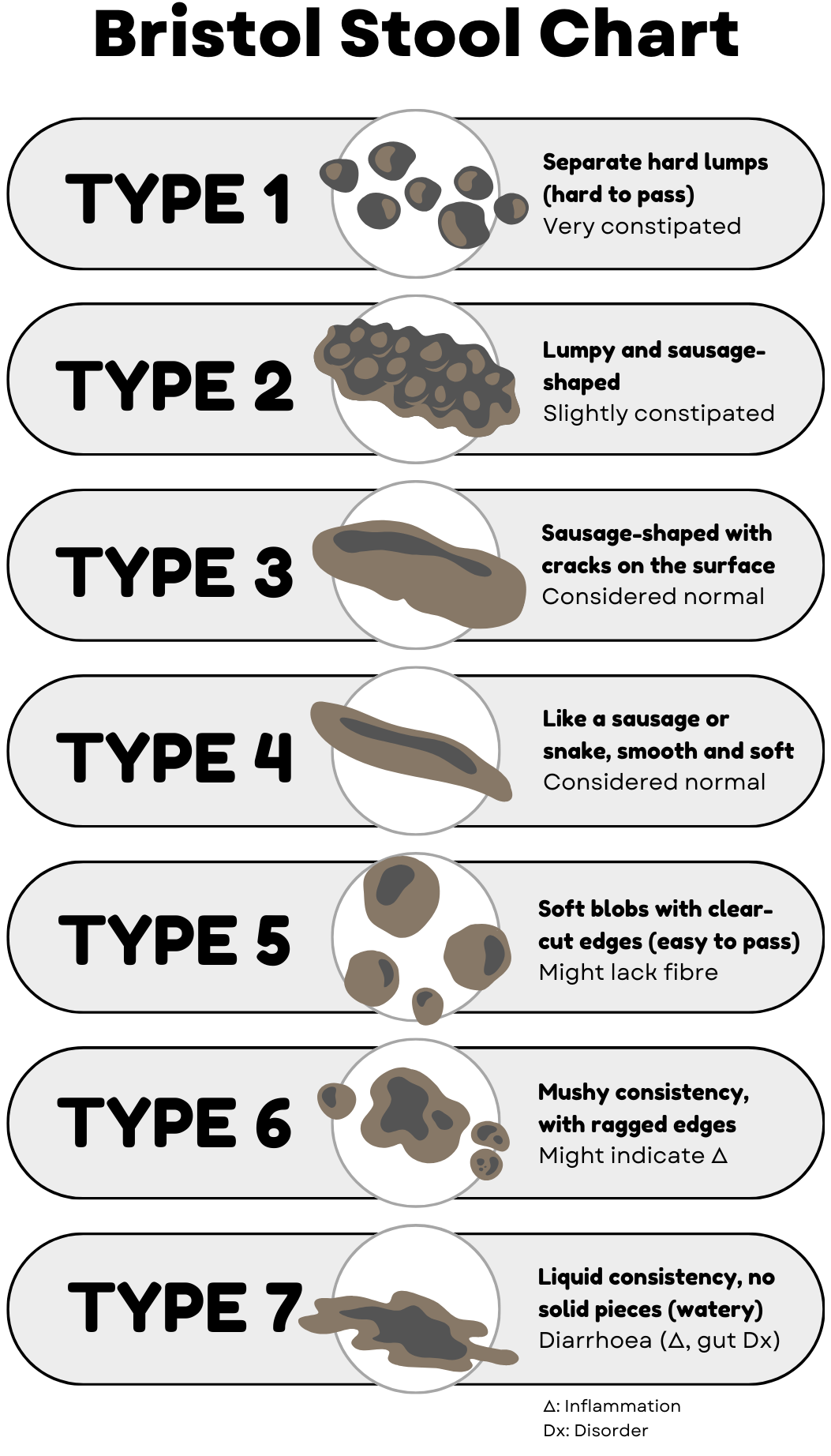
Nutrunity’s Bristol Stool Chart. Extracted from “Overcoming IBS,” by Olivier Sanchez. All rights reserved.
3. The Bristol Stool Chart: Metrics for Workforce Vitality
For a professional wellness framework to be effective, it must transition from subjective anecdotes to standardised metrics. The Bristol Stool Chart provides a validated scale for identifying digestive efficiency and transit time, and the 24–48-hour window required for optimal nutrient extraction.
Workforce Vitality Assessment (Bristol Categories)
Types 1–2: Slow Motility Indicators
Expert Interpretation: Indicates constipation or dehydration. Suggests waste is stagnant in the colon, correlating with systemic sluggishness and a lack of cognitive “flow.” Chronic constipation is associated with “Toxic Colon Syndrome,” whereas toxic substances are entering the bloodstream by stagnating too long in the bowel. This is particularly relevant for the female workforce, because detoxified hormones can reach the circulation and once again oppose their effect on the body, leading to “Oestrogen-dominance Syndrome” in the long term. A phenomenon associated with increased risks of cancer, such as breast cancer.
Types 3–4: Optimal Transit Zone
Expert Interpretation: The “Gold Standard.” These smooth shapes indicate balanced fibre/hydration levels, supporting consistent energy and nutrient absorption. It may also indicate a well-balanced stress response.
Types 5–7: Inflammatory/Rapid Transit Indicators
Expert Interpretation: Suggests diarrhoea or systemic inflammation. Often triggered by food hypersensitivities or high stress, leading to urgent disruptions and malabsorption of fat-soluble vitamins necessary for neurological health.
Strategic Insight on Misclassification: It is critical to note that even medical professionals frequently misidentify Types 2, 3, 5, and 6. This “Misclassification” requires oversight by a trained consultant, even though we need to focus only on the extremes to avoid ineffective interventions.
Critical Escalation Checklist (Consultant Use Only)
Persistent Colour Deviations: Pale, yellow, or grey stools lasting >1 week (potential bile/gallbladder issues).
Mucus or Visible Blood: Persistent presence signalling infection, inflammation, or lower GI bleeding. This is a red flag and requires immediate medical attention.
Malabsorption Indicators: Greasy, foul-smelling stools that float, signalling fat malabsorption and potential vitamin deficiency. It may also indicate issues with the gallbladder and bile system, or insufficient healthy fats in the diet.
Systemic Red Flags: GI changes accompanied by unexplained weight loss or chronic pain.
4. Workplace Dietary Catalysts: Analysing Impact on Motility and Inflammation
Standard office dietary habits disrupt systemic inflammation and operational resilience. The interplay between caffeine, hydration, and “healthy” snacks can create significant productivity bottlenecks.
Hydration & Motility
Stool is 70–80% water. Proper hydration (2–2.5L daily) is a prerequisite for colon regulation. Dehydration thickens waste into Type 1–2 lumps, slowing motility and physically straining the vagus nerve, which further intensifies the physiological stress response. The more ventilated the environment (overheated or air-conditioned), the faster the body loses water.
Caffeine & Transit Time
Caffeine stimulates colon contractions. While a moderate intake may aid motility, excessive consumption (>2 cups) significantly accelerates transit time. Because coffee is commonly contaminated with moulds and mycotoxins, these contaminants also precipitate transit and increase intestinal permeability as the body desperately tries to expel them.
The "Wellness Irony" of Office Snacks:
Many office-provided “healthy” snacks are packed with sugar, and consuming them regularly can lead to energy crashes, even if the sugar comes from dates or other “natural” sources. Sugar-free alternatives (bars, fizzy drinks, or gum) contain sugar alcohols like sorbitol and xylitol. These compounds ferment undigested in the colon and pull water in via osmosis, triggering IBS-like flares and urgent, watery “|Type 6–7” stools in sensitive individuals. This creates a cycle where corporate perks directly drive productivity losses and workplace disruptions.
5. Strategic Interventions: Rationale for Nutritional Coaching and Functional Testing
To optimise workforce health, organisations must move beyond generic wellness advice toward data-driven, personalised interventions. Functional testing provides the high-resolution data necessary for chronic health management and long-term cost savings.
Diagnostic Methodology: Culture vs. PCR/GI Mapping
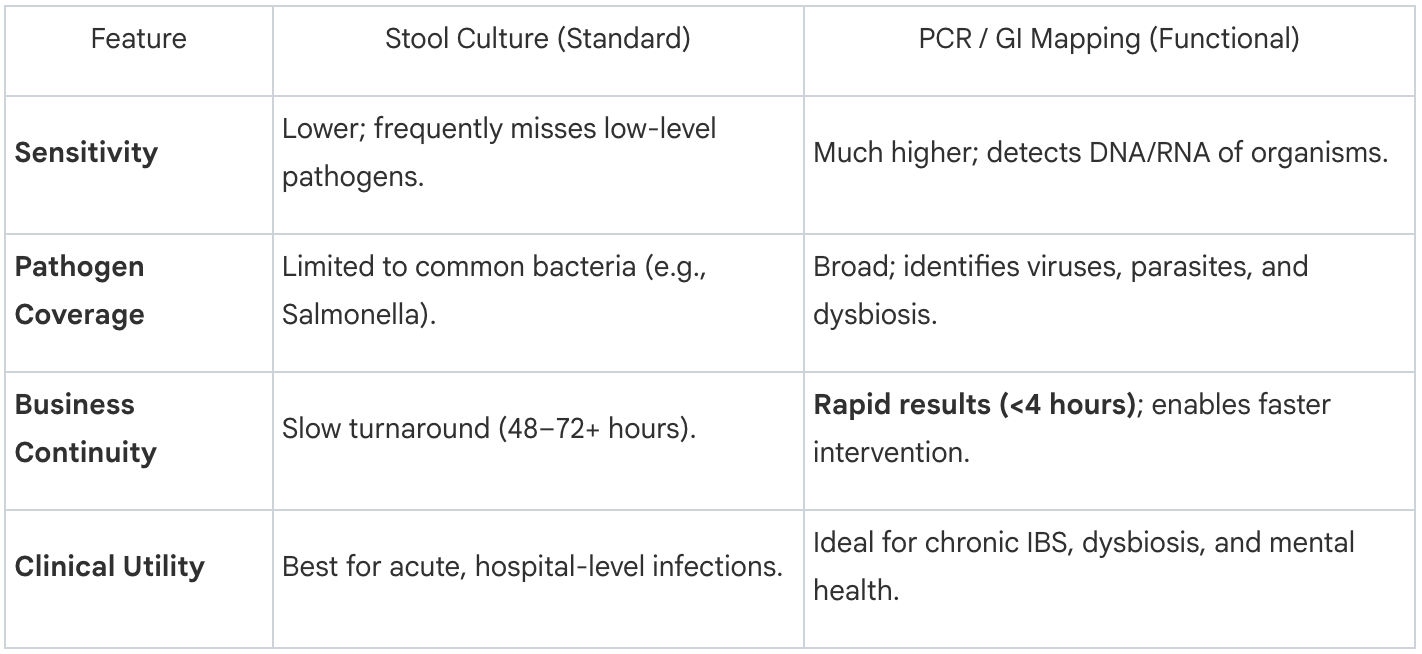
Naturopathic Protocol Framework
Nutrunity offers a hands-on approach with 1-2-1 coaching for small- to medium-sized enterprises and group talks (and interactive presentations) for larger companies.
6. Framework Conclusion: Integrating Gut Health into Corporate Culture
The integration of gut health into corporate wellness recognises the digestive system as the foundation of gut-brain calm, nutrient absorption, and sustained professional excellence. By treating the microbiome as a critical component of human capital management, organisations can move from reactive sick-leave management to proactive vitality optimisation.
Strategic Takeaway: The transition from “gut-unhealthy” stagnation to an energised, optimised workforce directly impacts the Total Cost of Care and overall operational resilience. Sustainable high performance is biologically impossible without a healthy gut.